

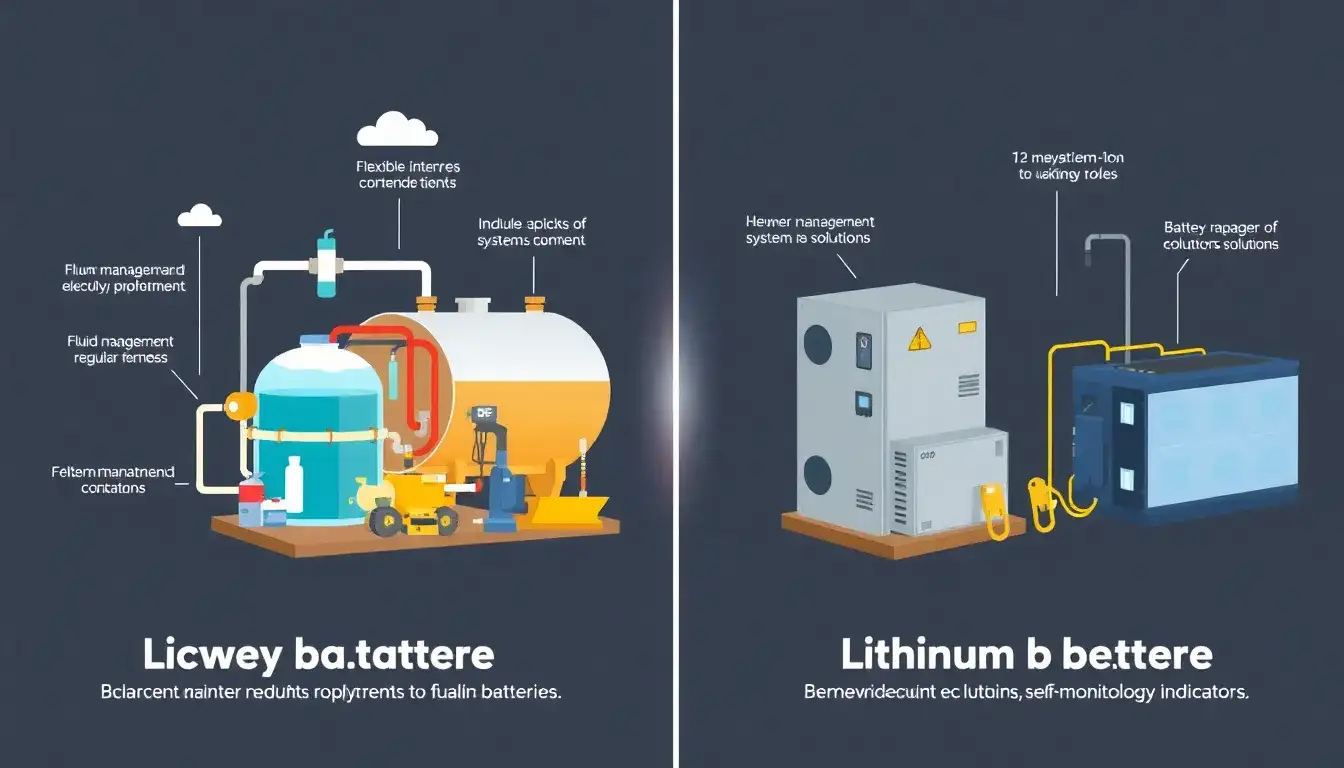
Maintenance Requirements: Flow Batteries vs. Lithium-Ion Batteries
Flow Batteries
- Design and Operation: Flow batteries use liquid electrolytes pumped through electrodes, which can lead to more complex maintenance needs due to the pumps and plumbing required.
- Low Maintenance: Despite their complexity, flow batteries have relatively low maintenance needs. They are designed like fuel cells, with annual inspections and electrolyte top-offs being common tasks. The lack of solid-state materials means components are more accessible for maintenance.
- Chemical Considerations: Flow batteries can experience electrolyte degradation and “crossover,” where active species mix, reducing capacity. However, this is easier to address in flow batteries due to accessible components.
Lithium-Ion Batteries
- Solid-State Design: Lithium-ion batteries contain solid charge-storage materials, which can make them less accessible for maintenance compared to flow batteries.
- Minimal Maintenance: Lithium-ion batteries, especially those like LFP (Lithium Iron Phosphate), require virtually no maintenance if installed correctly. They include a built-in battery management system (BMS) that monitors temperature, state of charge, and others.
- Environmental Sensitivity: Lithium-ion batteries are sensitive to extreme temperatures and require proper storage conditions to maintain performance.
Key Differences
- Complexity: Flow batteries have more mechanical components (pumps, tanks) compared to lithium-ion batteries.
- Accessibility: Components in flow batteries are more accessible, making maintenance easier despite higher complexity.
- Chemical Stability: Flow batteries benefit from using chemistries like vanadium, which do not degrade significantly over time.
Original article by NenPower, If reposted, please credit the source: https://nenpower.com/blog/how-does-the-maintenance-requirement-of-flow-batteries-differ-from-that-of-lithium-ion-batteries/

