

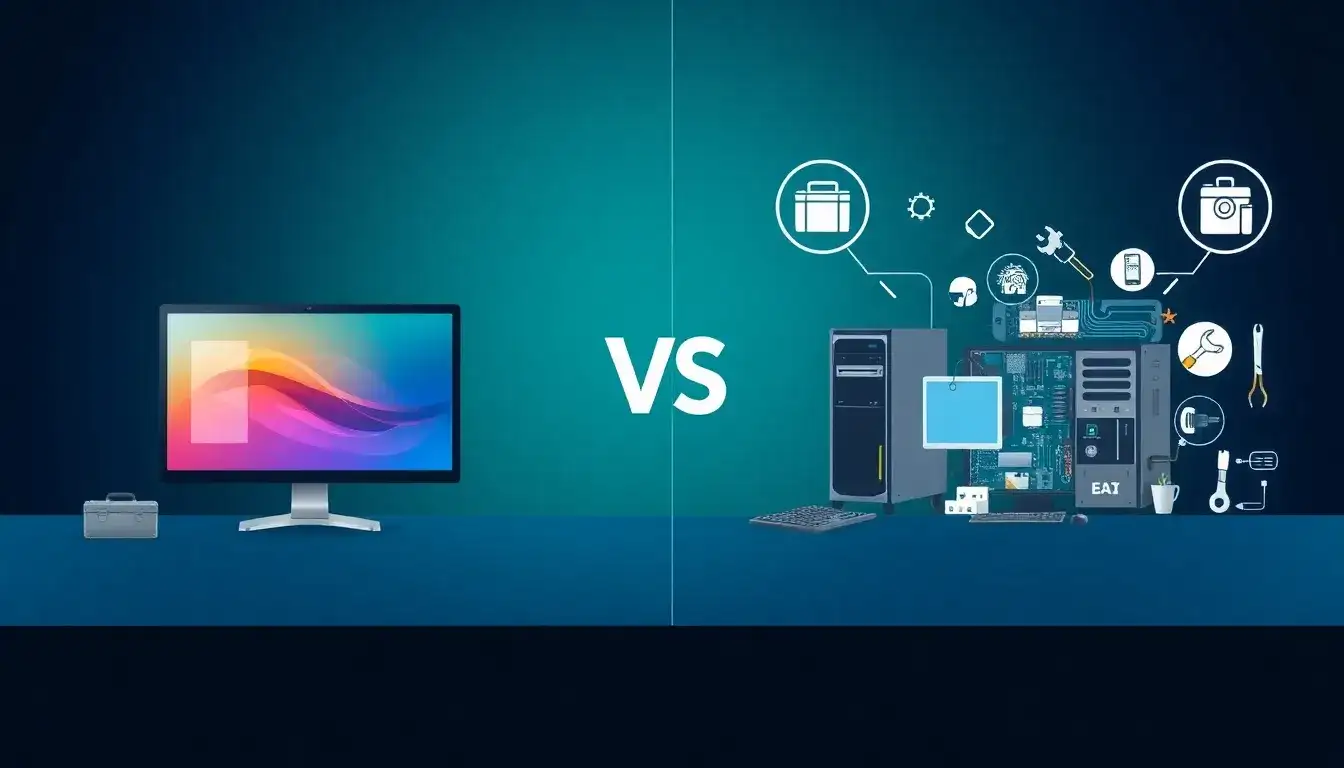
The maintenance requirements of all-in-one systems and traditional systems can differ based on design, functionality, and environmental factors. Here’s a comparison of their maintenance needs:
All-in-One Systems
All-in-one systems, like computers or healthcare devices, integrate multiple components into a single unit. This integration can simplify maintenance in some aspects but also concentrates potential issues.
- Simplified Physical Maintenance: Since all components are housed together, cleaning and dusting are more straightforward. However, ensuring proper airflow around the unit is crucial to prevent overheating.
- Complexity in Repair: When a component fails, the repair can be more complex because everything is integrated. This requires careful disassembly to avoid damaging other parts.
- Electrostatic Discharge (ESD) Precautions: Extra precautions need to be taken to prevent ESD damage when handling internal components.
- Software Management: Updates for integrated systems might need to be managed more carefully to ensure compatibility across all components.
Traditional Systems
Traditional systems typically have separate units for different components, which can affect maintenance in the following ways:
- Easier Access and Repair: Components are often easier to access and repair individually, reducing the complexity and potential for damage to other parts.
- Component-Specific Maintenance: Each component might have its own maintenance schedule and requirements, which can be more manageable but also more time-consuming.
- Distributed Heat Management: Separate units can dissipate heat more effectively, reducing the risk of overheating compared to all-in-one systems.
- Flexibility in Upgrades: Traditional systems often allow for more flexibility in upgrading individual components without affecting the entire system.
Comparison and Special Considerations
| Feature | All-in-One Systems | Traditional Systems |
|---|---|---|
| Physical Maintenance | Simplified cleaning but requires careful disassembly. | Easier access for repairs but more complex overall cleaning. |
| Component Interdependence | Components are integrated, affecting overall system functionality. | Components can be managed and repaired independently. |
| Heat Management | More susceptible to overheating if not properly ventilated. | Better heat dissipation due to separate units. |
| Upgrade Flexibility | Limited flexibility in upgrading individual components. | Easier to upgrade individual components without affecting the system. |
In summary, while all-in-one systems offer a more streamlined design that can simplify some aspects of maintenance, traditional systems provide greater flexibility and easier access for component repairs. The choice between the two often depends on specific needs, such as space constraints, performance requirements, and budget considerations.
Original article by NenPower, If reposted, please credit the source: https://nenpower.com/blog/how-does-the-maintenance-requirement-of-all-in-one-systems-differ-from-traditional-systems/

