

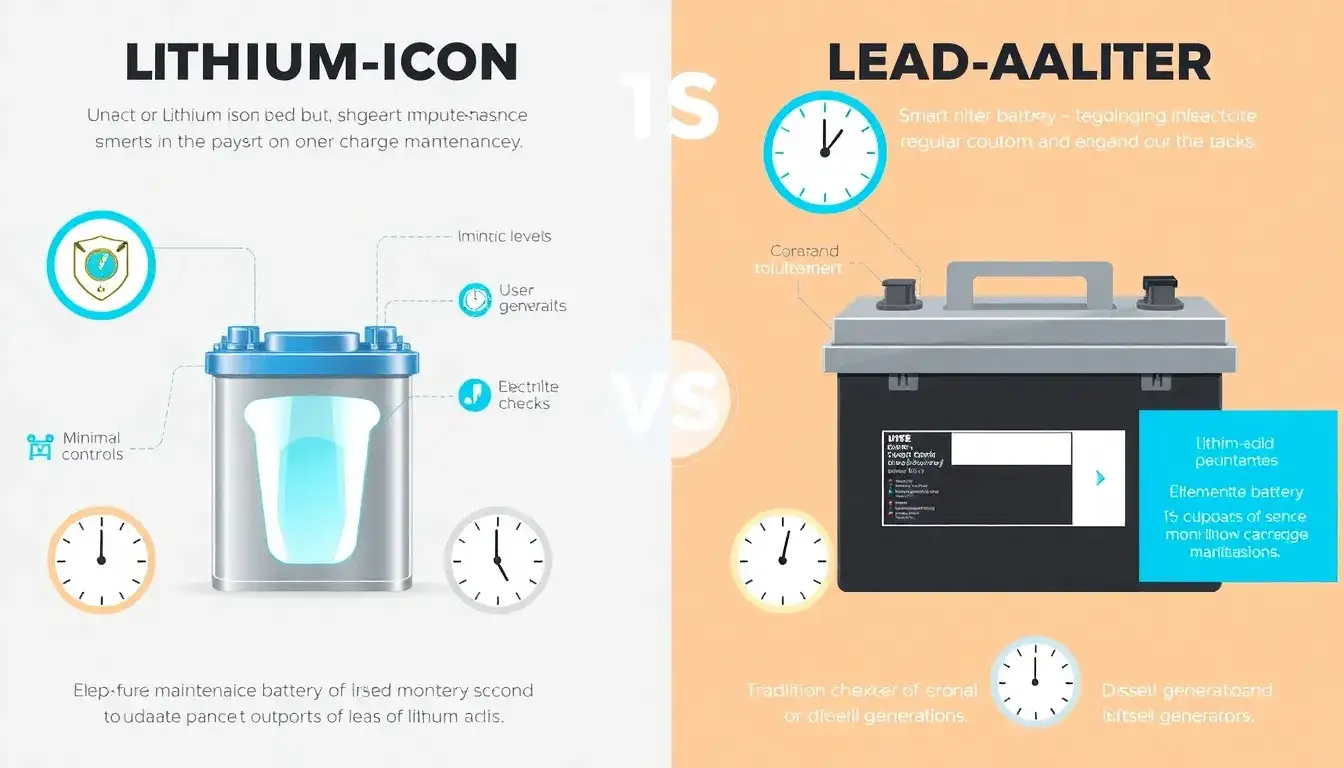
The maintenance requirements for lithium-ion and lead-acid batteries differ significantly, impacting their operational efficiency, lifespan, and overall cost-effectiveness.
Lead-Acid Batteries
- Frequent Maintenance Needed:
- Watering: Electrolyte levels must be maintained, requiring regular checks and adjustments with distilled water to prevent damage from over or under watering.
- Servicing: Regular cleaning of terminals and checking of vent caps are necessary to control acid buildup and corrosion.
- Inspection: Electrolyte levels and vent caps must be checked regularly to ensure safe operation.
- Equalization Charging: Required periodically to prevent sulfation, which involves applying a controlled overcharge to help restore battery health.
Lithium-Ion Batteries
- Minimal Maintenance:
- No Watering Required: Lithium-ion batteries do not require electrolyte maintenance.
- Simple Checks: Routine inspections are limited to ensuring proper connections and avoiding physical damage.
- Proper Charging Practices: Using lithium-specific chargers is recommended to optimize charging and extend battery life.
- Storage Conditions: Batteries should be stored at around 40-60% charge in cool, dry environments to maximize lifespan.
Overall, lead-acid batteries necessitate more labor-intensive and frequent maintenance compared to lithium-ion, which are generally maintenance-free. This difference affects the operational efficiency, cost, and longevity of the batteries.
Original article by NenPower, If reposted, please credit the source: https://nenpower.com/blog/how-does-the-maintenance-requirement-differ-between-lithium-ion-and-lead-acid-batteries/

