

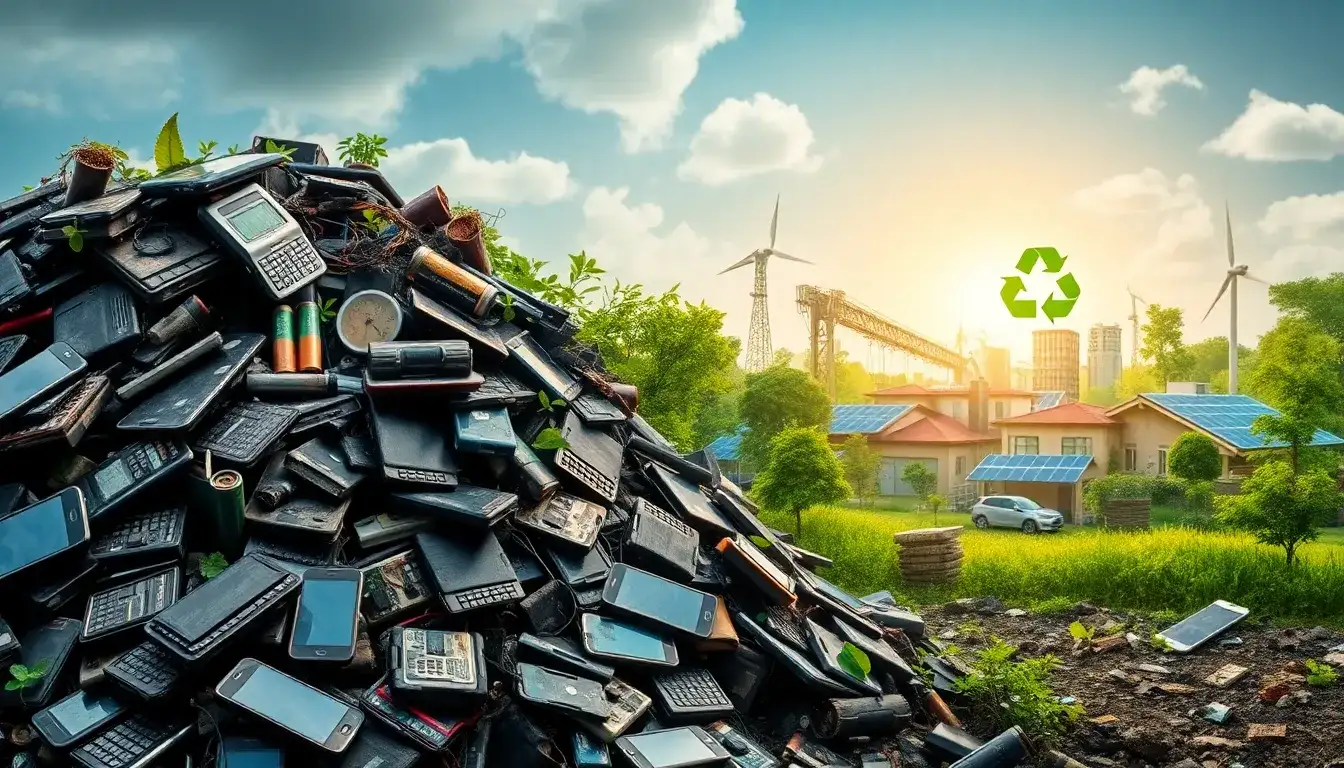
The long service life of lithium-ion batteries significantly impacts electronic waste by reducing the frequency of battery replacements and thus lowering the volume of waste generated. Here’s how this happens in detail:
Extended Lifespan Reduces Waste Frequency
Lithium-ion batteries typically last between 5 and 10 years, with some advanced types like lithium titanate oxide (LTO) batteries reaching up to 25,000 charge-discharge cycles, maintaining about 80% capacity even after extensive use. This lifespan is much longer than older battery technologies such as lead-acid, which generally last 3-6 years, or have fewer charge cycles (usually 500 to 1,000). Because these batteries endure many more cycles and longer service times, devices powered by lithium-ion batteries do not require battery replacement as often, thus extending the overall lifespan of the device itself.
Higher Efficiency and Stability
Lithium-ion batteries have a lower self-discharge rate and higher energy density, making them more efficient and reliable over time. They retain their charge longer when not in use and degrade more slowly through partial charge-discharge cycles compared to other battery types. This efficiency means users do not discard batteries prematurely due to performance issues, further lowering waste production.
Environmental Implications
Long-lasting lithium-ion batteries contribute positively to environmental sustainability by minimizing the generation of electronic waste (e-waste). Since fewer batteries need to be produced, transported, and disposed of over time, their extended life reduces resource consumption and pollution associated with battery manufacturing and disposal.
Moreover, some advanced lithium-ion technologies (e.g., LTO batteries) are designed with sustainability in mind, adhering to international standards such as RoHS regulations, and require no maintenance, which decreases potential harmful impacts during their lifecycle.
Summary:
- Lithium-ion batteries’ long service life (5-10 years or more) means fewer replacements, translating into less electronic waste.
- Their high charge cycle capacity and low self-discharge improve durability and efficiency, reducing premature disposal.
- Advanced variants like LTO batteries further extend lifespan and promote environmental responsibility.
- Overall, the longevity of lithium-ion batteries helps mitigate the growth of electronic waste by reducing battery turnover rates.
Original article by NenPower, If reposted, please credit the source: https://nenpower.com/blog/how-does-the-long-service-life-of-lithium-ion-batteries-impact-electronic-waste/

