

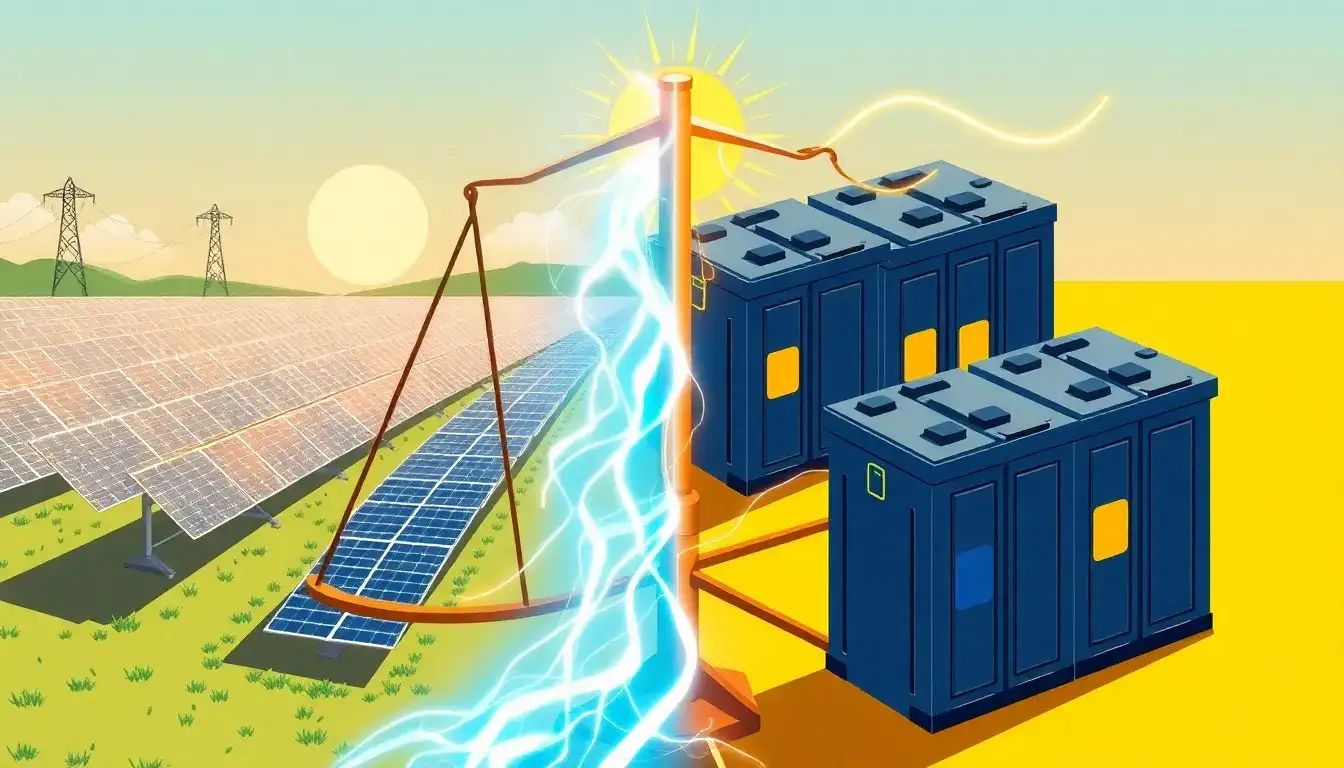
Impact of Limited Energy Density on Utility-Scale Storage
- Physical Space Requirements: Although lithium-ion batteries have relatively high energy densities compared to many other battery chemistries (ranging roughly from 150 to over 700 Wh/kg depending on the technology), their energy density is still constrained when it comes to storing very large amounts of energy typical in utility-scale applications. This means that to store hundreds of megawatt-hours (MWh), a substantial physical footprint is needed, which can be impractical or costly in terms of land use and infrastructure.
- Scalability Challenges: For utility-scale storage, the requirement to store energy for long durations or cover peak loads demands large battery banks. Limited energy density means that the volume and weight of the battery systems scale up considerably, increasing installation complexity and costs. This can make lithium-ion less economically attractive compared to other storage technologies that might offer better volumetric energy density or longer duration capabilities.
- Cost Implications: The need to deploy large quantities of lithium-ion cells due to limited energy density translates directly into higher capital expenditures. Manufacturing costs, along with system integration expenses, become a significant barrier when scaling lithium-ion batteries to grid levels. The cost per kWh for large installations may be less competitive versus alternatives such as pumped hydro or flow batteries that are more suited to long-duration storage.
- Cycle Life and Maintenance: Limited energy density ties into cycle life considerations as well. Large-scale installations undergo frequent cycling, and degradation over time reduces effective capacity. Frequent battery replacement adds to operational costs and may limit the financial feasibility of lithium-ion systems for grid storage.
- Safety and Thermal Management: Large-scale deployments of lithium-ion batteries necessitate careful design to mitigate risks like thermal runaway. The substantial size due to limited energy density increases complexity in managing heat dissipation and ensuring safety, which is critical in utility environments.
Summary
While lithium-ion batteries lead in energy density among battery types, their limited energy density at the utility scale leads to practical constraints in physical space, cost, scalability, and long-term durability. These limitations affect their overall viability for large-scale, long-duration grid storage, prompting utilities to consider alternative or complementary storage technologies depending on the application requirements.
References:
- Lithium-ion batteries have energy densities typically below 300 Wh/kg in commercial use, with recent advancements pushing upwards of 700 Wh/kg in experimental setups, but still constrained for very large-scale storage.
- At utility scale, the limited density results in large physical footprints and high costs, impacting practical deployment and economic viability.
- Safety and cycle life challenges further complicate their use in continuous, large-scale energy storage systems.
Original article by NenPower, If reposted, please credit the source: https://nenpower.com/blog/how-does-the-limited-energy-density-of-lithium-ion-batteries-impact-their-practicality-for-utility-scale-storage/

