

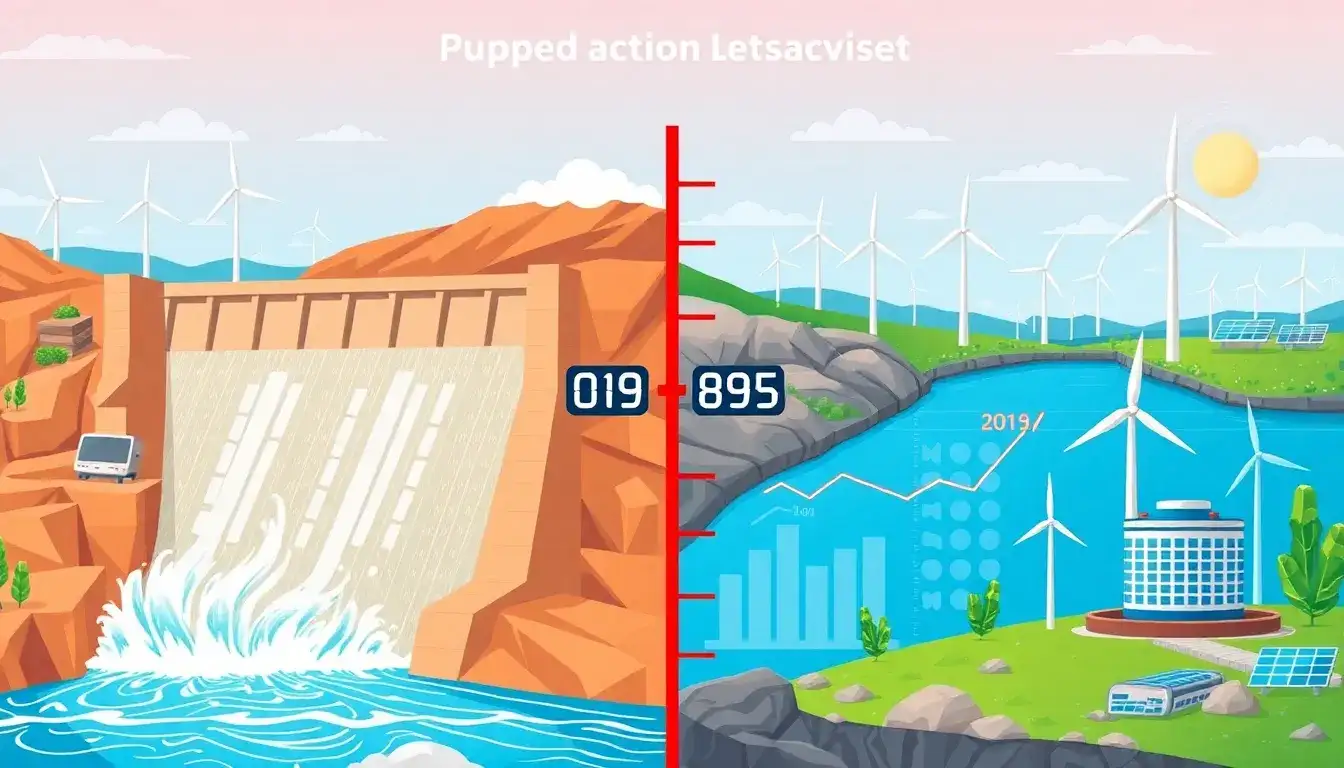
The lifespan of pumped hydroelectric energy storage (PHES) systems significantly exceeds that of most other energy storage technologies, making them one of the most durable and cost-effective large-scale storage solutions.
Lifespan of Pumped Hydroelectric Energy Storage Systems
- Typical Lifetime: Many sources estimate the lifetime of a closed-loop pumped hydro storage facility to be between 80 and 100 years, with some components like dams potentially lasting even longer. For example, dams in pumped storage plants can have lifespans exceeding 100 years, while electromechanical equipment typically lasts over 40 years.
- Technical Longevity: The overall technical lifetime of pumped storage plants is generally cited as 50 to 100 years, reflecting the robust infrastructure and mature technology behind these systems.
- Sustainability: New closed-loop pumped storage systems are designed to have minimal environmental impact and can be located flexibly, further extending their practical and operational lifespan through adaptive grid integration.
Comparison with Other Energy Storage Solutions
- Batteries (e.g., Lithium-ion): Common battery technologies usually have operational lifetimes ranging from 10 to 20 years depending on usage patterns, cycle depth, and maintenance. This is significantly shorter than PHES systems.
- Other Storage Technologies: Technologies like compressed air energy storage (CAES) and flywheels also typically have shorter lifespans and are less proven at large scale compared to PHES.
- Cost-effectiveness Over Time: The long lifespan of PHES means that its upfront investment can be amortized over many decades, resulting in lower levelized costs of storage compared to shorter-lived battery systems.
Summary Table of Lifespan Comparisons
| Energy Storage Type | Typical Lifespan | Notes |
|---|---|---|
| Pumped Hydroelectric Storage | 80–100+ years | Dams can exceed 100 years; mature tech |
| Lithium-ion Batteries | 10–20 years | Dependent on cycle life and degradation |
| Compressed Air Energy Storage | 20–40 years | Less common, intermediate durability |
| Flywheels | 10–20 years | Generally shorter, high power applications |
The extended operational life of pumped hydroelectric energy storage systems, combined with their large scale and sustainable characteristics, positions them as a crucial solution for grid-scale energy storage, outperforming other technologies in durability and long-term cost-effectiveness.
Original article by NenPower, If reposted, please credit the source: https://nenpower.com/blog/how-does-the-lifespan-of-pumped-hydroelectric-energy-storage-systems-compare-to-other-energy-storage-solutions/

