

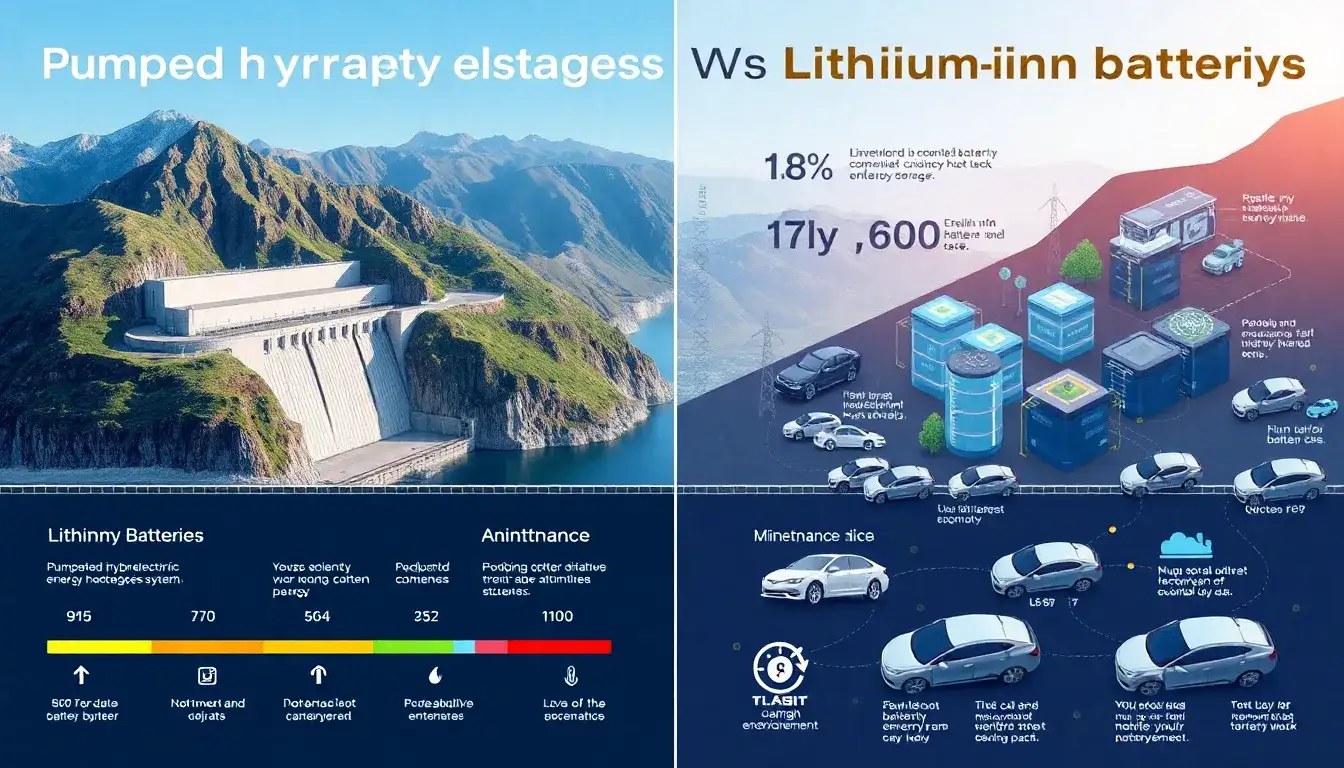
Pumped hydroelectric energy storage (PHES) systems and lithium-ion batteries differ significantly in lifespan:
Lifespan Comparison
Pumped Hydro Storage
- Infrastructure longevity: Dams have lifespans of 100 years, while electromechanical components last 40+ years. Closed-loop systems are typically designed for 80–100 years.
- Operational durability: Functions effectively for 50–100+ years with proper maintenance.
Lithium-Ion Batteries
- Cycle life: Commercial grid-scale batteries generally last 10–15 years or 5,000–10,000 cycles (depending on depth of discharge).
- Degradation: Capacity typically declines to 70–80% of original capacity within 10–15 years.
Key Distinctions
| Feature | Pumped Hydro Storage | Lithium-Ion Batteries |
|---|---|---|
| Typical lifespan | 50–100+ years | 10–15 years |
| Maintenance intensity | Low (once built) | High (thermal management, cycling) |
| Degradation mechanism | Mechanical wear | Electrochemical decay |
| End-of-life recycling | Mostly stable infrastructure | Complex material recovery |
PHES provides longer-lasting infrastructure but requires specific geography, while lithium-ion batteries offer modular deployment with shorter operational lifespans. Closed-loop PHES systems minimize environmental impacts while maintaining century-scale durability.
Original article by NenPower, If reposted, please credit the source: https://nenpower.com/blog/how-does-the-lifespan-of-pumped-hydroelectric-energy-storage-compare-to-lithium-ion-batteries/

