

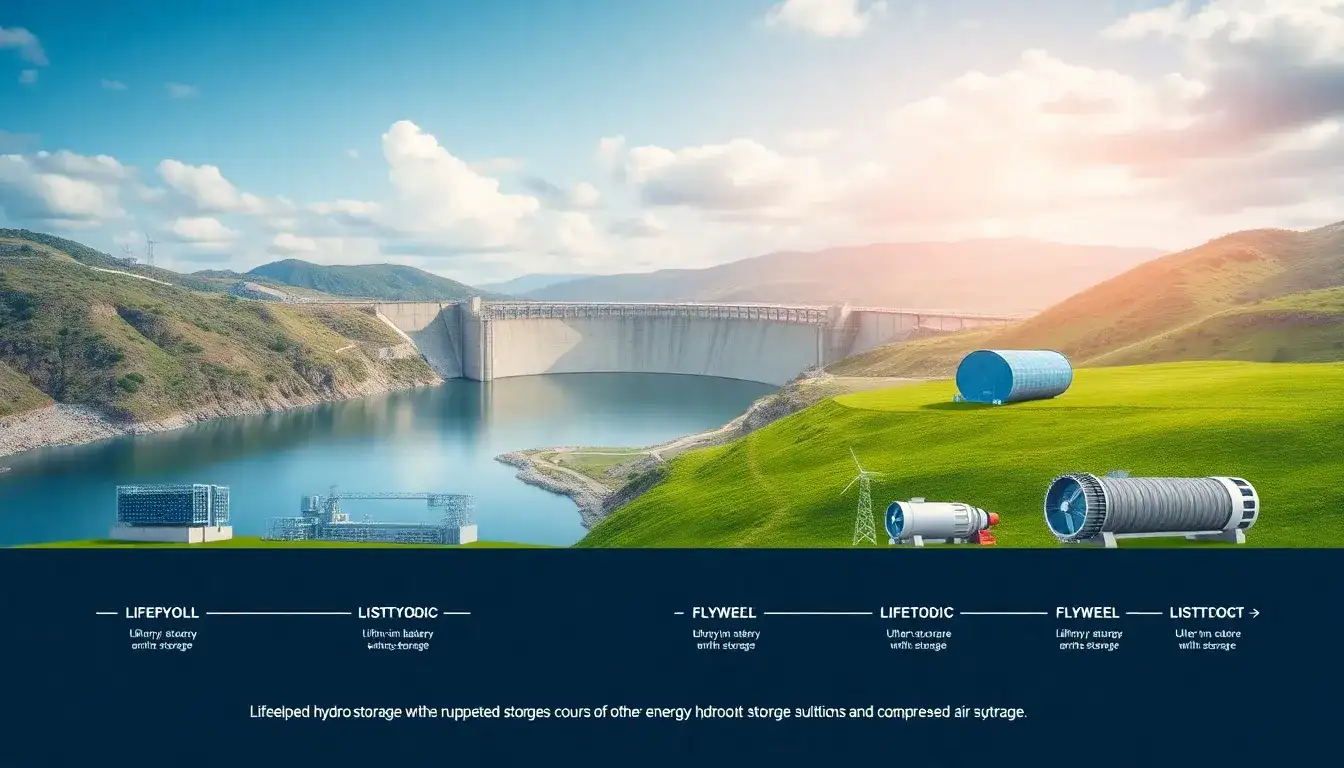
Lifespan Comparison: Pumped Hydro Storage vs. Other Energy Storage Solutions
Overview of Pumped Hydro Storage
- Lifespan: Pumped hydro storage facilities have a remarkably long lifespan. The electromechanical components typically last over 40 years, while the dams can endure for over 100 years. Some facilities have reportedly operated for more than 100 years.
- Advantages: They provide large-scale energy storage, cost-effectiveness, swift reactivity, and are a mature technology with minimal environmental impact when using closed-loop systems.
Comparison with Other Energy Storage Solutions
- Battery Storage: Traditional battery storage solutions, like lithium-ion batteries, usually last between 8 to 15 years, depending on the technology and usage. This is significantly shorter than pumped hydro storage.
- Other Solutions: Technologies such as compressed air energy storage and flow batteries have varying lifespans but generally do not match the longevity of pumped hydro. Compressed air storage, for example, has a lifespan that can be similar to pumped hydro if properly maintained, but its efficiency and scale are typically lower.
Key Points for Comparison
- Duration of Operation: Pumped hydro facilities are designed for long-term operation and can be refurbished or upgraded, extending their lifespan. In contrast, batteries often require replacement after a decade or so.
- Cost and Efficiency: While batteries have higher upfront costs per unit of energy stored compared to pumped hydro over their lifespan, they provide more flexibility in deployment locations.
- Environmental Impact: Pumped hydro storage has a low environmental footprint, especially when implemented as closed-loop systems, compared to some battery technologies that require mineral sourcing and have waste management challenges.
In summary, pumped hydro storage facilities offer a significantly longer lifespan compared to other energy storage technologies, making them a valuable asset for stable, long-term grid operations.
References:
[1] GE Vernova. Pumped Hydro Storage.
[3] ACS Publications. Life Cycle Assessment of Closed-Loop Pumped Storage.
[4] Volts. What’s the deal with pumped-hydro energy storage?
[5] Amigo Energy. Understanding Pumped Hydro Storage as a Renewable Energy.
[Note: The sources used do not explicitly mention compressed air energy storage, but common knowledge indicates it has a lifespan similar to pumped hydro in some cases.]
Original article by NenPower, If reposted, please credit the source: https://nenpower.com/blog/how-does-the-lifespan-of-pumped-hydro-storage-facilities-compare-to-other-energy-storage-solutions/

