

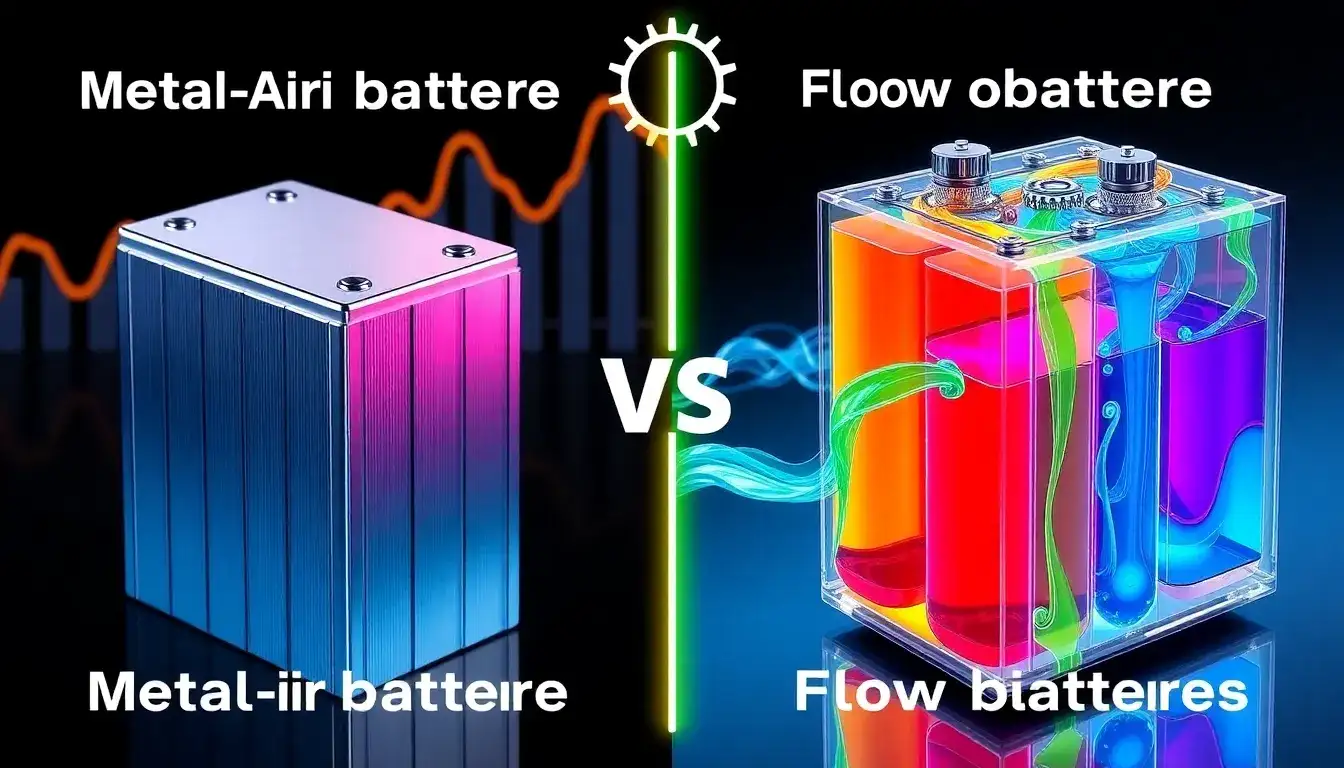
Comparing the Lifespan of Metal-Air Batteries and Flow Batteries
Metal-Air Batteries:
- Lifespan: The lifespan of metal-air batteries varies significantly based on their design and materials used. Most current models typically last around 100 to 300 cycles before their performance degrades.
- Durability Concerns: Corrosion of metal electrodes can significantly reduce the lifespan and efficiency of metal-air batteries, especially when not in use.
- Advancements: Research is ongoing to improve cycle life and shelf stability, particularly through new materials and hybrid systems.
Flow Batteries:
- Lifespan: Flow batteries, typically vanadium redox batteries, are known for their long lifespan, often exceeding 10,000 hours (over a year) of operation without significant capacity loss. They are highly durable and can last for many cycles, making them suitable for long-term energy storage applications.
- Durability: The design allows for the replacement of electrolyte fluids, which extends their operational lifespan and reduces maintenance needs compared to traditional batteries.
- Advantages: Flow batteries are particularly beneficial for grid-scale energy storage due to their scalability, flexibility, and long lifespan.
Comparison Summary:
| Battery Type | Lifespan/Cycles | Advantages |
|---|---|---|
| Metal-Air Batteries | 100 to 300 cycles | High energy density, low cost, environmentally friendly, compact and lightweight. |
| Flow Batteries | >>10,000 hours (>1 year) | Long lifespan, scalable, flexible, suitable for long-term energy storage applications. |
In summary, while metal-air batteries offer advantages in terms of energy density and cost, they generally have shorter lifespans compared to flow batteries, which are renowned for their long operational lifetimes and suitability for large-scale energy storage.
Original article by NenPower, If reposted, please credit the source: https://nenpower.com/blog/how-does-the-lifespan-of-metal-air-batteries-compare-to-that-of-flow-batteries/

