

Lifespan Overview
General Lifespan
Lithium-ion batteries generally have a lifespan ranging from 2 to 10 years. This variability is largely due to different battery chemistries and the specific demands of the devices they power.
Battery Types and Their Lifespans
Different types of lithium batteries serve various applications and exhibit different lifespans:
- Lithium-Ion (Li-ion): Typically used in smartphones and electric vehicles, with a lifespan between 2 to 10 years.
- Lithium Iron Phosphate (LiFePO4): Known for enhanced safety and longevity, these batteries last 5 to 15 years and are sometimes used in larger applications like electric buses.
- Lithium Polymer (LiPo): Common in mobile devices and drones, these batteries generally last 2 to 5 years.
- Lithium Manganese Oxide (LiMn2O4): Often used in power tools, offering a lifespan of about 3 to 7 years.
Specific Applications
Smartphones
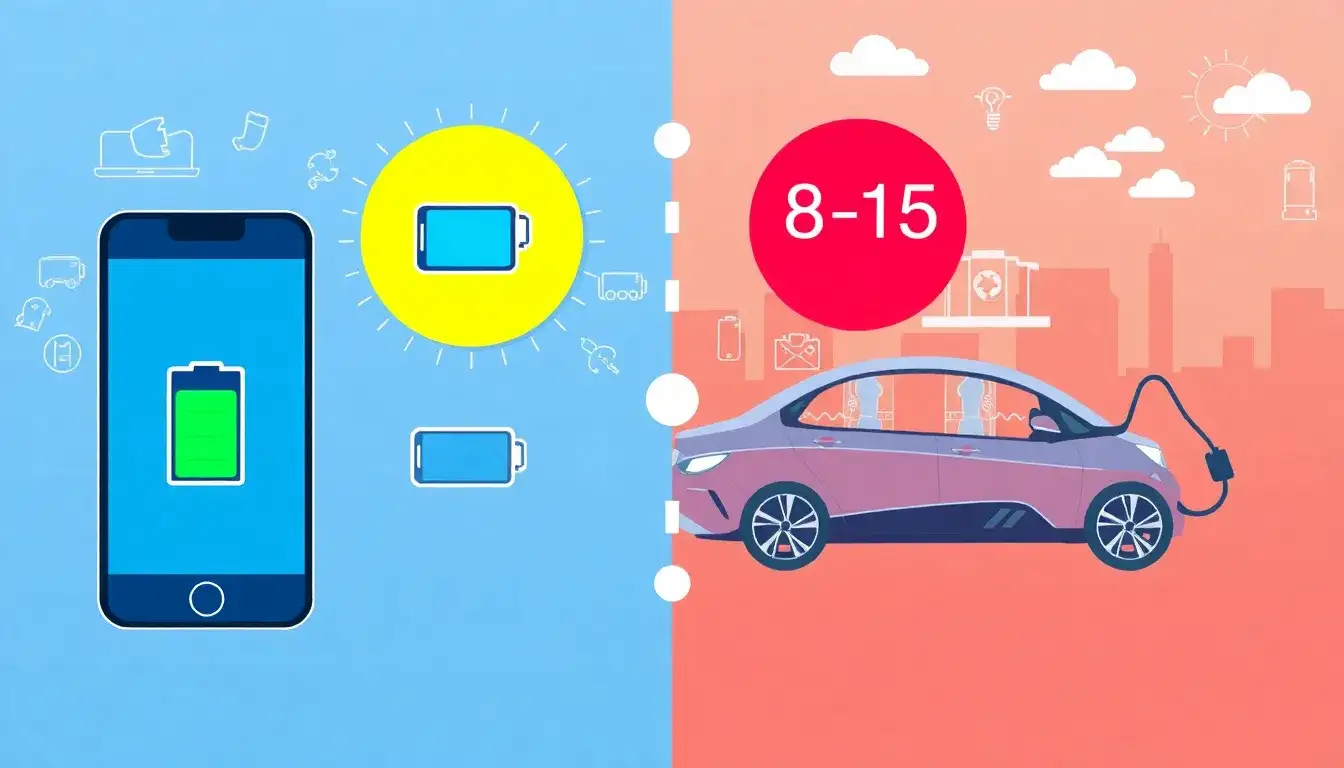
Smartphones typically use lithium-ion batteries (Li-ion) and have a lifespan of approximately 2-3 years. These batteries can withstand 500-1000 charge cycles, depending on usage conditions. The lifespan can be influenced by:
- Charging habits: Frequent full discharges or overcharging can shorten lifespan.
- Temperature sensitivity: High temperatures can degrade battery health.
Electric Vehicles
In electric vehicles, lithium-ion batteries are engineered for longer life and performance, enduring around 1000-1500 charge cycles, translating to about 8-15 years under optimal conditions. Factors affecting lifespan include:
- Depth of discharge: Maintaining a charge between 20% and 80% can significantly prolong cycle life.
- Thermal management: Effective cooling systems help prevent overheating, a major factor in battery degradation.
Comparison of Lifespan Influences
| Application | Battery Type | Lifespan (Years) | Charge Cycles |
|---|---|---|---|
| Smartphones | Lithium-Ion (Li-ion) | 2-3 | 500-1000 |
| Electric Vehicles | Lithium-Ion (Li-ion) | 8-15 | 1000-1500 |
| Power Tools | Lithium Manganese Oxide | 3-7 | 500-800 |
| Drones | Lithium Polymer (LiPo) | 2-5 | 800-1200 |
Factors Influencing Battery Lifespan
Several factors generally affect the lifespan of lithium-ion batteries across different applications:
- Charging Practices: Avoiding full discharges and not consistently charging to 100% can enhance lifespan.
- Temperature: Optimal performance occurs in moderate temperatures; extremes can lead to rapid aging.
- Storage Conditions: Storing batteries at partial charge (40-60%) is ideal for longevity.
- Battery Management Systems (BMS): Advanced BMS can protect batteries from conditions like overcharging and excessive temperatures, further extending their life.
In summary, while lithium-ion batteries are widely used across various applications, their lifespan can differ markedly based on specific usage conditions and battery management strategies. Electric vehicles generally benefit from batteries designed for longevity, while mobile devices have shorter lifespans due to their more demanding usage patterns.
Original article by NenPower, If reposted, please credit the source: https://nenpower.com/blog/how-does-the-lifespan-of-lithium-ion-batteries-vary-between-different-applications-like-smartphones-and-electric-vehicles/

