

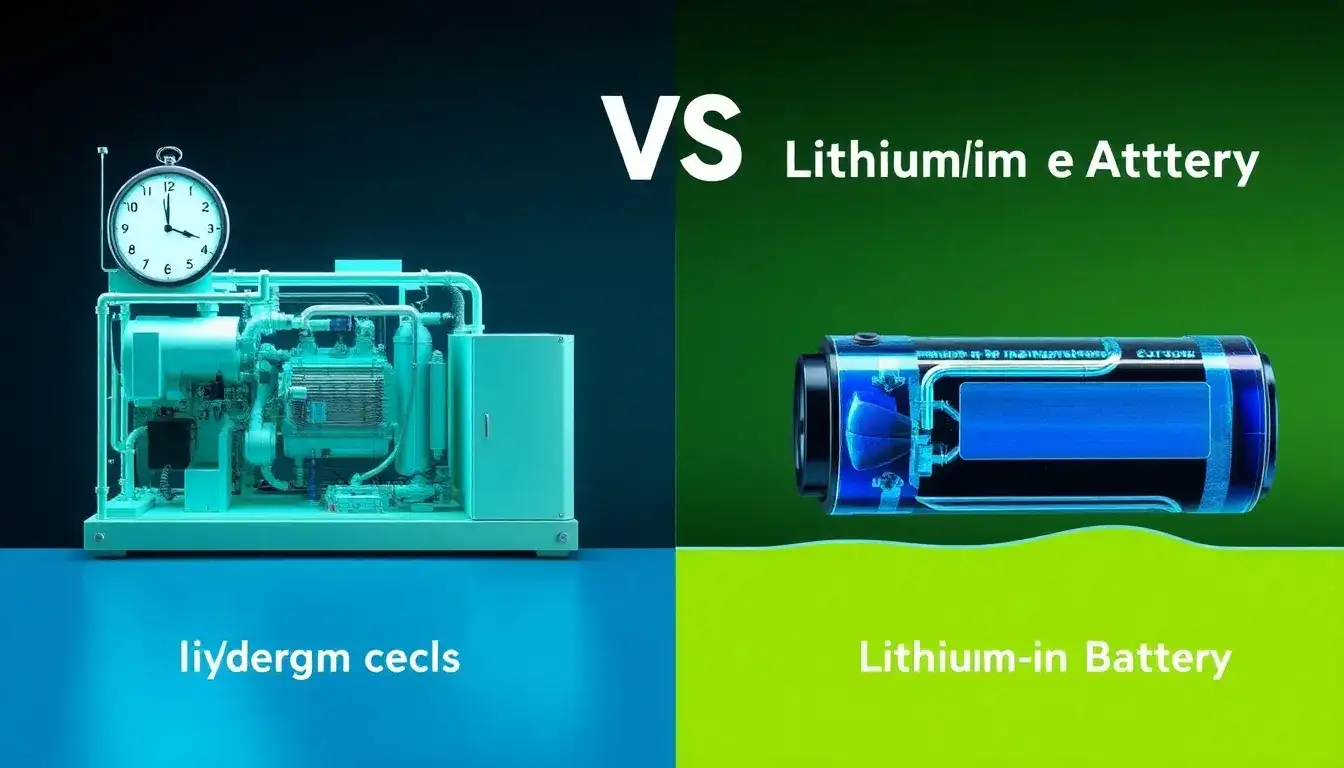
The lifespan of hydrogen fuel cells generally ranges from about 5,000 to 10,000 hours of use, which translates roughly to 5 to 10 years or 150,000 to 300,000 miles in automotive applications under normal conditions. Automakers aim for fuel cell stack lifespans comparable to vehicle engine lifetimes, with passenger car fuel cells often targeted to last at least 5,000 hours (around 150,000-200,000 miles), and heavy-duty fuel cells achieving even longer use, up to 20,000 hours or more, with goals of 30,000 hours by 2030. For example, Toyota designs fuel cell stacks to last the lifetime of their fuel cell vehicles, similar to internal combustion engines in conventional cars, and supports this with warranties and reuse programs.
In comparison, lithium-ion batteries typically used in electric vehicles have a lifespan measuring in terms of charge-discharge cycles, often around 1,000 to 2,000 cycles, which usually corresponds to about 8 to 15 years depending on usage patterns and maintenance. In mileage terms, this often equates to roughly 100,000 to 200,000 miles before significant capacity degradation occurs. The exact lifespan varies widely depending on battery chemistry, thermal management, and operating conditions.
Summary Comparison
| Aspect | Hydrogen Fuel Cells | Lithium-ion Batteries |
|---|---|---|
| Typical lifespan | 5,000-10,000 hours (5-10 years); ~150,000-300,000 miles | About 1,000-2,000 cycles; ~8-15 years; ~100,000-200,000 miles |
| Heavy-duty applications | Up to 20,000+ hours with goals for 30,000 hours (longer lifespan) | Generally shorter lifespan due to cycle limits |
| Vehicle warranty | Often matches vehicle lifetime (e.g., Toyota 100,000 km warranty) | Varies, often 8-10 years in EVs |
| Maintenance and reuse | Fuel cell stacks can be reused or recycled after end of life | Batteries can be recycled but capacity fades permanently |
Overall, hydrogen fuel cells can have a comparable or potentially longer lifespan than lithium-ion batteries in vehicle applications, especially for heavy-duty use, with durability designed to match or exceed conventional engines. Lithium-ion batteries degrade over cycles and time, while fuel cell lifespan depends on operational hours and maintenance but can be engineered for long service life.
Thus, hydrogen fuel cells offer a lifespan competitive with or exceeding that of lithium-ion batteries, particularly in terms of longevity in mileage and operational hours in automotive use.
Original article by NenPower, If reposted, please credit the source: https://nenpower.com/blog/how-does-the-lifespan-of-hydrogen-fuel-cells-compare-to-that-of-lithium-ion-batteries/

