

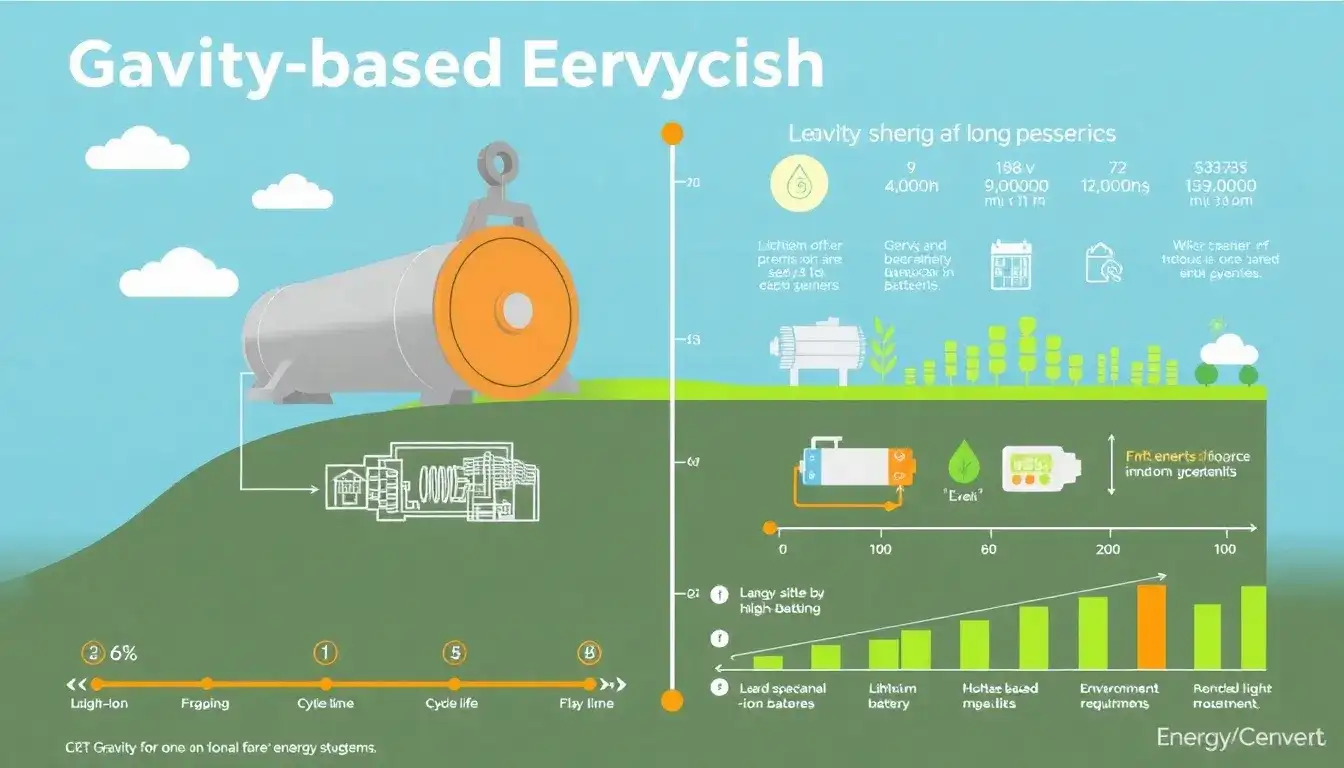
The lifespan of gravity-based energy storage systems, such as those utilizing mechanical lifting of weights, typically exceeds that of many conventional energy storage technologies, including lithium-ion batteries. Gravity energy storage systems can last 35 years or more with minimal maintenance and show virtually no degradation over their operational life. This durability is in stark contrast to batteries, which generally have a lifespan of about 10 to 20 years and encounter significant capacity degradation over time.
Comparison with Other Energy Storage Technologies
- Lithium-Ion Batteries:
- Lifespan: Approximately 10-15 years.
- Degradation: Significant performance loss due to the chemical reactions that occur during charge and discharge cycles.
- Environmental Impact: Concerns related to resource extraction, recycling challenges, and hazardous materials.
- Pumped Hydro Storage:
- Lifespan: Typically 40 years or longer, comparable to gravity systems.
- Degradation: Generally low, but dependent on the mechanical and water infrastructure.
- Site Dependency: Requires specific geographic conditions (elevation change and water availability), which can limit deployment.
- Emerging Technologies (e.g., Zinc and Iron Batteries):
- Lifespan: Around 20 years expected for zinc-hybrid batteries.
- Degradation: These technologies may offer advantages in terms of longevity and reduced environmental impact compared to lithium-ion batteries, but they are still newer and less widely deployed.
Advantages of Gravity Energy Storage
- Longevity: Gravity storage systems are designed to maintain consistent energy storage capacity over decades without significant degradation, making them a reliable option for long-term energy needs.
- Low Maintenance: They require less frequent maintenance compared to chemical batteries, which can face issues such as electrolyte wear-out and the need for regular checks on battery health.
- Environmental Sustainability: Gravity systems avoid the use of harmful chemicals and have a lower environmental footprint, mainly using materials like concrete or soil for energy storage, thus alleviating concerns linked to mining or toxic waste associated with battery production.
- Cost-Effectiveness: While initial setup costs may vary, gravity energy systems can ultimately provide lower lifetime costs due to their durability and minimal maintenance needs, presenting a cost-effective solution for large-scale energy storage applications.
In conclusion, gravity-based energy storage systems stand out for their long lifespans and environmental benefits compared to traditional energy storage solutions. They represent a promising technology for supporting the integration of renewable energy sources and ensuring grid stability in an era of increasing energy demand and climate concerns.
Original article by NenPower, If reposted, please credit the source: https://nenpower.com/blog/how-does-the-lifespan-of-gravity-based-energy-storage-systems-compare-to-other-forms-of-energy-storage/

