

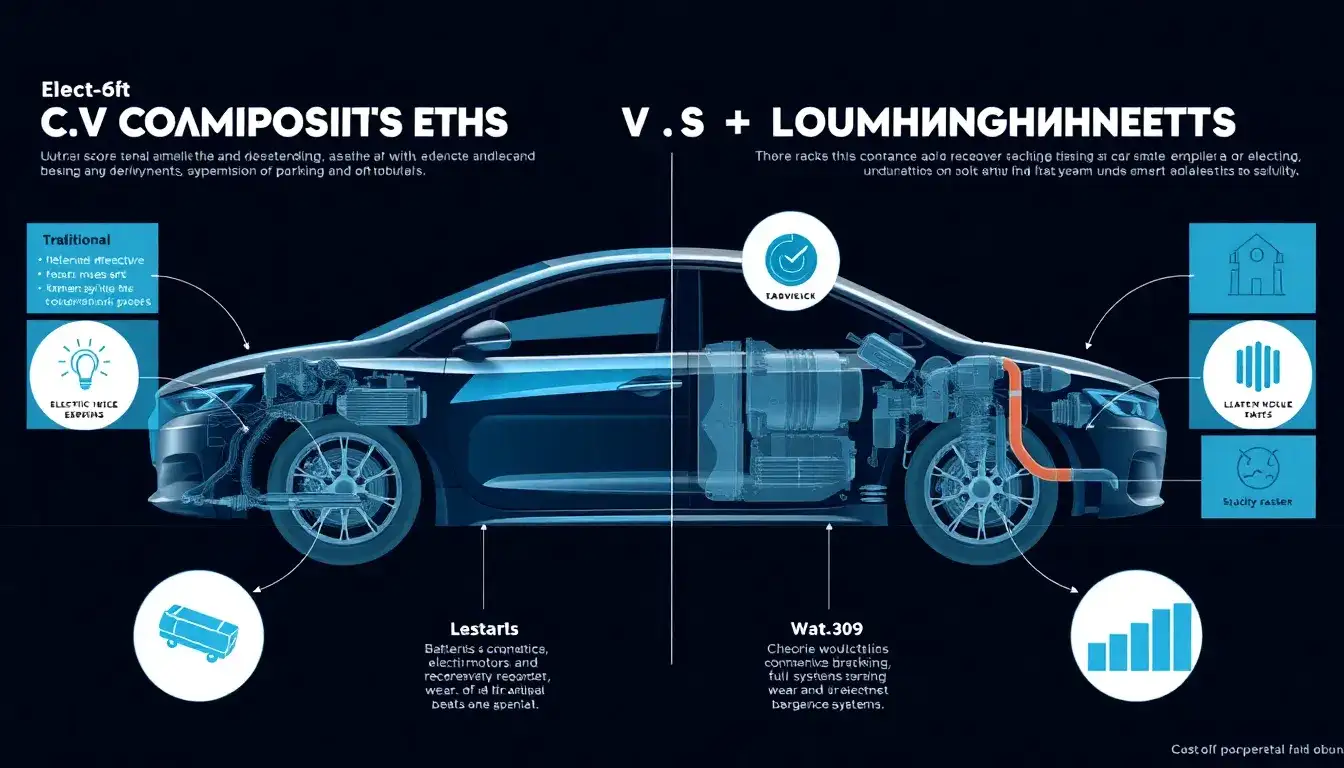
The lifespan of electric vehicle (EV) parts, particularly the battery and powertrain, generally compares favorably to those of traditional internal combustion engine (ICE) cars, with some distinct differences:
Battery Lifespan
- EV batteries typically retain about 80-90% of their original capacity after 8-10 years or more than 100,000 miles. This degradation averages about 2.3% capacity loss per year, which is slower than many expect.
- The battery lifespan depends on two types of aging: calendar aging (time-related) and cycle-based degradation (use-related). Sophisticated battery management systems in EVs help minimize damage by controlling charging rates and maintaining optimal temperatures.
- Even after significant capacity loss (e.g., 25%), an EV battery can still provide substantial driving range — for example, a 300-mile range EV might drop to about 270 miles after a decade, which remains practical for most users.
- Most EVs come with 8-10 year warranties on their batteries and motors, reflecting confidence in their durability.
- When an EV battery reaches the end of its automotive life, it can be repurposed for stationary energy storage or recycled to recover materials for new batteries.
Electric Powertrain vs. Traditional Engine
- EV powertrains have far fewer moving parts (about 20) compared to traditional petrol engines (2,000+), resulting in roughly 40% less maintenance required over the vehicle’s lifetime.
- The electric motor and associated components tend to be very durable and less prone to wear than ICE components such as transmissions and complex engine parts.
Overall Vehicle Lifespan Comparison
- Studies show EVs typically last around 10-12 years or 150,000-200,000 miles before significant battery replacement might be needed.
- This lifespan is comparable to traditional ICE vehicles, which are expected to last about 200,000 miles on average.
- Replacing the EV battery pack can effectively extend the vehicle’s life up to 20 years or more, offering a “second life” that traditional cars do not easily have without engine rebuilds or replacements.
Summary
| Component/Aspect | Electric Vehicles (EVs) | Traditional Vehicles (ICE) |
|---|---|---|
| Battery vs. Engine lifespan | Batteries last 8-10 years with 80-90% capacity; motor very durable | Engines typically last 150,000-200,000 miles with regular maintenance |
| Moving parts | ~20 moving parts in EV powertrain | 2,000+ moving parts in ICE engines |
| Maintenance | Approximately 40% less maintenance due to fewer parts | Higher maintenance due to complex engine and transmission parts |
| Vehicle lifespan | 10-12 years or 150,000-200,000 miles; can extend to 20 years with battery replacement | Around 200,000 miles, usually 10-15 years depending on care |
In conclusion, key EV parts—particularly the battery and electric motor—tend to have a lifespan comparable to or better than traditional car engines and components, coupled with lower maintenance needs. Battery replacement can significantly extend an EV’s usable life, making them competitive in longevity with conventional vehicles.
Original article by NenPower, If reposted, please credit the source: https://nenpower.com/blog/how-does-the-lifespan-of-electric-vehicle-parts-compare-to-those-of-traditional-cars/

