

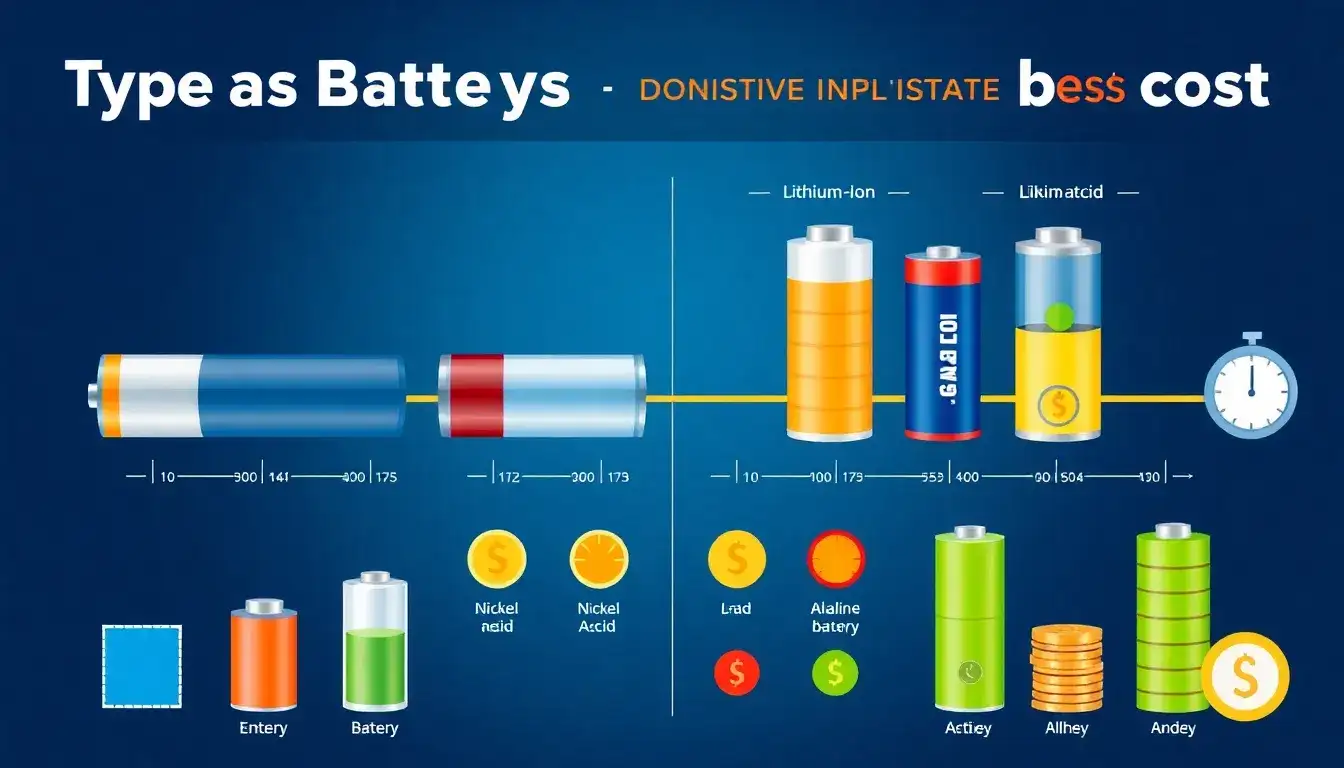
The lifespan of different battery types significantly impacts their overall cost, especially in industrial applications and electric vehicles (EVs). Here’s a detailed analysis of how lifespan correlates with cost, focusing mainly on lithium-ion and lead-acid batteries, as well as EV batteries.
Lifespan Comparison of Battery Types
Lithium-ion Batteries
- Lifespan: Lithium-ion batteries typically last between 3,000 to 5,000 charge cycles or about 10 years, depending on usage and conditions. This range translates into 2 to 4 times longer lifespan compared to lead-acid batteries, making them more durable under high-usage conditions.
- Cost Impact: Although the initial cost of lithium-ion batteries is higher (ranging from $700 to $2000), their longevity means they require fewer replacements over time. This results in lower long-term costs regarding purchasing, installation, and disposal. The minimal maintenance required and greater energy efficiency (which can lead to reduced electricity costs by 30%) further enhance their economic appeal.
Lead-Acid Batteries
- Lifespan: Lead-acid batteries generally last between 300 to 500 charge cycles. This shorter lifespan necessitates frequent replacements, often within the same time frame that one lithium-ion battery would serve.
- Cost Impact: The upfront cost is lower (between $150 to $1500), but the need for replacement every few years can accumulate substantial costs over time. Additional expenses arise from maintenance requirements, such as regular watering and cleaning, which further drive up the cost of ownership.
Electric Vehicle (EV) Batteries
- Lifespan and Costs: EV batteries, mostly composed of lithium-ion technology, can experience lifespans similar to or slightly better than traditional lithium-ion batteries, often lasting 8 years or 100,000 miles under warranty, and some studies suggest they can last up to 280,000 miles with proper care. Replacement costs for these batteries can range from $5,000 to $16,000 depending on the model and size, with prices decreasing as battery technology improves (from over $400/kWh to around $111/kWh by late 2024).
Long-Term Cost Analysis
Total Cost of Ownership: The total cost of ownership for batteries must consider the purchase price, lifespan, maintenance, and energy efficiency. While lead-acid batteries have a lower initial cost, their higher replacement frequency and maintenance needs offset this advantage, leading to a higher total cost over time. In contrast, lithium-ion batteries, despite their initial expense, provide better value with their longevity and lower operational costs.
Conclusion
The lifespan of batteries plays a crucial role in determining their overall costs. Lithium-ion batteries, with their significantly longer lifespan, offer lower long-term costs despite higher upfront prices. In contrast, lead-acid batteries may seem economically viable initially but quickly become more expensive due to shorter lifespans and ongoing maintenance needs. For EVs, advancements in battery technology continue to enhance longevity while reducing costs, making them a more attractive option in the long run.
Original article by NenPower, If reposted, please credit the source: https://nenpower.com/blog/how-does-the-lifespan-of-different-battery-types-affect-their-overall-cost/

