

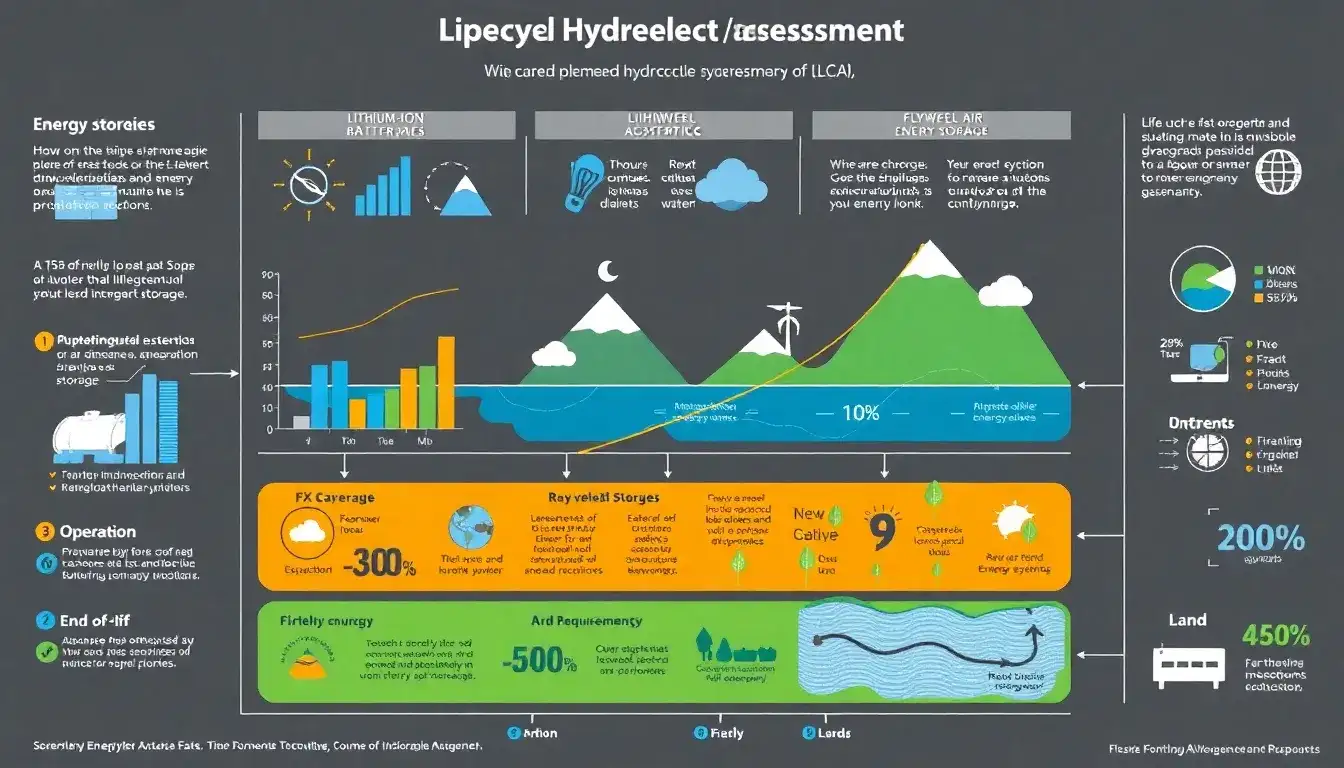
Life Cycle Assessment of Pumped Hydroelectric Energy Storage Compared to Other Technologies
Overview of Pumped Hydroelectric Energy Storage (PHES)
Pumped hydroelectric energy storage is a widely used technology for grid-scale energy storage, enabling the efficient storage and release of electrical energy at times of high and low demand. It involves pumping water from a lower reservoir to an upper reservoir during off-peak periods and releasing it back to generate electricity during peak demand.
Life Cycle Assessment (LCA) of PHES
Environmental Impact: Studies have shown that PHES generally exhibits low life cycle greenhouse gas (GHG) emissions compared to other energy storage technologies, making it environmentally favorable. However, GHG emissions can vary based on the energy mix used for pumping water and the materials used in construction.
Sustainability Indicators: Life cycle sustainability assessments (LCSA) for PHES include economic, environmental, and social indicators. While conventional PHES shows better economic and environmental performance due to economies of scale, underground PHES may have a better social impact by utilizing abandoned mine pits and avoiding excavation impacts.
Comparison with Other Energy Storage Technologies
- Compressed Air Energy Storage (CAES): CAES has been shown to have lower net GHG emissions than PHES when coupled with non-renewable energy sources, but PHES remains a preferred choice when integrated with renewable energy systems.
- Battery Storage: Battery technologies, such as lithium-ion batteries, have higher GHG emissions throughout their life cycle compared to PHES, mainly due to material extraction and manufacturing processes.
Conclusion
Pumped hydroelectric energy storage offers several advantages over other energy storage technologies, particularly in terms of low life cycle GHG emissions when combined with renewable energy sources. However, factors such as geographical constraints and the energy mix used for pumping can affect its overall sustainability.
Key Takeaways:
- Low GHG Emissions: PHES generally shows lower life cycle GHG emissions compared to other energy storage technologies when paired with renewable energy.
- Economies of Scale: Conventional PHES benefits from economies of scale, making it economically and environmentally more favorable than alternatives like underground PHES.
- Geographical Constraints: PHES requires specific geographical conditions, limiting its deployment compared to more flexible technologies like battery storage.
- Sustainability Indicators: LCSA highlights the importance of social, economic, and environmental considerations in assessing PHES’s overall sustainability.
Original article by NenPower, If reposted, please credit the source: https://nenpower.com/blog/how-does-the-life-cycle-assessment-of-pumped-hydroelectric-energy-storage-compare-to-other-energy-storage-technologies/

