

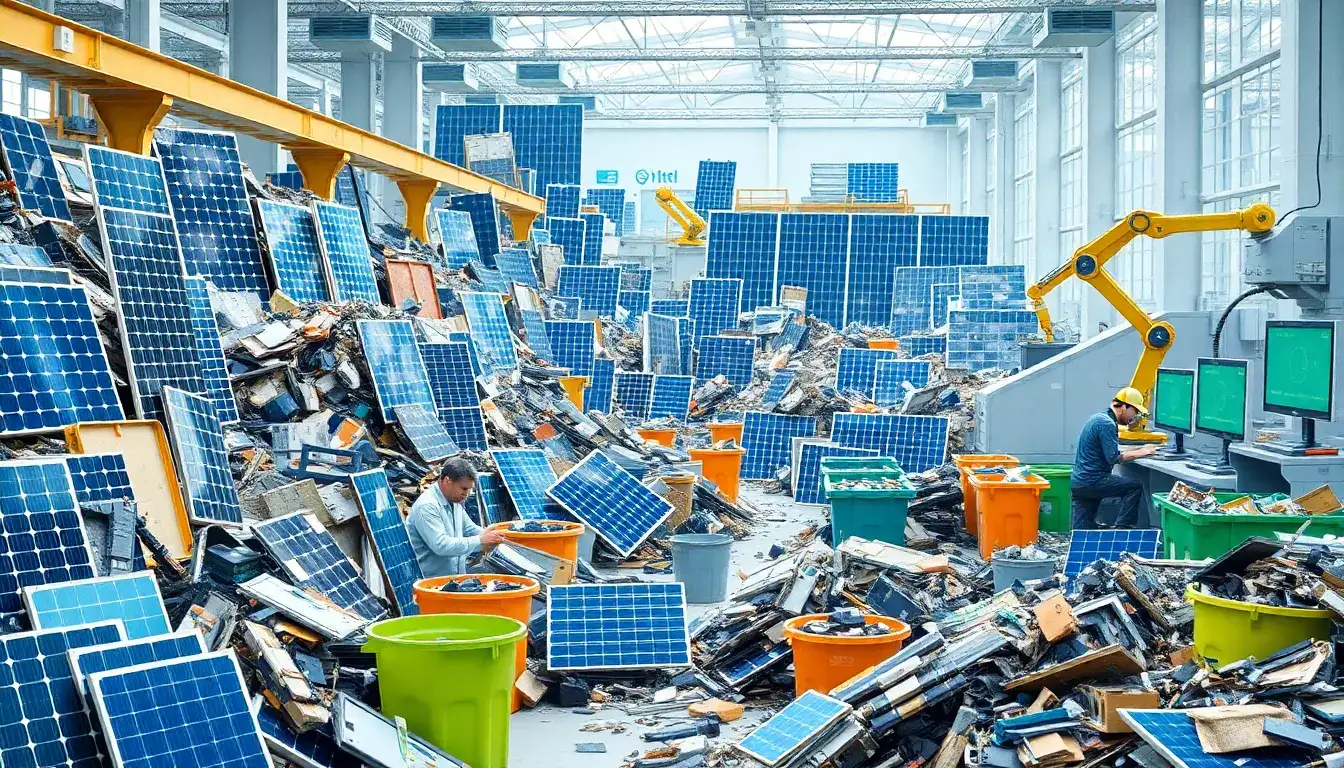
The lack of standardization significantly impacts the efficiency of solar panel recycling in several key ways:
1. Inconsistent Handling and Processing Methods
Without standardized regulations and processes, solar panels vary widely in design, materials, and construction, making it difficult for recyclers to efficiently dismantle and recover valuable components. This inconsistency leads to more labor-intensive, slower, and costly recycling operations as facilities must tailor their methods to different panel types rather than applying uniform procedures.
2. Increased Complexity and Costs
Recycling facilities face challenges in sorting and managing diverse waste streams due to the absence of uniform standards. This complexity raises operational costs and reduces the economic viability of recycling, hindering investments in dedicated infrastructure and technology that would improve recovery rates.
3. Safety and Environmental Concerns
Without clear guidelines and standards, improper handling of solar panels can result in hazardous waste management issues, especially given some panels contain toxic materials regulated under hazardous waste laws. Standardization helps ensure compliant, safe disposal and recycling practices, but its absence increases environmental risks and regulatory uncertainty for recyclers.
4. Barriers to Market Development
The evolving nature of solar technology and the lack of an established, widely adopted recycling standard hinder the creation of a robust recycling market. This delays the building of specialized facilities and certification processes that can assure quality and sustainability in solar panel recycling.
Progress Towards Standardization
Efforts like the R2 Standard for solar panel reuse and recycling are addressing this gap by providing a baseline for processing solar panels. These initiatives aim to create uniform guidelines for recycling operations, improving efficiency, safety, and environmental outcomes as they gain wider adoption.
In summary, the absence of standardization leads to inefficiencies, higher costs, safety risks, and slower growth in solar panel recycling capacity. Establishing and implementing standards like the R2 framework is critical to unlocking more efficient, sustainable recycling pathways for end-of-life solar panels.
Original article by NenPower, If reposted, please credit the source: https://nenpower.com/blog/how-does-the-lack-of-standardization-impact-the-efficiency-of-solar-panel-recycling/

