

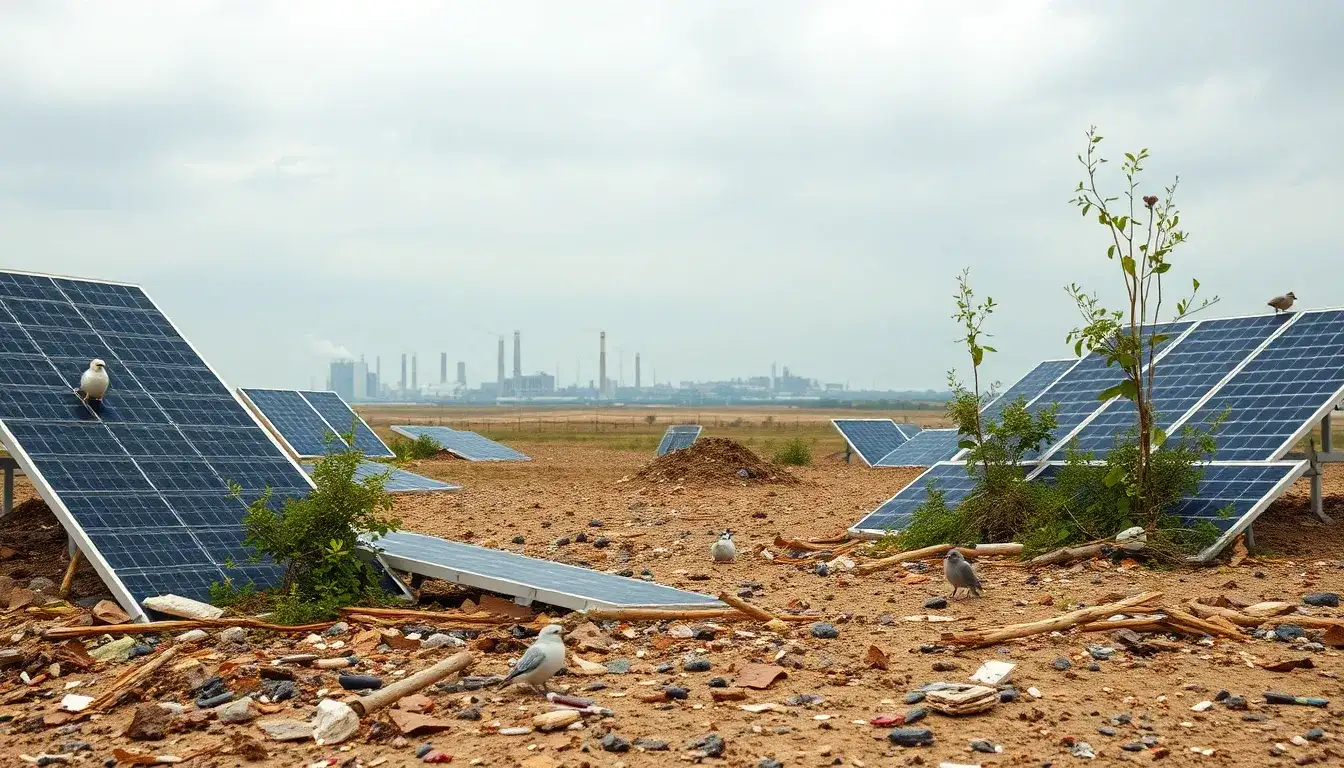
The lack of recycling infrastructure significantly undermines the environmental sustainability of solar energy by increasing waste, resource depletion, and environmental harm associated with the disposal of end-of-life solar panels.
Impact of Lack of Recycling Infrastructure on Solar Energy Sustainability
- Increased Waste and Landfill Use
Without adequate recycling infrastructure, old or faulty solar panels often end up in landfills, where valuable materials such as silicon, silver, aluminum, and glass are lost. This not only wastes finite resources but also fills landfill space and risks leaching toxic substances like lead and cadmium into soil and groundwater, posing environmental and health hazards. - Greater Extraction of Virgin Materials
When recycling is not available, manufacturers must rely on extracting raw materials through energy-intensive mining processes. This leads to increased environmental degradation, including habitat destruction and water pollution, which recycling could mitigate by recovering up to 95% of semiconductor materials and 90% of glass from retired panels. - Higher Carbon Footprint
Recycling solar panels reduces the carbon footprint of solar energy by preventing the need for new raw material extraction. Proper recycling can save approximately 1,200 pounds of CO2 emissions per ton of recycled panels and reduce the energy required for producing new panels by up to 50%. Without recycling infrastructure, these emission-saving benefits are lost, reducing the overall climate benefits of solar energy. - Hindrance to Circular Economy Models
Recycling supports a circular economy where valuable materials are reused, minimizing waste and resource consumption. Lack of infrastructure stalls the transition to this sustainable model, locking the solar industry into linear “take-make-dispose” practices that are environmentally harmful and resource-inefficient. - Threat to Industry Reputation and Sustainability Goals
The solar industry’s sustainability depends on responsible lifecycle management of panels, including end-of-life recycling. Insufficient recycling infrastructure threatens this by allowing environmental harms and inefficiencies to persist, undermining the credibility of solar energy as a clean and sustainable solution.
Summary Table
| Impact Area | Consequence of Lack of Recycling Infrastructure |
|---|---|
| Waste Management | Increased landfill waste, toxic leachate risk |
| Resource Use | More mining and raw material extraction, resource depletion |
| Carbon Emissions | Higher CO2 emissions from raw material extraction |
| Energy Consumption | More energy required for manufacturing new panels |
| Circular Economy Development | Stalled progress toward sustainable, closed-loop material cycles |
| Industry Sustainability | Undermined credibility and environmental benefits of solar energy |
In conclusion, the absence of adequate solar panel recycling infrastructure reduces the environmental sustainability of solar energy by increasing waste, greenhouse gas emissions, and resource exploitation, while preventing the adoption of circular economy practices essential for truly sustainable renewable energy systems. Developing and expanding recycling capabilities is critical to ensuring that solar energy remains an environmentally responsible and sustainable power source.
Original article by NenPower, If reposted, please credit the source: https://nenpower.com/blog/how-does-the-lack-of-recycling-infrastructure-impact-the-environmental-sustainability-of-solar-energy/

