

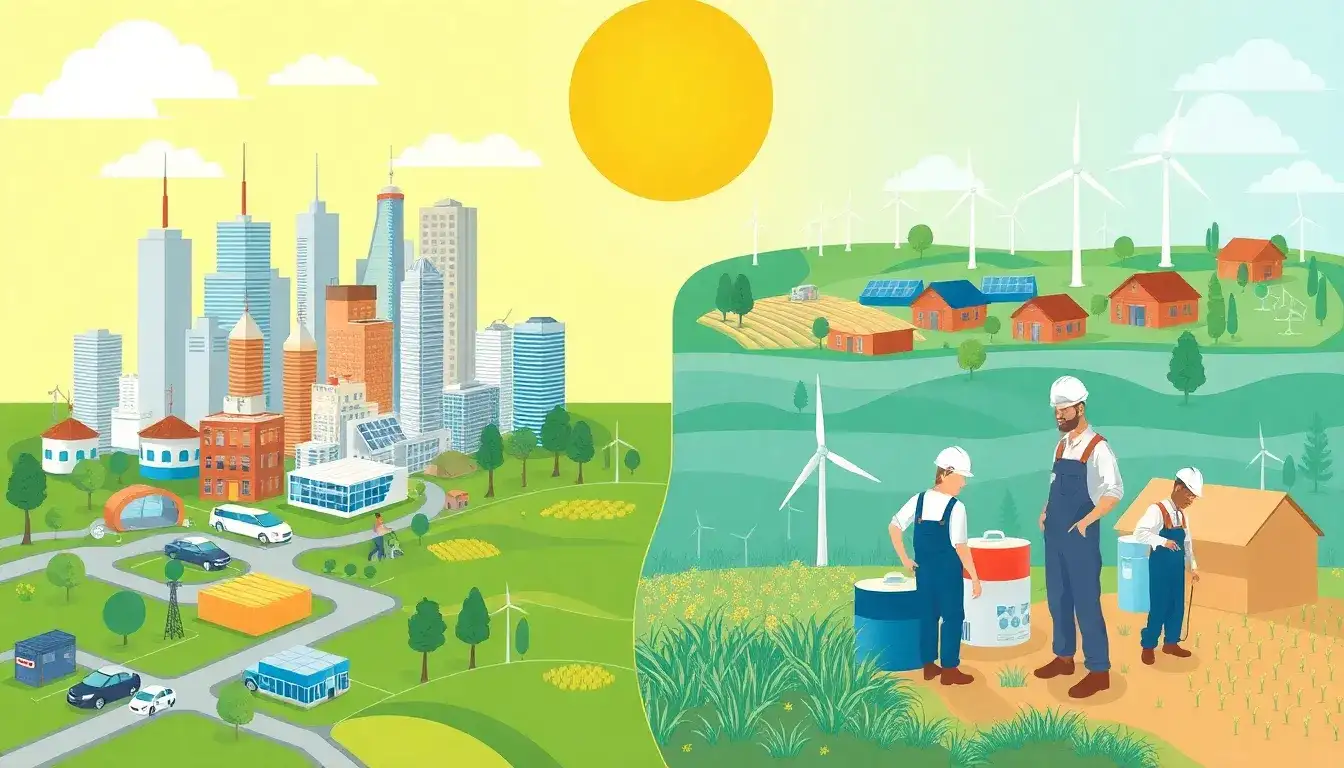
The job market for energy storage shows notable differences between urban and rural areas, shaped by factors such as deployment scale, technology types, and local energy needs.
Energy Storage Jobs in Rural Areas
- Higher Proportion of Clean Energy Jobs: Rural counties in the U.S. have a higher share of clean energy jobs relative to fossil fuel jobs, with clean energy employment making up more than 5% of total jobs in many rural counties. In fact, clean energy jobs outnumber fossil fuel jobs in about 81% of rural counties, reflecting strong growth in renewable energy sectors including energy storage.
- Growth and Opportunities: Rural areas have experienced relatively faster growth in clean energy jobs, including energy storage, compared to urban areas. For example, rural counties in Texas saw a 19% increase in clean energy jobs between 2017 and 2019, nearly doubling the urban growth rate.
- Energy Storage for Remote and Isolated Communities: Rural and isolated communities often rely on remote power systems (e.g., diesel generators), making energy storage an attractive solution to reduce fuel consumption and costs. The strong business case in these areas drives demand for energy storage systems tailored to off-grid or remote locations.
- Long-term Maintenance Jobs: Large-scale, ground-mounted energy storage and solar facilities in rural areas generate employment not only during construction but also for ongoing maintenance and operations, providing sustained local job opportunities.
Energy Storage Jobs in Urban Areas
- Diverse and Specialized Roles: Urban energy storage jobs often focus on more specialized roles such as system design, engineering, and integration with building infrastructure due to space constraints and the complexity of urban energy systems.
- Smaller-Scale and Innovative Applications: Urban areas tend to deploy energy storage with smaller-scale or integrated technologies (e.g., building-integrated photovoltaics coupled with batteries), which require skilled technicians and engineers for installation and ongoing management.
- Broad Geographic Distribution: Since energy storage technologies can be used wherever energy is consumed or generated, jobs exist across urban, suburban, and rural areas, but the nature of jobs varies based on local energy infrastructure and deployment patterns.
- Urban Infrastructure Development: Rapid urbanization increases demand for electrical infrastructure, including energy storage, to support grid stability and renewable integration. This drives job creation targeting urban grid modernization and advanced energy management systems.
Summary Comparison
| Aspect | Rural Areas | Urban Areas |
|---|---|---|
| Job Types | Construction, large-scale system maintenance, remote off-grid projects | Specialized system design, engineering, integration, and urban grid management |
| Growth Rate | Often higher; driven by renewable expansion and need to replace fossil fuels | Moderate growth; focus on innovation and dense infrastructure |
| Energy Storage Use Cases | Off-grid energy storage to reduce diesel reliance, large ground-mounted systems | Building-integrated storage, grid stability, space-constrained solutions |
| Employment Characteristics | More entry-level and mid-skill jobs in installation and maintenance | More specialized and technical roles requiring advanced skills |
| Geographic Employment Spread | Concentrated in rural counties with renewable resource availability | Distributed across urban centers with dense energy demand |
In conclusion, while energy storage jobs exist in both urban and rural areas, rural areas tend to have more jobs tied to large-scale deployment and remote power solutions with strong growth in clean energy sectors, whereas urban areas emphasize specialized, technical roles supporting integrated and smaller-scale energy storage solutions critical for urban energy resilience.
Original article by NenPower, If reposted, please credit the source: https://nenpower.com/blog/how-does-the-job-market-for-energy-storage-differ-between-urban-and-rural-areas/

