

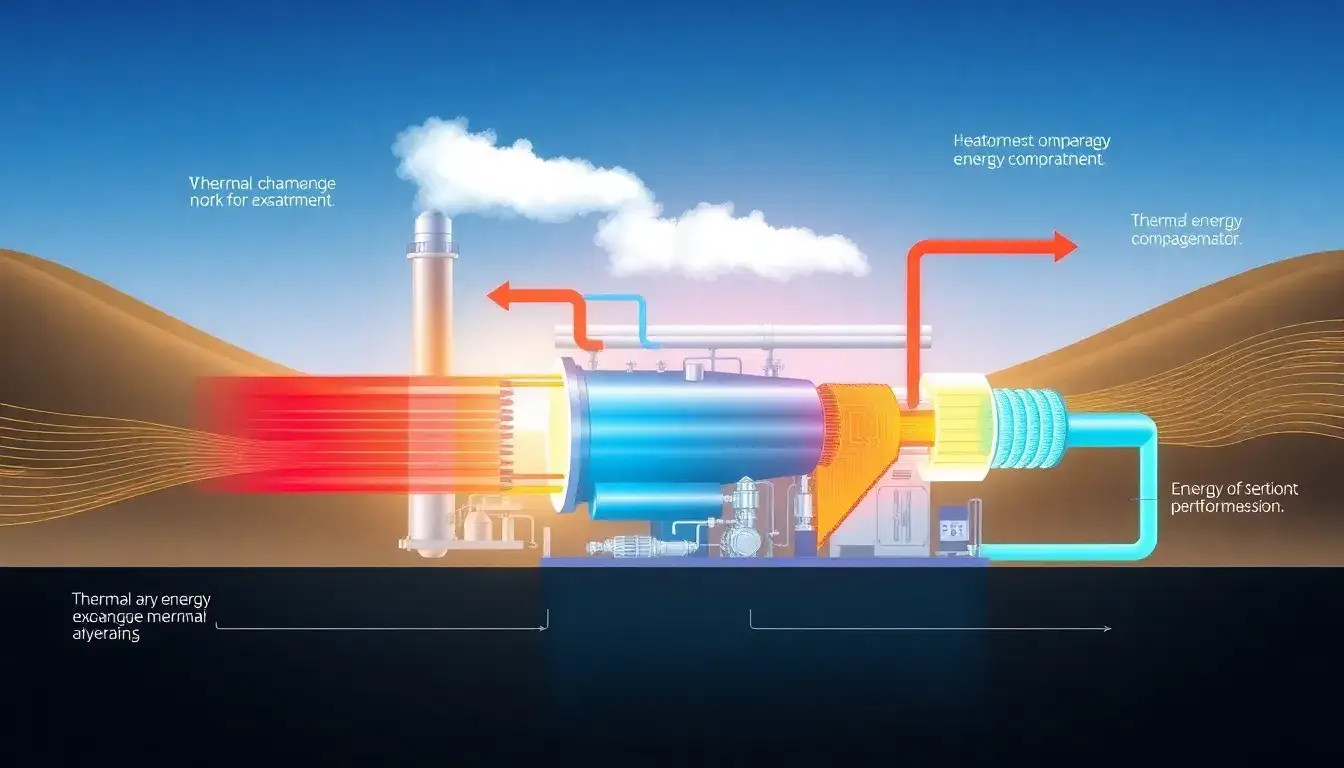
The isothermal process in Compressed Air Energy Storage (CAES) systems
Isothermal process in Compressed Air Energy Storage (CAES) systems significantly improves efficiency by maintaining a constant temperature during both the compression and expansion phases. Here are the key ways it enhances efficiency:
Key Improvements
- Reduced Heat Loss: In conventional CAES systems, a significant amount of energy is lost as heat during compression. Isothermal CAES addresses this by continuously removing heat generated during compression, thus minimizing this energy loss.
- Increased Round-Trip Efficiency: Theoretically, isothermal CAES can achieve a round-trip efficiency of 100%, although practical limitations reduce this to about 80%. This is much higher than traditional CAES, which typically achieves efficiencies of around 40-50%.
- Cost Reduction: By maintaining a constant temperature, isothermal CAES reduces the need for costly cooling systems and can store more air at lower costs. It is estimated that storage costs can be reduced to about one-seventh of those in conventional CAES systems.
- Operational Flexibility: Isothermal CAES allows for more flexible operation, as it does not require the use of fossil fuels for reheating the air during expansion, unlike conventional CAES systems.
- Technological Advancements: Advanced heat exchange systems are often used in isothermal CAES. Techniques like injecting water sprays into the compression chamber enhance heat transfer and help maintain a constant temperature.
Challenges and Practical Limitations
Despite these improvements, isothermal CAES faces challenges such as requiring sophisticated heat management systems and large surface areas for efficient heat exchange. Additionally, the extracted heat during compression is often wasted, similar to traditional CAES systems.
Overall, isothermal CAES represents a significant advancement in energy storage efficiency by minimizing thermal losses and maximizing the utilization of compressed air energy.
Original article by NenPower, If reposted, please credit the source: https://nenpower.com/blog/how-does-the-isothermal-process-improve-the-efficiency-of-caes-systems/

