

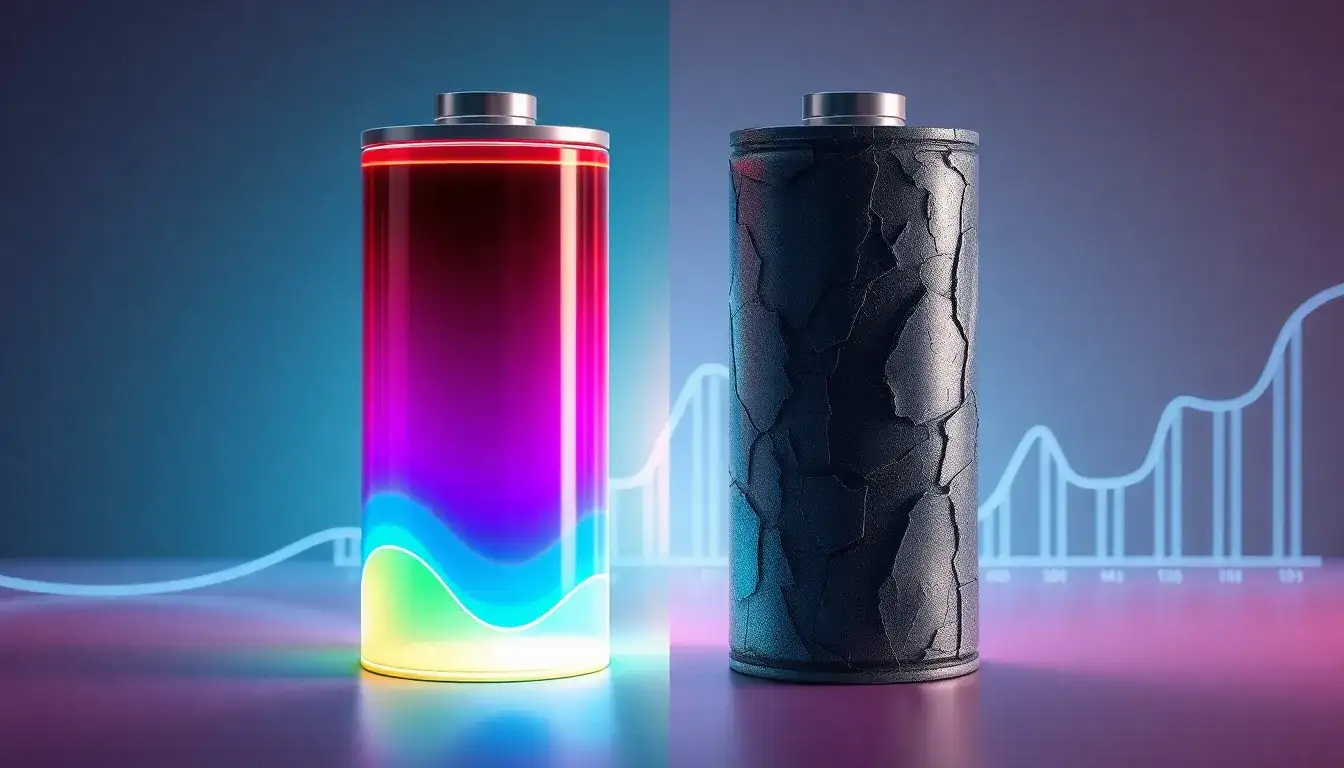
The internal resistance of a lithium-ion battery changes over time due to various factors that contribute to its degradation. Here’s a detailed explanation:
Factors Influencing Internal Resistance Over Time
- Aging and Cycle Count: As a lithium-ion battery ages and undergoes more charge-discharge cycles, its internal components degrade, leading to an increase in internal resistance. This degradation is due to weakened chemical reactions within the battery cells.
- Temperature and Environmental Conditions: High temperatures accelerate chemical reactions, which can lead to increased internal resistance over time. Conversely, low temperatures raise internal resistance but do not accelerate long-term degradation as much as high temperatures do.
- State of Charge (SoC) and Depth of Discharge: While lithium-ion batteries show relatively stable internal resistance across the state of charge, deep discharging can cause permanent increases in resistance.
- Material Degradation: Over time, the electrodes and electrolyte degrade, increasing resistance to ion movement within the battery.
Impact of Increasing Internal Resistance
As internal resistance increases over time, it leads to several performance issues:
- Reduced Efficiency: More energy is lost as heat during charge and discharge cycles, reducing the effective capacity of the battery.
- Increased Heat Generation: Higher resistance generates more heat, which can lead to safety hazards and further degradation.
- Decreased Power Output: The battery’s ability to deliver power, especially under high loads, is compromised.
- Shortened Lifespan: Increased internal resistance signifies that the battery’s chemical reactions are becoming less efficient, contributing to a shorter lifespan.
Maintaining Lower Internal Resistance
To mitigate the increase in internal resistance over time:
- Use high-quality materials and optimized battery designs.
- Control charging and discharging rates to prevent excessive heat generation.
- Implement efficient temperature management.
- Regularly monitor and maintain the battery to detect rising internal resistance early.
Original article by NenPower, If reposted, please credit the source: https://nenpower.com/blog/how-does-the-internal-resistance-of-a-lithium-ion-battery-change-over-time/

