

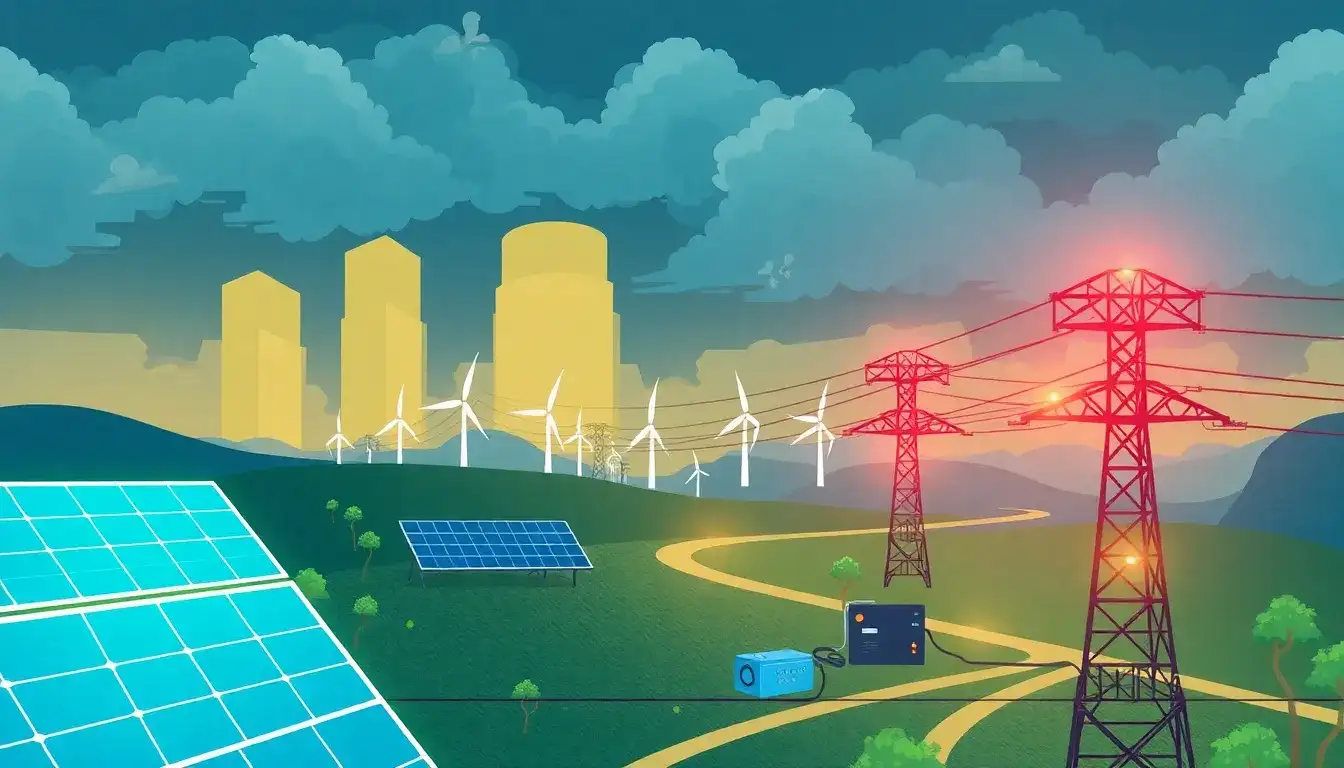
The intermittency of renewable energy sources, such as solar and wind power, significantly impacts grid stability due to their variability and unpredictability. These sources are dependent on weather conditions, leading to fluctuations in energy production that can disrupt the balance between electricity supply and demand. Here are some key ways that intermittency affects grid stability:
Impact of Intermittency on Grid Stability
- Fluctuations in Supply and Demand: The unpredictable output of solar and wind power means that there can be sudden increases or decreases in electricity supply. This can lead to mismatches between supply and demand, causing fluctuations in grid frequency and voltage.
- Grid Frequency and Voltage Control: Maintaining consistent frequency and voltage is essential for grid stability. However, renewable sources like solar panels lack inertia (the ability of a system to resist changes in its state), making it more challenging to regulate frequency and voltage during system failures.
- Overproduction and Underproduction: On very sunny or windy days, renewables can overproduce energy, causing spikes that strain grid infrastructure. Conversely, during periods of low wind or sunlight, they may underproduce, requiring backup power sources to meet demand.
- Impact on Long-Term Grid Planning: Traditional grid planning must adapt to account for the unpredictability of renewable sources. This involves more advanced planning models that consider weather patterns and technological advancements to ensure grid reliability.
Solutions for Enhancing Grid Stability
To mitigate the effects of intermittency on grid stability, several strategies are employed:
- Energy Storage Systems: Technologies like batteries, pumped hydro storage, and compressed air energy storage can store excess energy during periods of high production and release it when needed, thus smoothing out supply fluctuations.
- Smart Grid Technologies: Advanced control systems and smart grids enable real-time monitoring and management of energy flow, allowing for more efficient integration of renewable energy sources.
- Demand Response Programs: These programs encourage consumers to adjust their energy use based on the availability of renewable energy, helping to balance supply and demand.
- Grid Infrastructure Upgrades: Modernizing grid infrastructure with grid-enhancing technologies (GETs) helps in better accommodating renewable energy sources.
By addressing intermittency through these strategies, grid stability can be maintained despite the challenges posed by renewable energy sources, supporting a transition towards a sustainable energy future.
Original article by NenPower, If reposted, please credit the source: https://nenpower.com/blog/how-does-the-intermittency-of-renewable-energy-sources-affect-grid-stability/

