

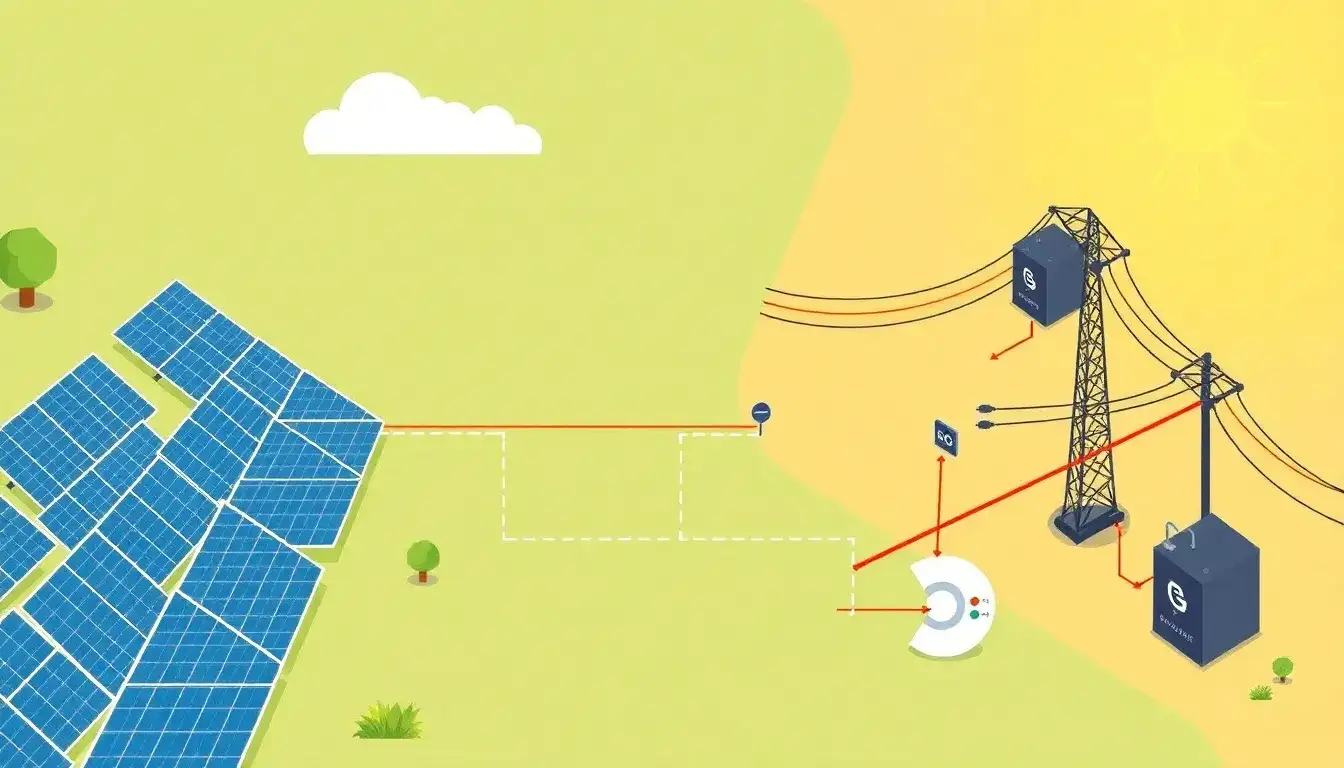
The interconnection process for solar-plus-storage projects differs from typical solar-only projects primarily because it involves additional complexity related to the energy storage component. This leads to distinct regulatory, technical, and procedural considerations:
Key Differences in the Interconnection Process for Solar-Plus-Storage
1. Regulatory and Rule Updates
- Many state interconnection rules were originally designed for generation-only systems and do not explicitly include energy storage, causing delays and extra costs when solar projects add batteries.
- Updating interconnection rules to clearly incorporate energy storage and its pairing with solar generation brings clarity for developers, utilities, and regulators, streamlining the process.
2. Accounting for Energy Storage Flexibility
- Energy storage systems can store excess solar energy during the day and export it to the grid later (e.g., evening peak times). However, many existing interconnection screening processes do not account for this temporal flexibility.
- Unlike solar-only systems that export power primarily when generating, solar-plus-storage projects can both inject and draw power at different times, complicating impact assessments and grid reliability analysis.
3. Impact Studies and Scheduling
- Traditional interconnection studies often assume continuous or peak export during solar generation hours. Solar-plus-storage projects require updated impact study procedures that consider energy storage operation schedules and their effects on grid stability.
- Regulators are encouraged to develop standards for scheduling energy storage dispatch, giving utilities confidence that these projects will operate reliably and safely.
4. Technical Interconnection Components
- Solar-plus-storage systems frequently use hybrid inverters capable of managing both solar generation and battery charging/discharging. These inverters must comply with interconnection technical requirements and facilitate bi-directional power flow.
- The complexity of managing both generation and storage necessitates additional coordination with utilities to ensure proper protection, control, and communication systems.
Summary
| Aspect | Solar-Only Projects | Solar-Plus-Storage Projects |
|---|---|---|
| Interconnection Rules | Often exclude storage, simpler | Rules must explicitly include storage concepts |
| Impact Studies | Based mainly on solar export patterns | Must consider charging/discharging schedules |
| Grid Interaction | One-way export during daylight hours | Bi-directional flow, flexible timing |
| Technical Equipment | Standard PV inverters | Hybrid inverters managing solar+storage |
| Scheduling and Operation | Limited operational flexibility | Requires defined operation schedules for storage |
| Regulatory Clarity | Clear, mature framework for solar-only | Requires updated terminology and standards |
Overall, the interconnection process for solar-plus-storage projects requires modernized rules and technical standards that reflect the unique capabilities and operation of energy storage paired with solar. These enhancements reduce delays and costs, improve grid integration, and enable projects to maximize their value and reliability.
Original article by NenPower, If reposted, please credit the source: https://nenpower.com/blog/how-does-the-interconnection-process-differ-for-solar-plus-storage-projects/

