

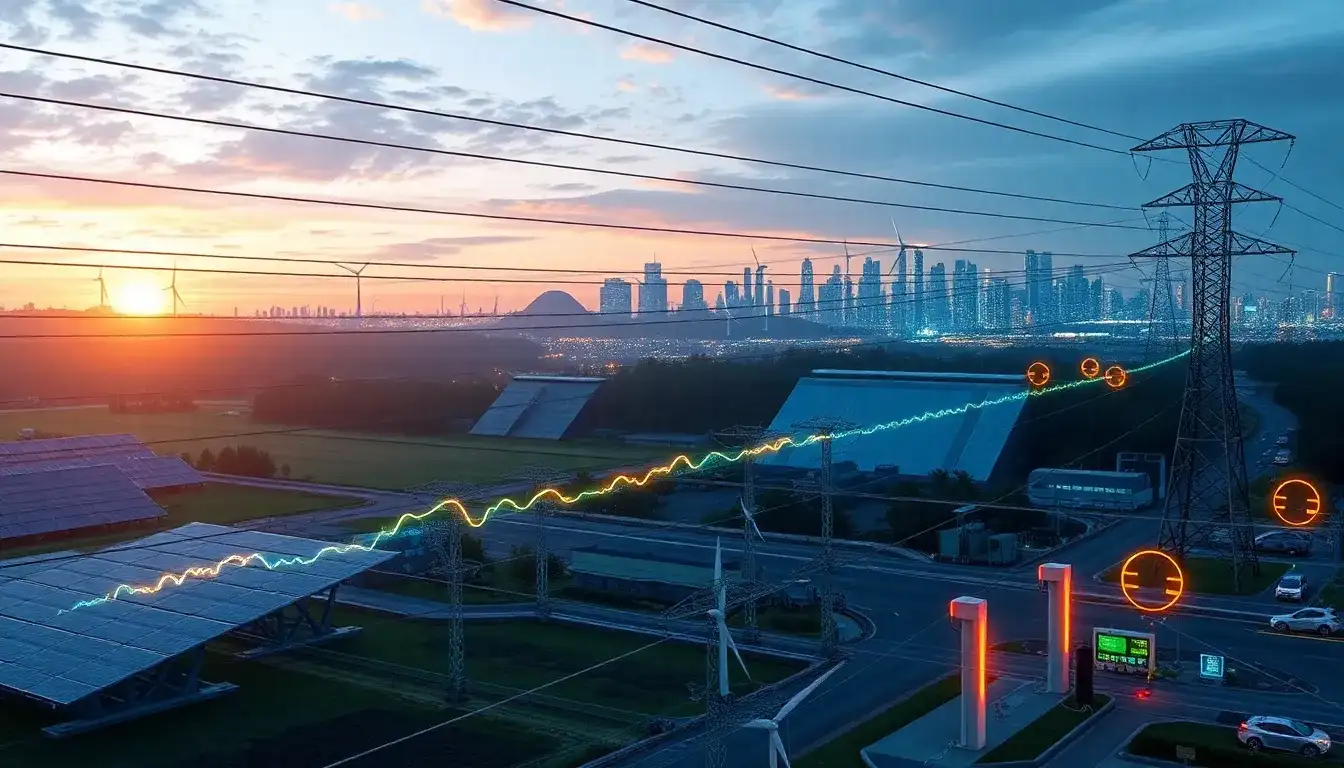
The integration of renewable energy sources (RES)
such as photovoltaic (PV) and wind into power systems impacts voltage stability in several significant ways due to their unique characteristics compared to conventional synchronous generators.
Effects on Voltage Stability
- Reduction in Voltage Stability Margin: High penetration of renewables, especially PV, tends to reduce the voltage stability margin because renewables generally lack inherent voltage regulation and reactive power support capabilities that synchronous machines provide.
- Voltage Fluctuations and Instability: Variable and intermittent renewable generation causes frequent rapid changes in power output, leading to voltage sags, swells, and flickers which challenge the static voltage stability of the grid. For instance, passing cloud cover on PV can cause sudden voltage drops at integration points.
- Reactive Power Imbalance: Renewable generators interfaced through inverters often have limited or no reactive power support by default, causing reactive power imbalances that degrade voltage regulation and stability. Without adequate reactive power compensation, voltage collapse risk increases under high renewable penetration.
- Overvoltage Risks: When PV inverters inject reactive current for voltage control, overvoltage at the point of connection can occur, especially when the converter capacity is fully used or exceeded. This can provoke abrupt voltage collapse phenomena.
- Impact of Network Topology and Aggregation: The topology of how renewables are connected influences voltage stability. Radial or parallel connections of aggregated renewable sources tend to offer better static-voltage stability compared to other configurations.
Mitigation and Improvement Measures
- Reactive Power Compensation: Using devices like shunt capacitors, static VAR compensators (SVC), static synchronous compensators (STATCOM), and smart inverters with advanced control strategies enhances reactive power support, directly improving voltage stability in grids with high RES penetration.
- Advanced Control and Monitoring: Grid technologies such as real-time monitoring, automated voltage control, and sophisticated inverter algorithms provide dynamic reactive power support and harmonic compensation, helping maintain voltage stability.
- Selection of Integration Nodes: Planning renewable integration at nodes with favorable impedance and topology, such as nodes with higher impedance model index values, can improve the voltage stability margin of the network.
- Energy Storage and Flexible AC Transmission Systems (FACTS): Incorporating energy storage and FACTS devices helps manage variability and reactive power demands, smoothing voltage profiles and enhancing stability.
Summary
The integration of renewable energy sources affects voltage stability by introducing variability, reducing reactive power support, and generating voltage fluctuations and overvoltage risks. However, these impacts can be mitigated and even reversed by employing reactive power compensation devices, optimizing network topologies, using advanced inverter and control technologies, and improving system planning strategies. As renewable penetration grows, careful attention to voltage stability considerations, including reactive power management and network configuration, becomes crucial to maintaining secure and stable power system operation.
Original article by NenPower, If reposted, please credit the source: https://nenpower.com/blog/how-does-the-integration-of-renewable-energy-sources-affect-voltage-stability/

