

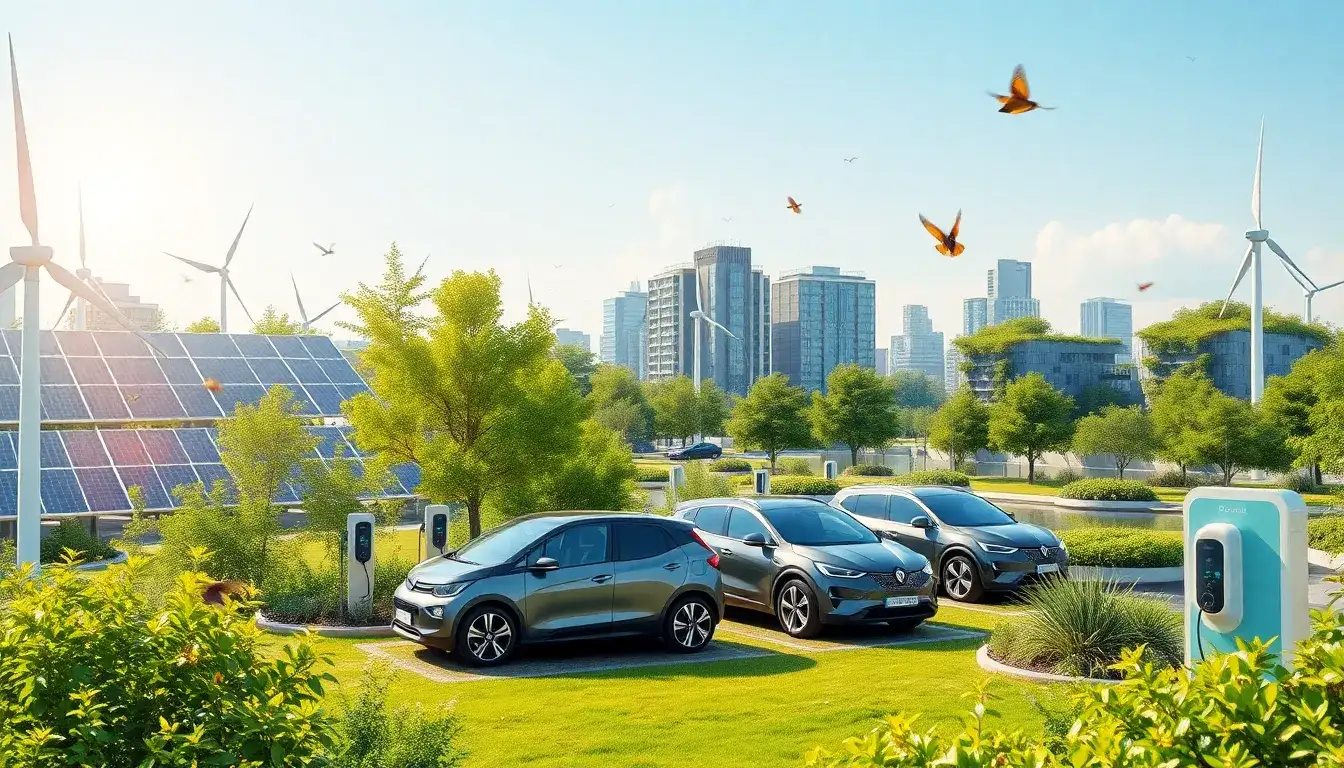
The integration of renewable energy into electric vehicle (EV) charging stations significantly reduces their environmental footprint. Here are some key ways this integration impacts the environment:
Reduced Carbon Emissions
- Renewable Energy Sources: By using renewable energy sources like solar or wind power to generate electricity for EVs, charging stations reduce their reliance on fossil fuels, which are major contributors to greenhouse gas emissions.
- Carbon Footprint Reduction: This integration can significantly decrease the carbon footprint associated with conventional EV charging, which often relies on non-renewable energy sources.
Grid Stability and Efficiency
- Smart Charging and Energy Storage: Renewable energy-based EV charging stations often incorporate smart charging technologies and energy storage systems. These systems optimize energy use, enhance grid stability, and minimize the strain on the electrical grid by storing excess renewable energy for peak charging times.
Promoting Sustainable Transportation
- Sustainable Infrastructure: The integration supports sustainable transportation by reducing emissions associated with conventional vehicles and encouraging the use of electric vehicles powered by clean energy.
- Environmental Benefits: Beyond emissions reduction, renewable energy-based EV charging also supports broader environmental sustainability goals by reducing pollution and conserving natural resources.
Overall, integrating renewable energy with EV charging infrastructure is a critical step towards achieving environmental sustainability and reducing the ecological impact of transportation.
Original article by NenPower, If reposted, please credit the source: https://nenpower.com/blog/how-does-the-integration-of-renewable-energy-affect-the-environmental-footprint-of-ev-charging-stations/

