

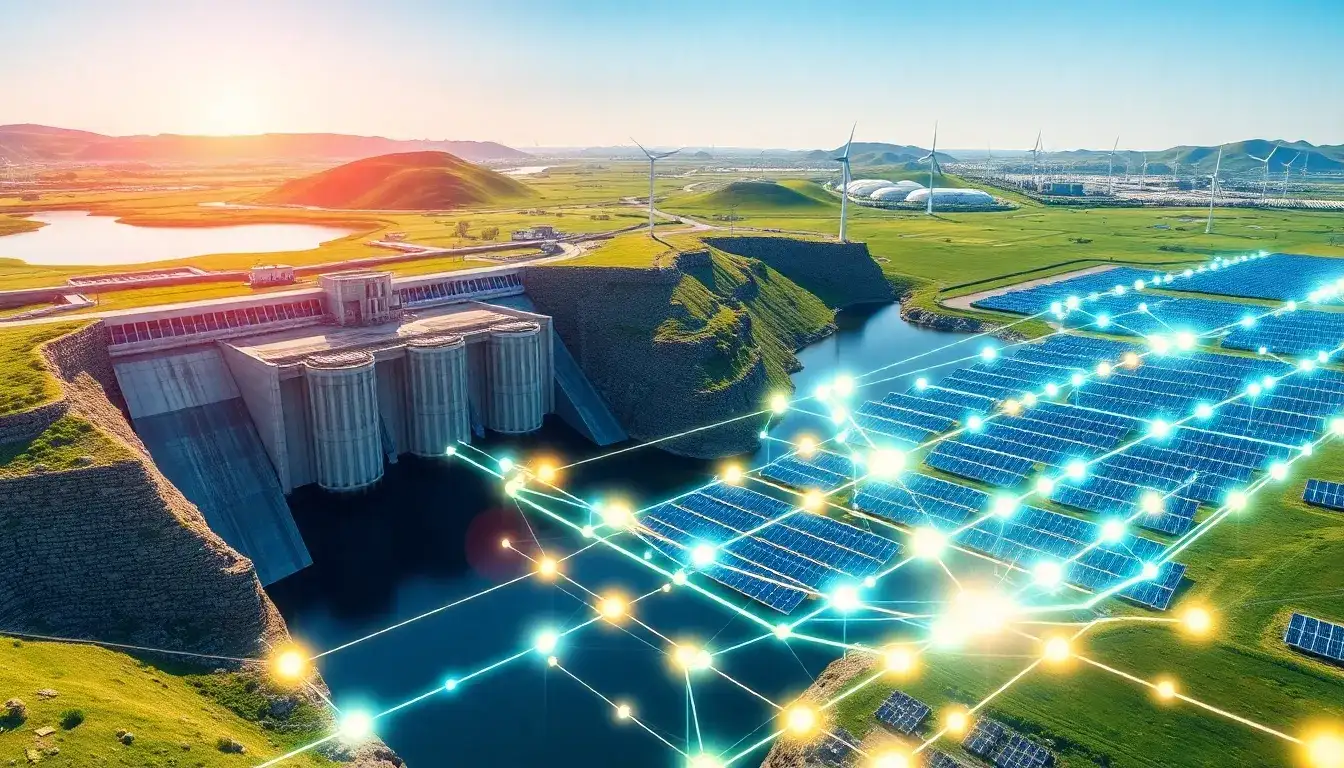
Integration of Pumped Storage Hydropower with Solar and Wind Energy
The integration of pumped storage hydropower (PSH) with solar and wind energy plays a crucial role in enhancing grid resilience. Here’s how PSH supports renewable energy sources and contributes to a more stable and reliable grid:
Process and Benefits
-
Energy Storage Mechanism:
- Operation: PSH facilities use excess electricity generated by solar and wind during low-demand periods to pump water from a lower reservoir to an upper one. During peak demand, water is released from the upper reservoir, flowing through turbines to generate electricity.
- Role of PSH: This storage mechanism acts as a buffer to manage the intermittent nature of solar and wind energy by storing excess energy and releasing it when needed.
-
Grid Resilience and Flexibility:
- Mitigating Intermittency: Solar and wind energy are not always available due to weather conditions. PSH fills this gap by providing a reliable source of energy when these sources are not generating power.
- Grid Frequency Management: PSH helps manage grid frequency by quickly adjusting output to match supply and demand, ensuring stable grid operation.
-
Environmental and Economic Benefits:
- Low Environmental Impact: Closed-loop PSH systems have been shown to have a low global warming potential compared to other energy storage technologies.
- Long-Term Viability: PSH facilities can operate for decades without needing significant component replacements, providing long-term reliability and cost-effectiveness.
-
Enhanced Grid Stability:
- Inertia Provision: PSH contributes to grid inertia, which is crucial for maintaining stability in systems increasingly reliant on intermittent renewables.
- Real-Time Monitoring: Advanced algorithms using PSH signals help monitor grid inertia in real-time, enabling better management of potential grid instabilities.
Conclusion
The integration of pumped storage hydropower with solar and wind energy enhances grid resilience by providing a reliable mechanism for energy storage, managing the intermittency of renewable sources, improving grid frequency stability, and supporting long-term grid reliability. This combination supports a cleaner, more resilient energy system and is essential for achieving net-zero carbon goals.
Original article by NenPower, If reposted, please credit the source: https://nenpower.com/blog/how-does-the-integration-of-pumped-storage-hydropower-with-solar-and-wind-energy-enhance-grid-resilience/

