

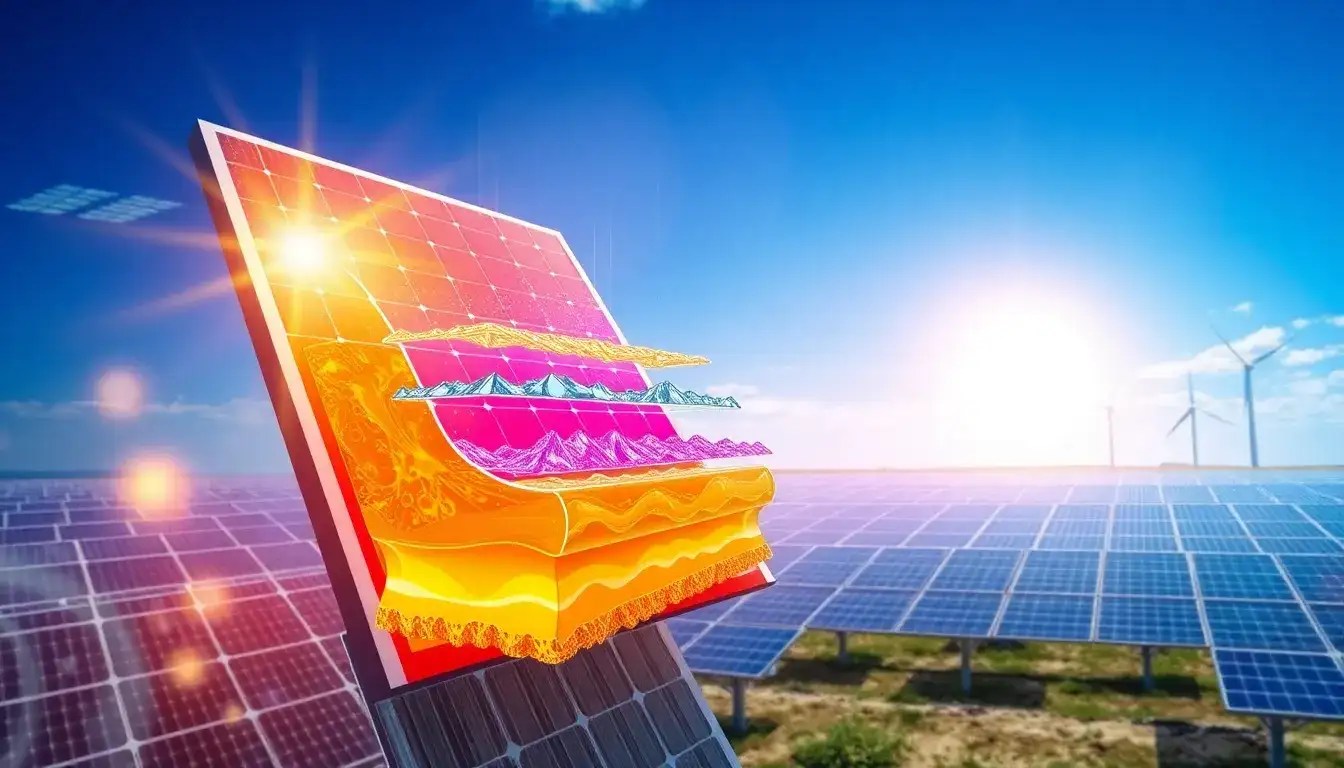
Phase change materials (PCMs) enhance solar panel efficiency primarily by reducing operating temperatures, as photovoltaic (PV) performance declines by 0.5–0.6% per °C temperature rise. Here’s how PCM integration works:
1. Temperature Regulation Mechanism
PCMs absorb excess heat from PV panels during peak sunlight hours through latent heat storage, maintaining a stable temperature near the PCM’s melting point. For example:
- RT21 PCM (melting at 21°C) reduced peak panel temperatures from 65°C to 38°C, improving efficiency by ~6% and power output by 16%.
- RT35/RT44 PCMs (melting at 35°C/44°C) lowered temperatures proportionally, with optimal material selection achieving ~39% temperature reduction in hot climates.
2. Efficiency and Output Gains
- Electrical efficiency rises due to reduced thermal stress on PV cells. PCM-RT21 boosted average efficiency to ~19% (vs. baseline without PCM).
- Power output increases by ~14–16% in optimized systems, as seen with lauric acid (LA)–MgO composites enhancing output by 14.18%.
- Nano-enhanced PCMs (e.g., graphene, Al₂O₃) further improve thermal conductivity, reducing temperatures by 6–7°C and increasing efficiency by 3–13.7%.
3. Material Selection and Optimization
- Melting point: PCMs must match the climate. RT21 performs best in moderate climates, while RT35/44 suit hotter regions.
- Composites: Adding nanoparticles (e.g., MgO, SiC) improves heat absorption. LA-MgO (94:6 ratio) reduced temperatures by 5.2°C and enhanced efficiency by 14.11%.
- Seasonal performance: PCMs retain effectiveness across seasons, with optimized systems maintaining ~18–19% efficiency even in summer.
By stabilizing PV temperatures, PCMs mitigate efficiency losses, making them a key solution for solar energy systems in high-temperature environments.
Original article by NenPower, If reposted, please credit the source: https://nenpower.com/blog/how-does-the-integration-of-phase-change-materials-pcms-improve-solar-panel-efficiency/

