

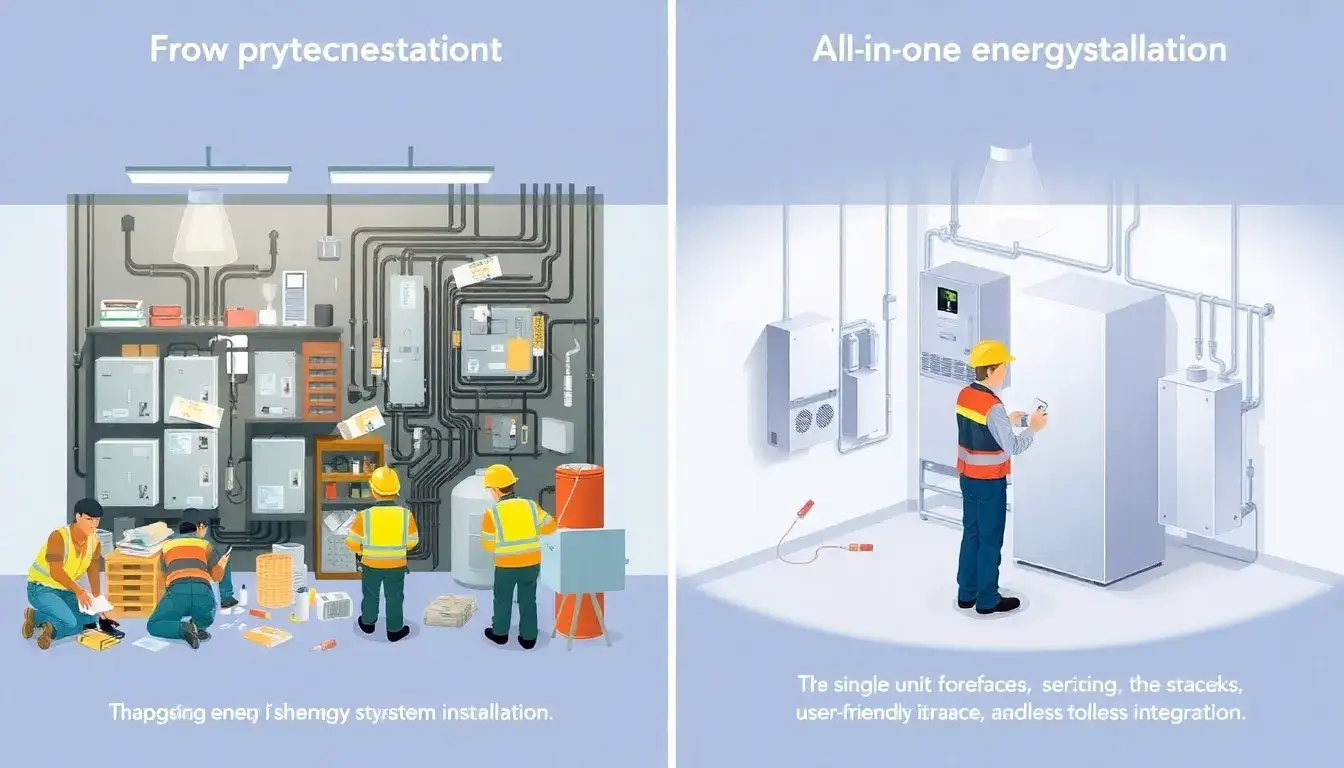
The installation process of an all-in-one energy storage system differs significantly from traditional systems, which often require multiple separate components and complex setups. Here are some key differences:
Key Differences in Installation Process
1. Simplified Installation
- All-in-One Systems: Since these systems combine essential components like batteries, inverters, charge controllers, and energy management systems into a single unit, the installation is streamlined and less complex. This simplifies the setup process, reducing the time and effort required to get the system operational.
- Traditional Systems: These require individual installation of each component (batteries, inverters, charge controllers), which can be more labor-intensive and space-consuming.
2. Space Efficiency
- All-in-One Systems: They require less space because all components are integrated into one unit, making them ideal for locations with limited area available for equipment.
- Traditional Systems: More space is needed as each component must be installed separately.
3. Permitting and Compliance
- All-in-One Systems: The streamlined nature of these systems can simplify compliance with local regulations since fewer components require inspection and approval.
- Traditional Systems: Each component may need separate permits, increasing the administrative burden.
4. Electrical Integration
- All-in-One Systems: These systems are designed to connect easily to existing electrical infrastructure, reducing the complexity of wiring and electrical upgrades.
- Traditional Systems: Requirements for electrical upgrades can be more extensive as each component needs to be integrated separately.
5. Maintenance and Monitoring
- All-in-One Systems: Often include built-in energy management systems that allow for easy monitoring and maintenance of the entire system through a single interface.
- Traditional Systems: Monitoring and maintenance can be more complicated due to the separate components, each potentially requiring individual management tools.
Conclusion
The installation of all-in-one energy storage systems is generally quicker, simpler, and more efficient than traditional systems, offering advantages in terms of space usage, simplicity, and ease of monitoring and maintenance.
Original article by NenPower, If reposted, please credit the source: https://nenpower.com/blog/how-does-the-installation-process-of-an-all-in-one-energy-storage-system-differ-from-traditional-systems/

