

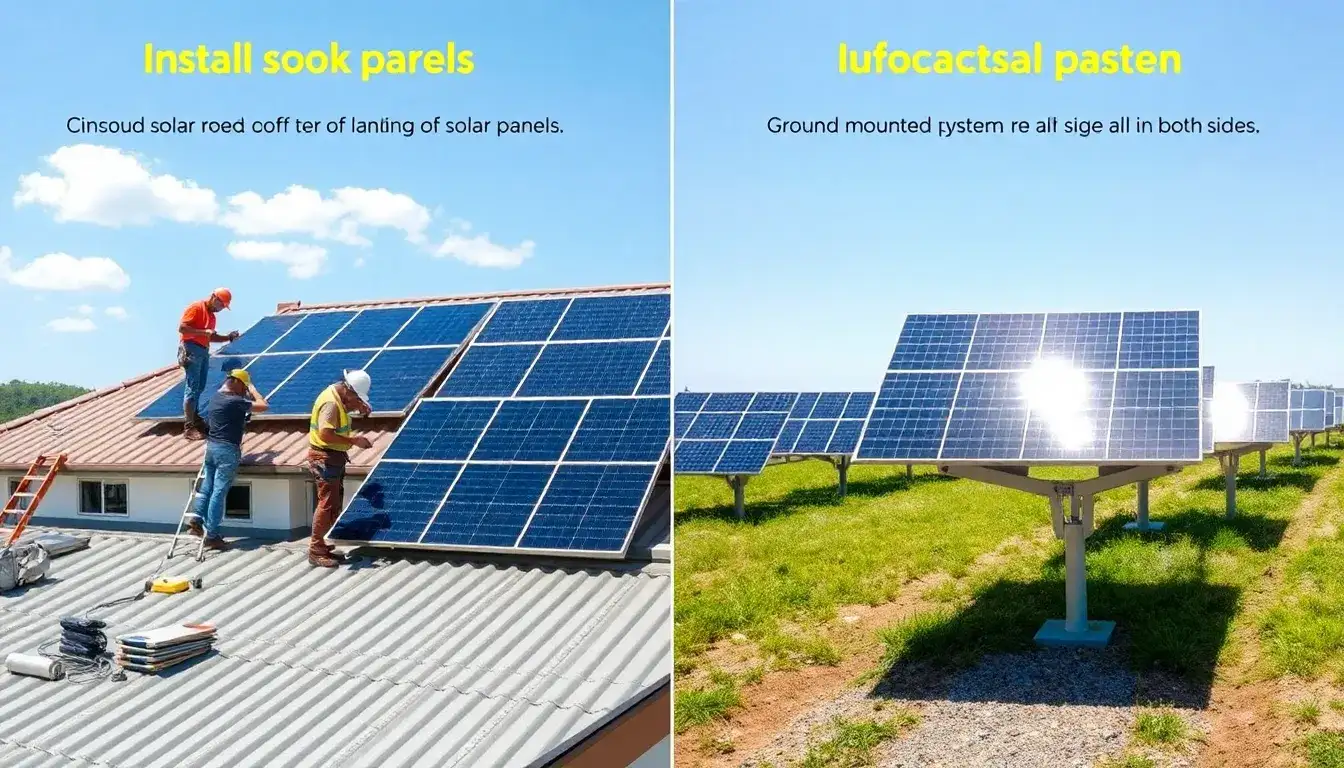
Key Differences in Installation Process for Bifacial Solar Panels
1. Site Assessment and Ground Reflectivity
- Assess site conditions with extra emphasis on ground reflectivity (albedo) since bifacial panels generate power from reflected light beneath them. Light-colored surfaces such as white gravel, sand, snow, or reflective coatings boost energy capture on the panel’s rear side, unlike traditional panels that only require sunlight exposure in front.
- Ensure minimal shading not just on the front but also around the panels to prevent loss of reflected light.
2. Panel Mounting and Elevation
- Bifacial panels are often mounted on specialized elevated racks to allow sunlight to reflect up onto the back of the panel. The height is typically at least 1 meter (3.3 feet) above the ground for ground installations, or at least 10-15 cm clearance for roof installations to promote airflow and rear light capture. This elevation is generally higher than traditional solar panel mounting.
- Adjustable tilt angles (typically 20° to 30°) are set to maximize both direct sunlight and reflected light capture on the rear surface.
3. Mounting Components and Materials
- Use mounting materials and components that are reflective or transparent to avoid shading the panel’s rear side. Light-colored or reflective rails and supports are preferred, unlike typical opaque mounting hardware used for traditional panels.
- Bifacial panels require secure fastening at multiple points, commonly via bolting or clamping methods detailed in manufacturer manuals (e.g., Canadian Solar recommends bolting at 4 points with specific torque requirements).
4. Panel Spacing and Layout
- Maintain wider row spacing between panels to allow sunlight to reach the ground and reflect to the back of the next row, typically around 2.5 meters or more, depending on the geographic location and tilt. This spacing reduces mutual shading compared to denser layouts common for monofacial systems.
- Consider seasonal solar angles to optimize ground coverage ratio between 0.3 to 0.5 for bifacial benefits.
5. Electrical Wiring and System Setup
- Wiring should be planned to minimize shading on the rear of panels by routing cables along panel edges and using transparent or light-colored cable ties and conduits.
- Use Maximum Power Point Tracking (MPPT) inverters or power optimizers to balance output across panels as bifacial panels may have uneven illumination between front and rear surfaces.
- Proper grounding and secure electrical connections are essential to maintain safety and performance, with testing of voltage output from both sides.
6. Testing, Monitoring, and Maintenance
- Perform performance testing including measuring energy output from both panel surfaces to verify proper installation and functionality.
- Install solar monitoring systems that can track real-time performance and detect shading or electrical issues early.
- Regular cleaning of both panel surfaces is critical since dirt or debris on either side reduces efficiency. This differs from monofacial panels, which only require front-side cleaning.
- Ongoing maintenance includes checking panel alignment, mounting stability, and inspecting for physical damage or shading sources.
Summary Table: Installation Differences Between Bifacial and Monofacial Solar Panels
| Installation Aspect | Bifacial Solar Panels | Traditional Monofacial Panels |
|---|---|---|
| Site Preparation | Emphasize ground reflectivity and albedo | Focus on direct sunlight exposure |
| Mounting Height | Elevated mounting (~1 m above ground) | Lower or flush mounting |
| Tilt Angle | Adjustable tilt optimized for front & rear | Tilt optimized mainly for front exposure |
| Panel Spacing | Wider spacing for rear light reflection | Closer spacing for maximum front density |
| Mounting Materials | Reflective or transparent components | Standard opaque mounting hardware |
| Wiring Layout | Cables routed to minimize rear shading | Standard wiring layout |
| Electrical Components | Use MPPT/power optimizers to maximize output | Standard inverters |
| Cleaning/Maintenance | Clean both sides regularly | Clean front side only |
| Performance Monitoring | Monitor dual-sided energy generation | Monitor front side only |
In conclusion, bifacial solar panel installation involves additional considerations to harness energy from both sides effectively. The primary changes include elevating panels for rear light access, selecting reflective mounting materials, optimizing spacing for light reflection, more strategic wiring, and maintaining both panel surfaces. These adaptations enable bifacial systems to deliver higher energy yields compared to traditional solar panels when installed correctly.
Original article by NenPower, If reposted, please credit the source: https://nenpower.com/blog/how-does-the-installation-process-differ-for-bifacial-solar-panels/

