

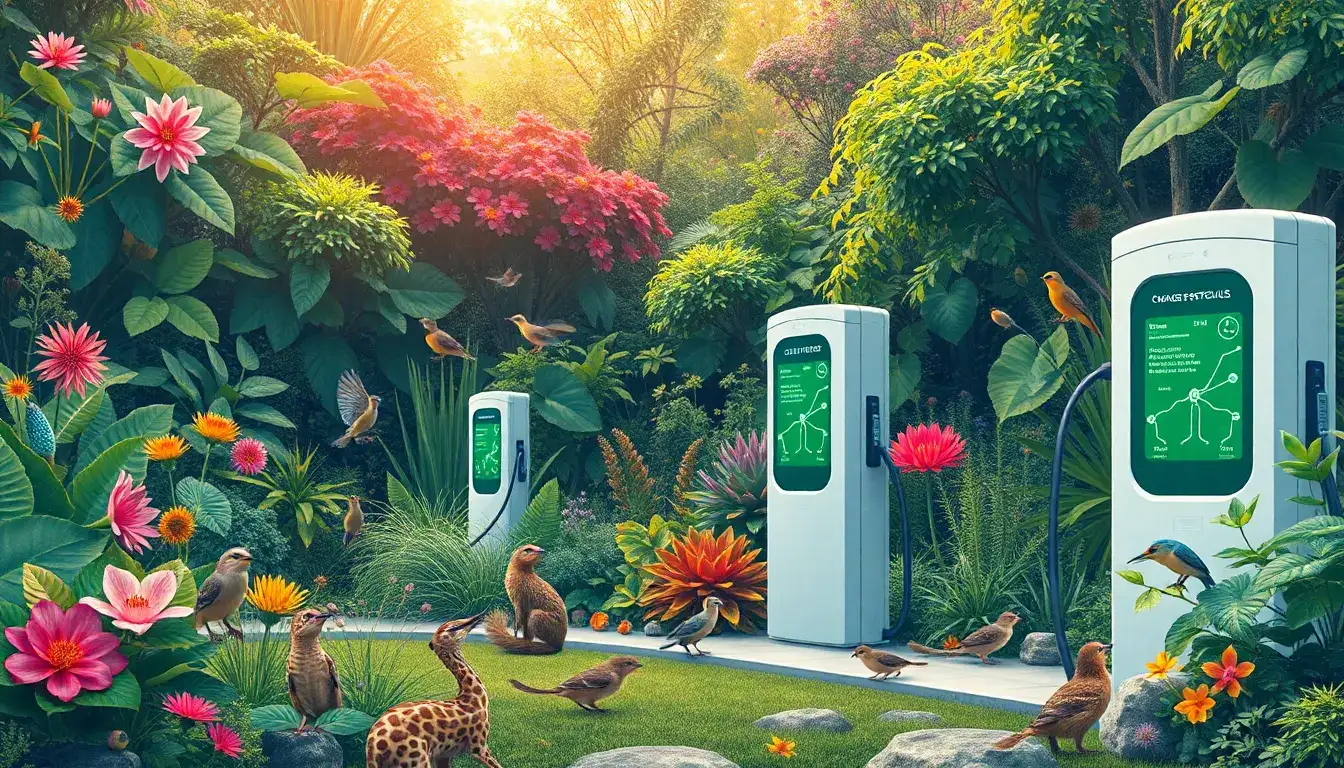
Impact of EV Charging Stations on Local Ecosystems
The installation of EV charging stations can have both positive and negative impacts on local ecosystems:
Negative Impacts
- Land Use and Habitat Disruption:
- The construction of charging stations requires land use, which can lead to habitat disruption, deforestation, or ecosystem disturbances if not carefully planned.
- Proper siting and land-use planning are essential to mitigate these impacts and preserve biodiversity.
- Material Resources:
- The need for materials to construct and maintain charging stations can influence local ecosystems through resource extraction and waste generation.
Positive Impacts
- Promotion of Eco-Tourism:
- By facilitating access to remote areas, charging infrastructure can encourage eco-tourism, allowing people to explore natural and protected areas sustainably.
- Reduced Air Pollution:
- Electric vehicles produce zero emissions directly, reducing air pollution in local communities and preserving environmental health.
- Renewable Energy Integration:
- Charging stations powered by renewable energy sources can significantly reduce carbon emissions and support sustainable development.
Mitigation Strategies
- Sustainable Design: Incorporate sustainable design principles to minimize environmental impacts.
- Renewable Energy Sources: Promote the use of solar, wind, or hydroelectric power for charging.
- Strategic Placement: Locate charging stations to minimize habitat disruption and support eco-friendly exploration.
By carefully managing these factors, the installation of EV charging stations can contribute to a more environmentally friendly transportation system while supporting local ecosystems.
Original article by NenPower, If reposted, please credit the source: https://nenpower.com/blog/how-does-the-installation-of-ev-charging-stations-impact-local-ecosystems/

