

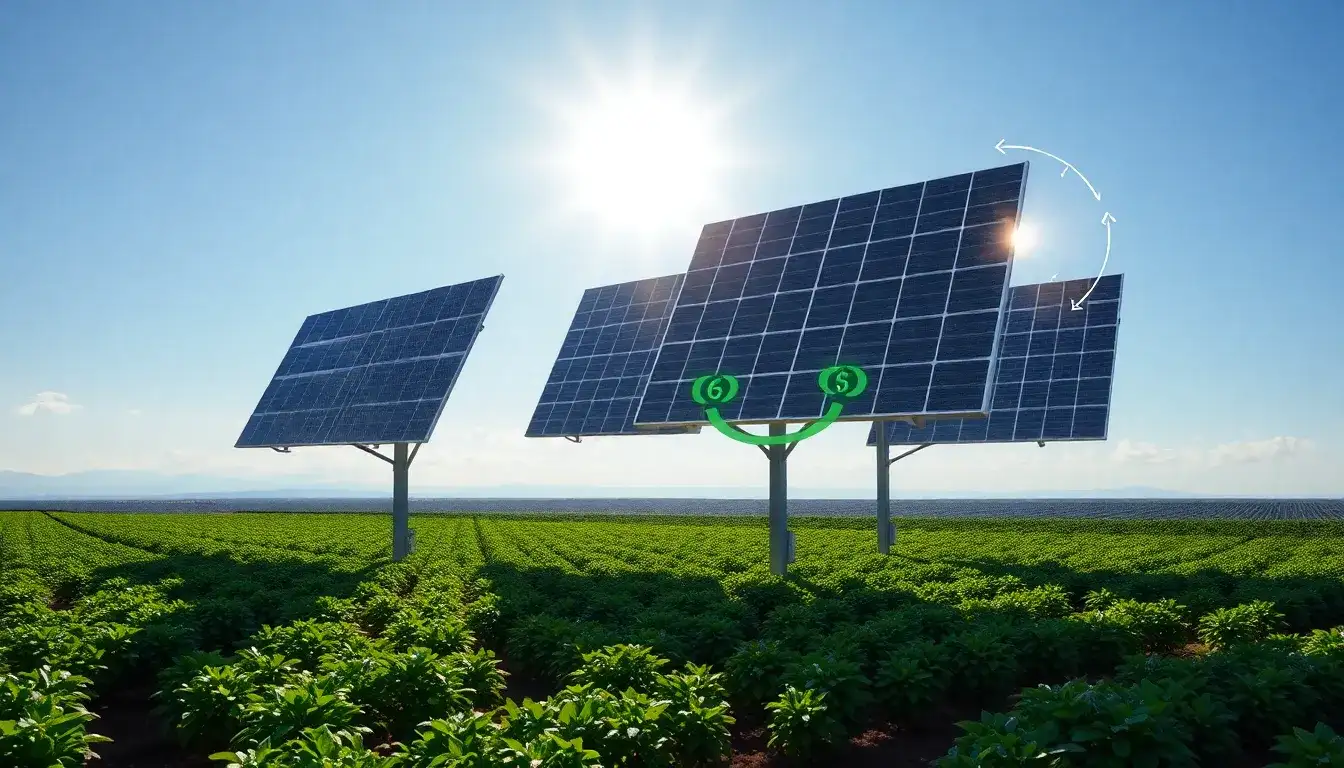
Effect of Installation Height on Energy Output
- Increased Rear-Side Irradiance: Bifacial panels can capture sunlight from both the front and rear sides. Installing these panels at a greater height above the ground allows more reflected and scattered sunlight from the ground and surroundings to reach the backside, increasing overall energy generation. This is because a higher mounting position exposes the rear side to a larger surface area of reflected light.
- Energy Gain with Height Increase: Research shows that raising the installation height from about 0.5 meters up to approximately 1.2 to 1.3 meters substantially increases bifacial energy gains. This height range is where the most notable improvement in energy output occurs due to better rear-side irradiance.
- Diminishing Returns Beyond Certain Height: Increasing panel height beyond roughly 1.2 to 2 meters continues to increase energy gains but at a much lower rate. After this point, the benefits tend to saturate, and the additional cost and structural requirements for higher mounting (e.g., stronger racking to handle increased wind loads) may outweigh the incremental energy benefits.
- Recommended Installation Height: Industry best practice suggests mounting bifacial panels at heights between 1.0 to 1.3 meters off the ground. This range offers an optimized balance between maximizing backside irradiance and controlling costs and structural complexity.
Additional Factors Affecting Energy Output Related to Height
- Ground Surface Reflectivity (Albedo): Higher installation heights allow panels to better utilize the albedo effect, where sunlight reflected off light-colored or reflective surfaces (such as white roofs, sand, or snow) enhances rear-side irradiance and thus energy output.
- Tilt and Orientation Considerations: While height is key, the tilt angle also affects backside irradiance. Increased tilt angles generally enhance rear-side light collection but may reduce front-side capture at very steep angles.
Summary Table of Height Impact on Bifacial Panel Output
| Installation Height (m) | Effect on Rear-Side Irradiance & Energy Gain | Practical Considerations |
|---|---|---|
| < 0.5 | Limited rear-side reflected light; lower bifacial gains | Minimal structural cost |
| 0.5 to ~1.2-1.3 | Significant increase in rear-side irradiance and energy gain | Recommended height range for balance |
| > 1.2-2 | Further increased irradiance but diminishing returns | Higher structural costs and wind loads |
In conclusion, raising bifacial solar panels to at least about 1 meter above ground maximizes their ability to capture reflected sunlight on the rear side, significantly boosting energy output, with optimal height recommended near 1.2 to 1.3 meters to balance gains and costs. Beyond this, additional height yields smaller improvements and increased structural challenges.
Original article by NenPower, If reposted, please credit the source: https://nenpower.com/blog/how-does-the-installation-height-of-bifacial-panels-affect-their-energy-output/

