

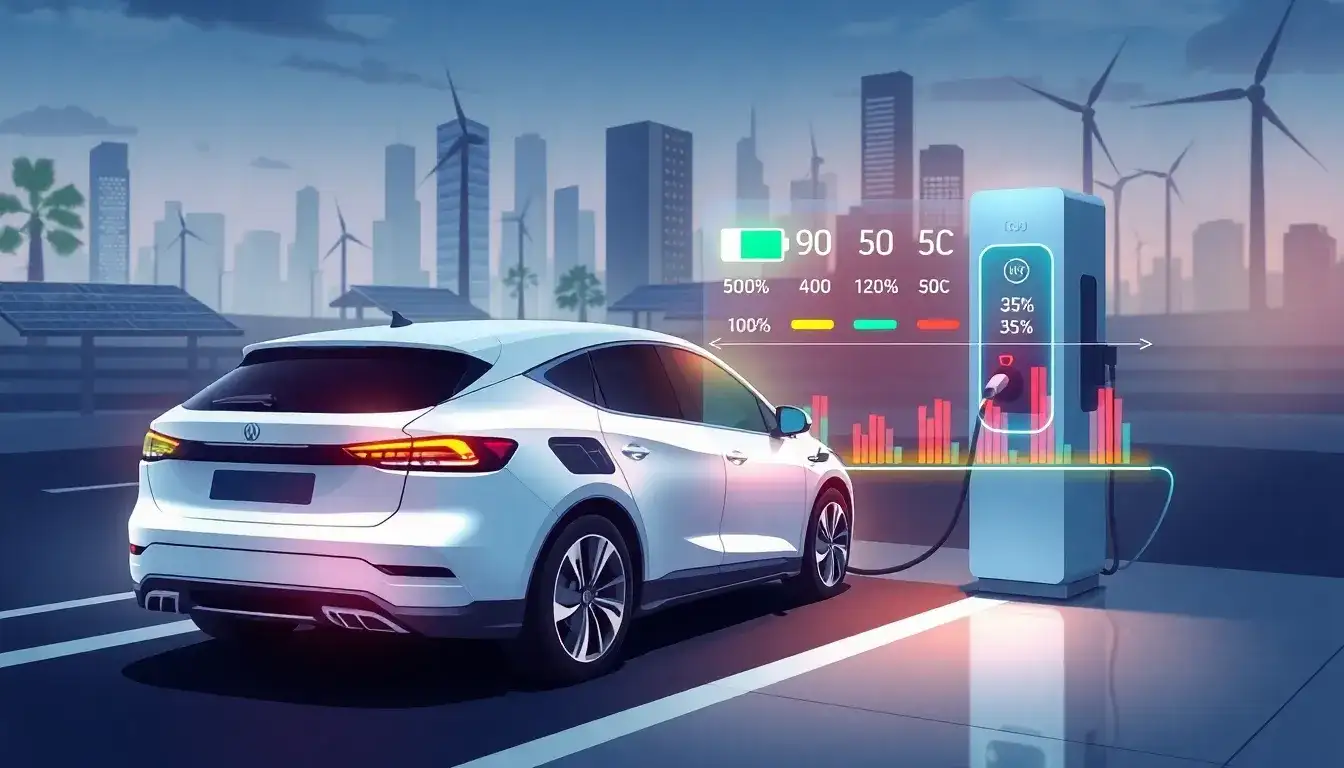
The initial state of charge (SOC) significantly influences the charging time of an electric vehicle. Here are some key points about how it affects charging:
- Charging Speed and SOC: Electric vehicles tend to charge faster when the battery is at a lower SOC, typically below 20%. This is because the battery can accept a higher charge rate when it is emptier. As the battery approaches a higher SOC, particularly as it nears full charge (around 80% to 100%), the charging speed is reduced to protect the battery’s health and ensure safety.
- Tapering: This reduction in charging speed as the battery fills up is known as “tapering.” It is a common feature of lithium-ion batteries used in most electric vehicles. Tapering helps preserve battery longevity by preventing overcharging and excessive heat buildup.
- DC vs. AC Charging:
- DC Fast Charging: This type of charging achieves its fastest speeds when the battery SOC is between 20% and 60%. Beyond 80% SOC, DC charging slows down significantly.
- AC Charging: While AC charging speeds remain relatively consistent, the overall charging time is longer compared to DC fast charging. However, AC charging systems also reduce power output as the battery approaches full capacity to protect it.
To summarize, starting with a lower SOC allows for faster initial charging, while a higher SOC results in slower charging as the system protects the battery.
Original article by NenPower, If reposted, please credit the source: https://nenpower.com/blog/how-does-the-initial-state-of-charge-influence-the-charging-time-of-an-electric-vehicle/

