

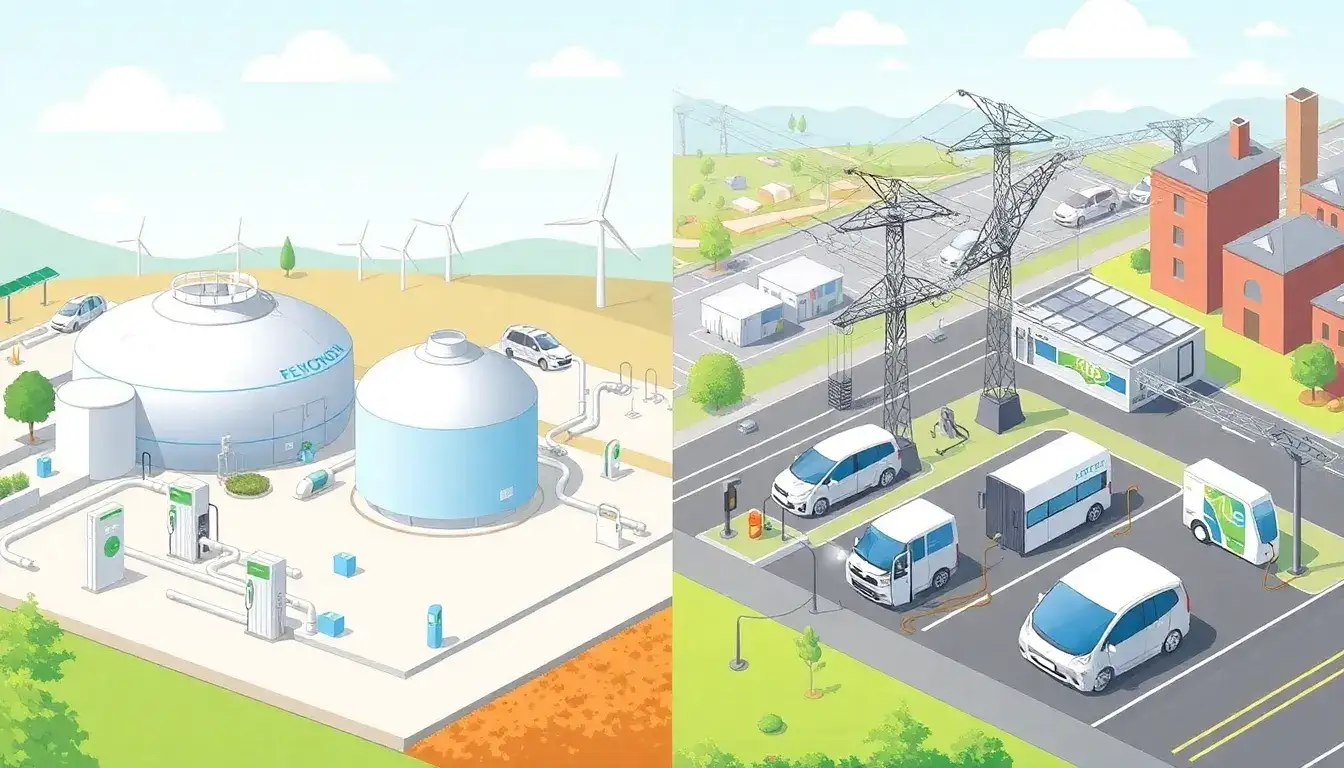
The infrastructure required for hydrogen fuel cells and electric batteries differs in several key ways, reflecting the distinct characteristics of each technology.
Hydrogen Fuel Cell Infrastructure
Key Components:
- Hydrogen Production: Hydrogen can be produced from various sources, including water electrolysis or from fossil fuels. Large-scale production facilities are often required.
- Transportation Infrastructure: Hydrogen is transported via pipelines, trucks carrying compressed hydrogen tubes, or liquid hydrogen tankers. Pipelines are the most cost-effective method over long distances.
- Hydrogen Stations: These are needed to dispense hydrogen directly to vehicles. They may use onsite production or receive deliveries of hydrogen for storage and dispensing.
- Storage and Handling: Hydrogen requires specialized storage and handling systems due to its high reactivity and the need for high-pressure containers.
Challenges:
- Cost and Complexity: Building hydrogen fueling infrastructure is expensive and complex, involving high-pressure systems and often requiring new facilities.
- Energy Efficiency: The production and transportation of hydrogen can be energy-intensive and not always carbon-neutral.
Electric Battery Infrastructure
Key Components:
- Charging Stations: These range from basic Level 1 household chargers to high-speed public charging points. They are easily integrated into existing electrical grids.
- Energy Source Integration: Charging can be powered by various energy sources, including renewable energy like solar or wind power.
- Grid Capacity: Electric vehicles require sufficient electrical grid capacity to support rapid charging, which can be managed through smart grid systems and energy storage.
Advantages:
- Maturity and Availability: Electric infrastructure is well-established, with widespread availability of charging points and existing electrical grids.
- Energy Efficiency: Electric vehicles are generally more energy-efficient than hydrogen fuel cell vehicles when considering well-to-wheel emissions from renewable energy sources.
Comparison Summary
| Infrastructure Aspect | Hydrogen Fuel Cells | Electric Batteries |
|---|---|---|
| Production/Generation | Hydrogen production facilities | Existing power plants & renewable sources |
| Transportation | Pipelines, trucks | Direct electrical charging |
| Fueling/Charging | Hydrogen stations | Electric charging stations |
| Storage | High-pressure tanks | Batteries in vehicles |
| Energy Efficiency | Less efficient due to production & transport losses | Generally more efficient using grid electricity |
| Infrastructure Costs | High upfront costs for new facilities | Lower costs due to existing grid and infrastructure |
In summary, hydrogen fuel cell infrastructure requires specialized facilities for production, transportation, and storage, which are more complex and expensive compared to the more established and flexible infrastructure for electric batteries.
Original article by NenPower, If reposted, please credit the source: https://nenpower.com/blog/how-does-the-infrastructure-required-for-hydrogen-fuel-cells-differ-from-that-for-electric-batteries/

