

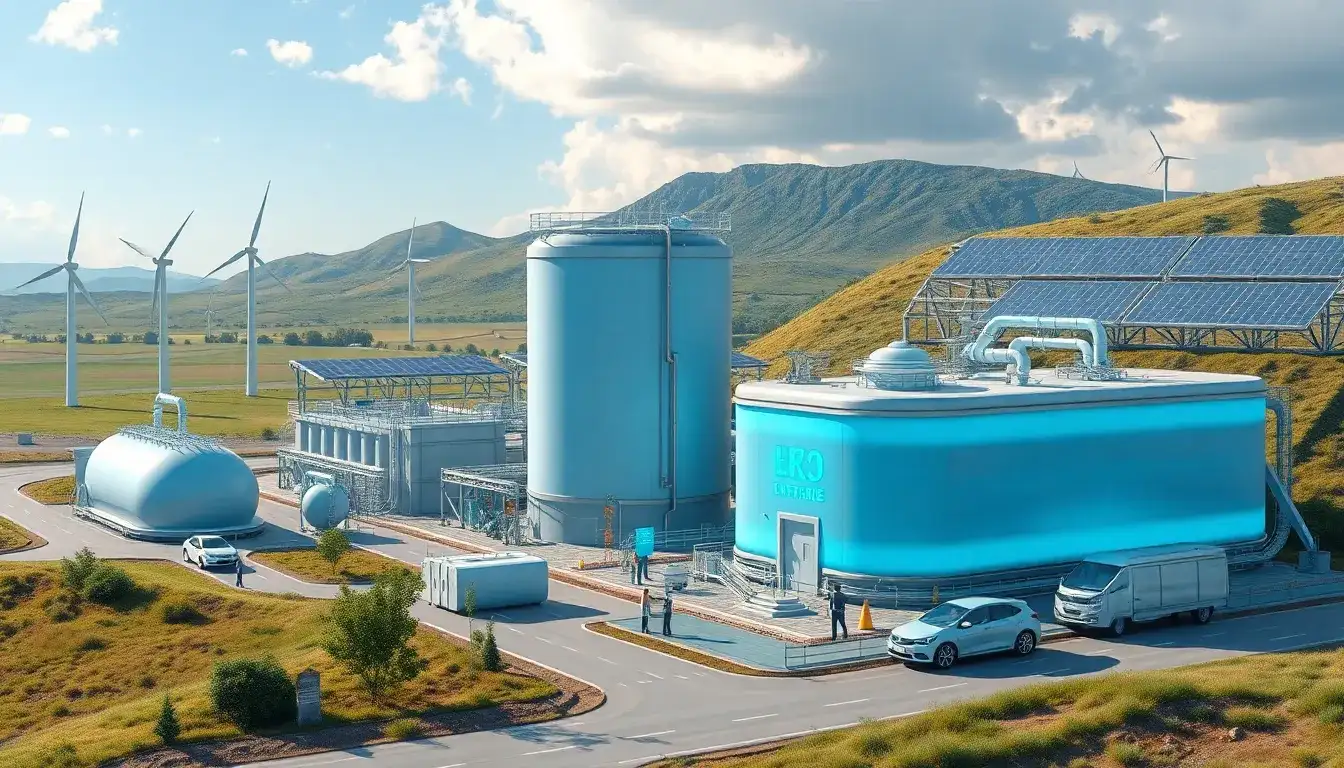
Hydrogen Storage Infrastructure
- Physical Forms: Hydrogen can be stored physically as a gas, requiring high-pressure tanks, or as a liquid, which requires cryogenic conditions.
- Technical Challenges: Hydrogen has a low energy density by volume, necessitating large storage capacities. It is also highly reactive, requiring specialized materials for safe storage.
- Infrastructure Needs: Large-scale hydrogen storage often involves underground facilities, which are essential for balancing supply and demand, especially in seasonal variations.
- Integration with Energy Systems: Hydrogen can be used to enhance system flexibility by providing energy during low demand periods and converting excess renewable energy into hydrogen via electrolysis.
Comparison with Other Energy Storage Solutions
Battery Storage
- Energy Density: Batteries offer higher energy density than compressed hydrogen, making them more compact for storage.
- Charge/Discharge Cycle: Batteries can rapidly charge and discharge, providing quick power responses, which contrasts with hydrogen’s need for conversion processes (electrolysis to store, and fuel cells or combustion engines to release energy).
- Infrastructure: Battery storage infrastructure is typically more straightforward to integrate into existing electrical grids compared to hydrogen systems.
Pumped Hydro Storage (PHS)
- Scalability: PHS is one of the largest and most cost-effective forms of energy storage, but it requires specific geography, which limits its scalability.
- Efficiency: PHS is generally more efficient than hydrogen storage since it avoids the energy losses associated with hydrogen’s electrolysis and conversion back to electricity.
Other Forms of Energy Storage
- Compressed Air Energy Storage (CAES): Similar to PHS in terms of geography limitations but uses compressed air in underground caverns. It is less energy-dense than hydrogen but more efficient in terms of conversion losses.
Key Considerations for Hydrogen Storage
- Flexibility: Hydrogen offers flexibility in energy systems by allowing the storage of renewable energy when it is abundant and using it later.
- Seasonal Demand Balancing: Hydrogen storage can help balance seasonal energy supply and demand fluctuations, particularly beneficial in regions with variable renewable energy sources.
- Cost and Complexity: While hydrogen infrastructure is complex and costly, integrating it into a multi-energy system can provide significant cost savings over isolated energy systems.
In summary, hydrogen storage infrastructure provides unique advantages in terms of flexibility and the potential for seasonal demand balancing, but it also poses technical and economic challenges that differentiate it from other energy storage solutions.
Original article by NenPower, If reposted, please credit the source: https://nenpower.com/blog/how-does-the-infrastructure-for-hydrogen-storage-compare-to-other-energy-storage-solutions/

