

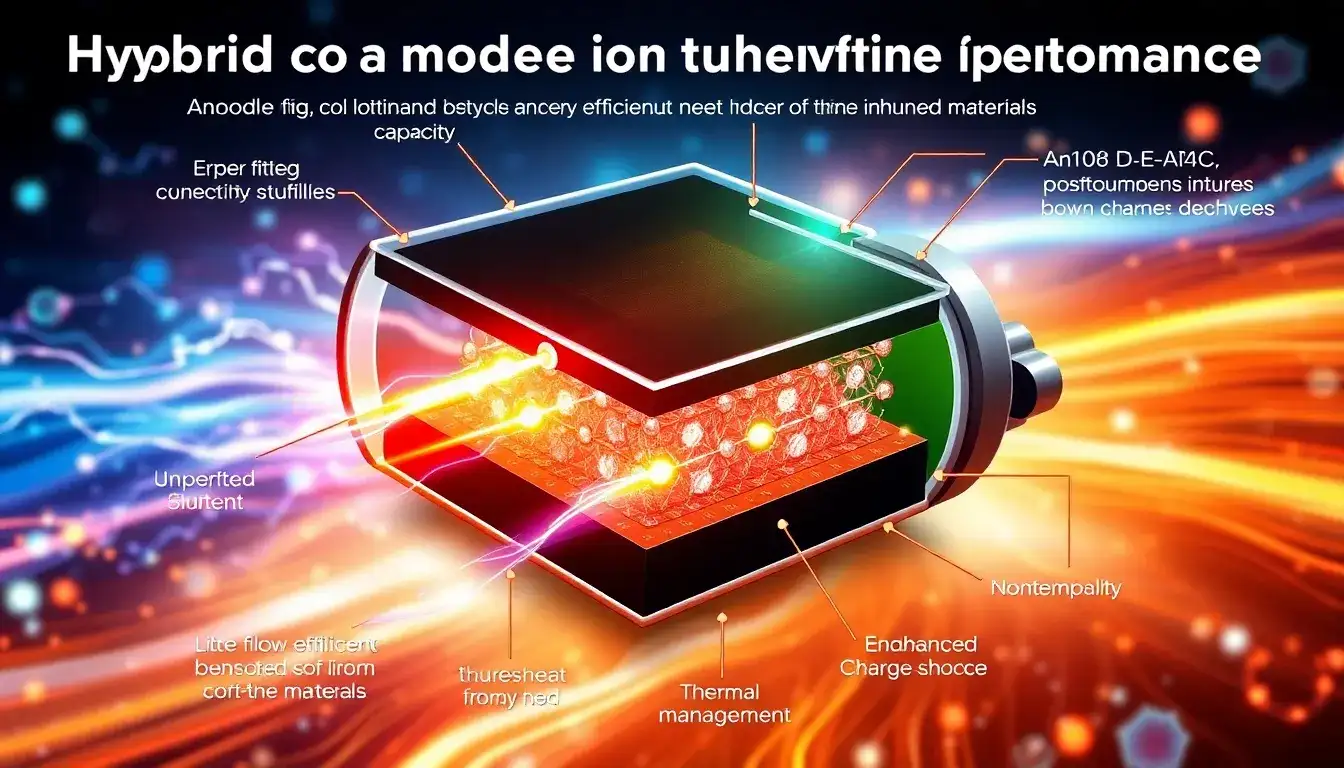
The hybrid anode material, composed of reduced graphene oxide (rGO), nanocrystalline nickel-iron oxide (NiFe₂O₄), and amorphous nickel oxide (a-NiO), significantly enhances the performance of lithium-ion batteries through several mechanisms:
Key Improvements
- Improved Conductivity: The integration of rGO into the composite enhances electrical conductivity, allowing for more efficient charge transport during the charge-discharge process. This improvement in conductivity directly contributes to better overall battery performance.
- Hollow Structure Design: The hollow structure of the composite prevents direct contact between the a-NiO/NiFe₂O₄ nanoparticles and the electrolyte. This design feature enhances the stability of the battery system by reducing potential adverse reactions, thus improving the longevity and safety of the battery.
- High Specific Capacity and Durability: The material achieves a remarkable specific capacity of 1687.6 mAh/g at a current density of 100 mA/g after 580 charge-discharge cycles. This exceptional cycling stability far surpasses that of traditional materials, highlighting its potential for practical applications.
- Good Rate Performance: The hybrid anode material maintains high capacity even at significantly increased charge/discharge rates. This ability ensures that the battery performs well under diverse operational conditions, making it suitable for a wide range of applications.
Overall, the hybrid anode material offers significant advancements in lithium-ion battery technology by addressing traditional limitations such as instability and low capacity. Its innovative design and enhanced properties make it a promising candidate for improving battery performance in modern devices.
Original article by NenPower, If reposted, please credit the source: https://nenpower.com/blog/how-does-the-hybrid-anode-material-improve-the-performance-of-lithium-ion-batteries/

