

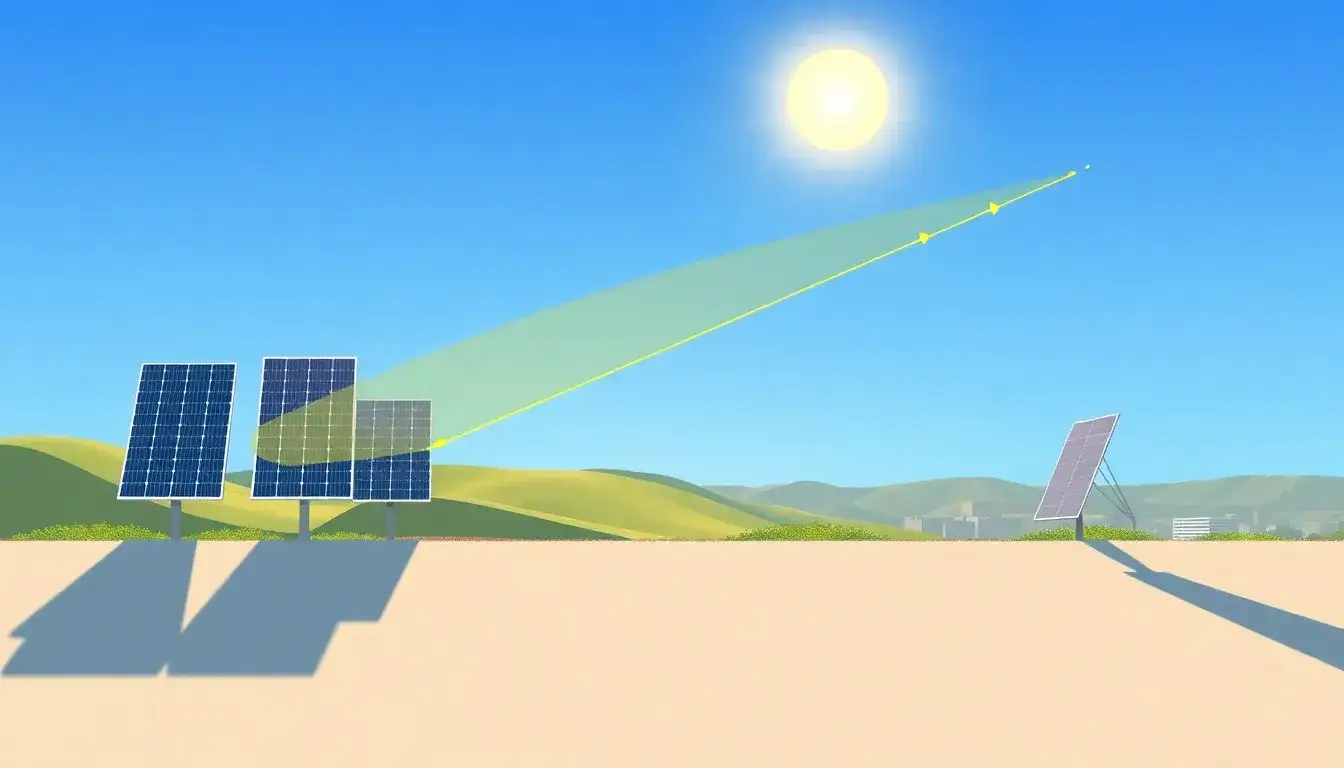
The height and tilt angle of bifacial solar panels significantly influence their energy output by affecting the amount of sunlight and reflected light each side of the panel can capture.
Effect of Height on Energy Output
- Increased Height Improves Rear-Side Irradiance: Elevating bifacial panels above the ground enhances the uniformity and intensity of light reflected from the surface reaching the rear side of the panels. This results in a higher bifacial gain and increased overall energy production.
- Optimal Height Range: Studies suggest that increasing the clearance from flush mounting up to about 1.2 to 1.3 meters is optimal for maximizing energy yield. Heights below 1 meter reduce the reflected light capture due to shading and limited angular view of the reflected irradiance.
- Trade-offs: While greater height can increase energy output, it also exposes panels to higher wind loads, which must be considered in structural design.
- Empirical Results: Simulation and field data show increased bifacial gain with increased height, for example, a jump in energy gain when raising modules from 0.5 m to ~1.2 m height.
Effect of Tilt Angle on Energy Output
- Balancing Front and Rear Side Irradiance: Tilt angle affects both the amount of direct sunlight on the front and the reflected light on the rear. Increasing tilt generally improves the rear-side irradiance by enhancing the angle of incidence of reflected light, but too steep a tilt can reduce front-side irradiance.
- Optimal Tilt Angle Range: Most studies and experiments find an optimal tilt angle around 20 to 35 degrees for fixed bifacial installations. For example, a controlled experiment with a bifacial panel on a white-painted surface showed maximum power output at about 30 degrees tilt. Angles between 13 and 45 degrees tend to produce similar high energy yields within a margin of uncertainty.
- Higher Tilts and Vertical Orientation: Vertical (90 degrees) mounting captures more reflected light but less direct sunlight, shifting energy generation to mornings and evenings rather than peak midday. This can reduce clipping losses but may lower peak power output during noon. Vertical East-West mounting is specifically beneficial in higher latitudes and under certain conditions.
- Trade-offs: Increasing tilt beyond optimal angles can increase irradiance ratio on the rear but decrease total power output due to lower front side exposure.
Summary Table
| Parameter | Impact on Energy Output | Optimal Range/Values | Notes |
|---|---|---|---|
| Height | Increases rear irradiance and bifacial gain | 1.0 – 1.3 meters elevation above ground | Higher height increases reflected light capture but may raise wind load concerns |
| Tilt angle | Balances front direct irradiance and rear reflected light | 20° – 35° for fixed installations | Vertical tilt shifts generation to morning/evening; optimal tilt maximizes total output |
Additional Factors Influencing Energy Output
- Ground Albedo: Reflectivity of the ground surface strongly influences bifacial gain. Higher albedo surfaces (e.g., white-painted ground, snow) reflect more light, boosting rear-side irradiance especially when combined with optimal height and tilt.
- Ground Coverage Ratio (GCR): Proper spacing of panels to avoid shading also impacts reflected light availability.
- Location and Climate: Latitude and local weather conditions affect the distribution of direct and diffuse light, influencing optimal mounting configurations.
- Tracking Systems: Single or dual-axis trackers can further increase reflected light capture and energy yield by dynamically adjusting tilt and orientation.
In conclusion, for bifacial solar panels, elevating the modules about 1 to 1.3 meters above the ground and setting the tilt angle around 20 to 35 degrees generally maximizes energy output by optimizing the balance of direct front irradiation and rear reflected irradiance. Both height and tilt must be carefully designed considering site-specific factors like albedo, shading, and wind load to fully realize bifacial gains of up to 30-40% over monofacial panels.
Original article by NenPower, If reposted, please credit the source: https://nenpower.com/blog/how-does-the-height-and-tilt-of-bifacial-solar-panels-affect-their-energy-output/

