

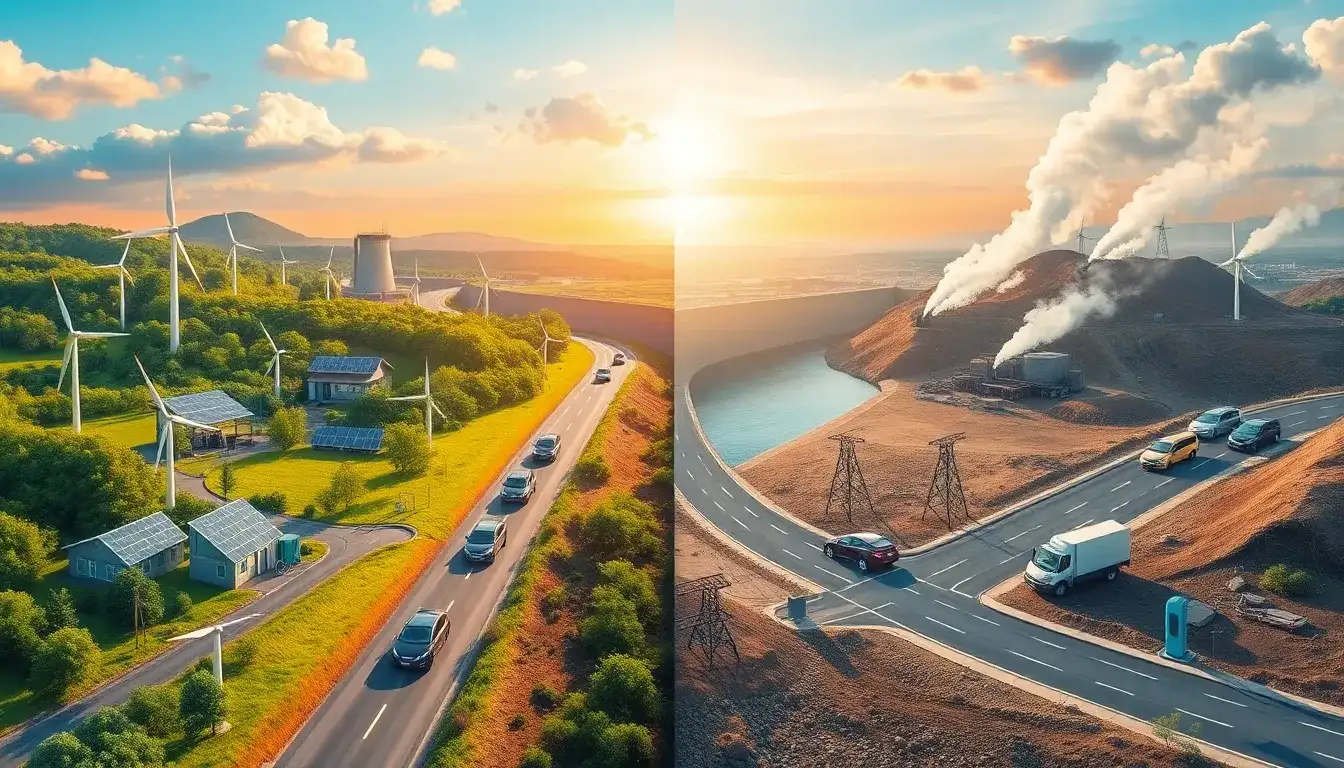
Impact of Grid Mix on EV Environmental Benefits
- Fossil Fuel-Dominated Grid: In regions where electricity is predominantly generated from fossil fuels like coal or natural gas, the environmental benefits of EVs are reduced. This is because the production of electricity for charging EVs results in higher emissions, which offsets the zero tailpipe emissions advantage of EVs.
- Renewable Energy Sources: Conversely, in regions with a high proportion of renewable energy sources such as solar, wind, or hydroelectric power, EVs offer substantial environmental benefits. These regions can achieve lower overall emissions from EVs, as the electricity used for charging comes from cleaner sources.
- Emissions Savings: Studies have shown that even with the current grid mix, widespread EV adoption can lead to significant greenhouse gas reductions. For example, a 25% adoption rate in the U.S. could result in approximately 242 million tons of CO2 reduction annually, depending on the energy source for EV charging.
Regional Variability
- Regional Emissions Advantage: The emissions advantage of EVs varies greatly by region, depending on the local electricity generation mix. In areas with clean energy sources, EVs are more environmentally friendly compared to conventional vehicles.
- Need for Cleaner Energy: For EVs to realize their full potential in reducing emissions, a broader transition to low-carbon electricity production is necessary. This transition can enhance the environmental benefits of EVs by minimizing emissions associated with electricity generation.
In summary, the environmental benefits of EVs are influenced by the grid mix in different regions, emphasizing the importance of cleaner energy sources for maximizing these benefits.
Original article by NenPower, If reposted, please credit the source: https://nenpower.com/blog/how-does-the-grid-mix-in-different-regions-impact-the-environmental-benefits-of-evs/

