

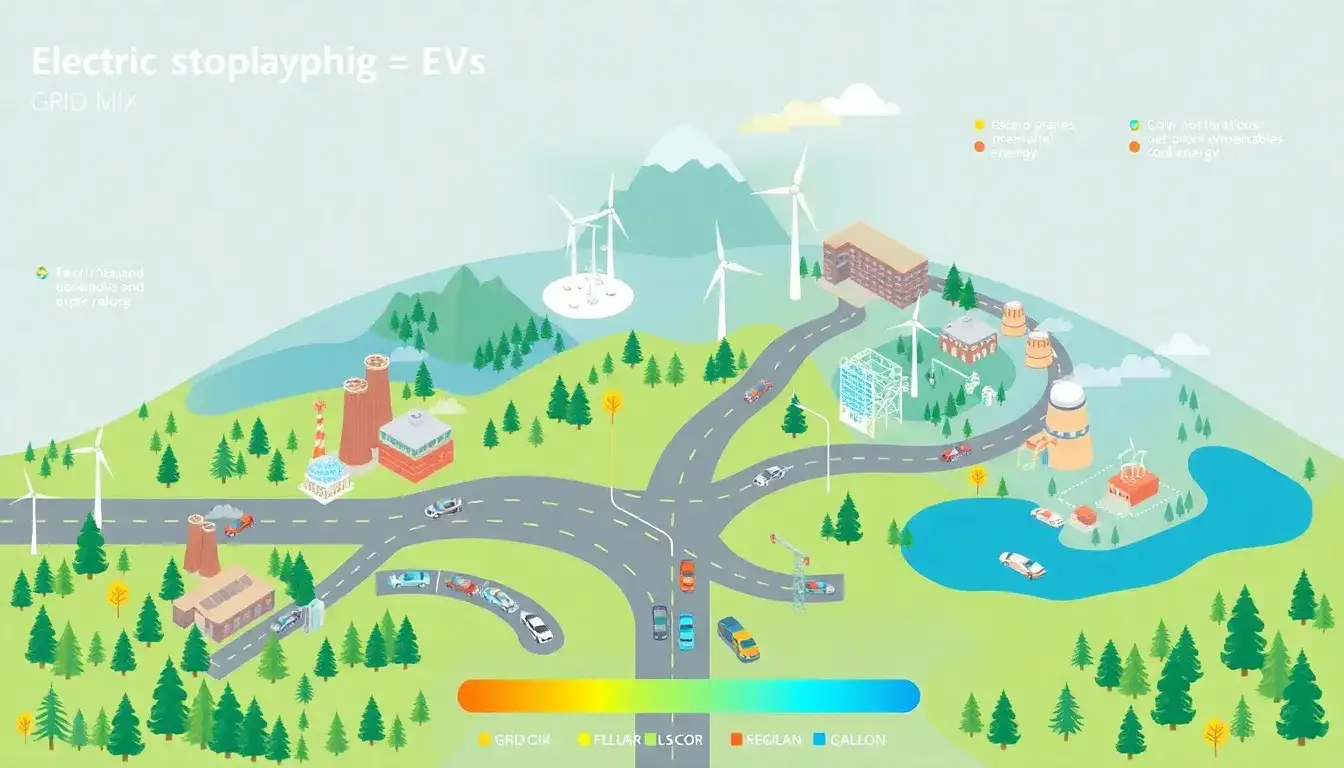
The environmental impact of electric vehicles (EVs) is strongly influenced by the regional electricity grid mix—that is, the sources of power used to generate the electricity that charges EVs. This impact varies significantly between regions depending on how clean or fossil-fuel-intensive their electricity supply is.
How Grid Mix Affects EV Environmental Impact
- Cleaner grids reduce EV emissions: Regions with a higher share of renewable energy sources (such as wind, solar, and nuclear) provide cleaner electricity, which lowers the greenhouse gas (GHG) emissions associated with charging EVs. For example, states like California, which have over 30% renewables in their grid mix, offer a lower carbon footprint for EV charging compared to areas more dependent on fossil fuels.
- Fossil fuel-heavy grids increase EV emissions: In regions where electricity generation relies heavily on coal or natural gas, the carbon emissions from EV charging are substantially higher. An EV charged mostly with coal-fired power can produce up to 50% more CO2 than a gasoline vehicle would emit directly from its tailpipe. Therefore, the environmental benefit of EVs is diminished in these areas.
- Urban vs. rural disparities: Urban areas often benefit more from EVs because of zero tailpipe emissions improving local air quality, while rural or economically disadvantaged communities may face more environmental burdens. These communities are often located near power plants, so pollution from electricity generation can exacerbate environmental injustice.
- Health and climate benefits depend on grid and adoption levels: Studies modeling U.S. scenarios find that EV adoption combined with a cleaner grid leads to major reductions in CO2 emissions and health benefits, such as fewer deaths related to particulate matter and ozone. For instance, a 25% EV adoption with current grid generates a 242 million ton reduction in CO2 emissions and significant public health benefits; these improve further with greater EV adoption and more emission-free electricity sources.
- Energy efficiency still favors EVs: Despite grid variations, EVs tend to be more energy-efficient than gasoline cars, converting a higher percentage of their energy into movement. This efficiency means that even when charged with some fossil fuel-generated electricity, EVs often still have a smaller overall carbon footprint than conventional vehicles.
Summary
The environmental impact of electric vehicles varies greatly by region due to differences in the local electricity grid mix:
- Regions with clean, renewable-heavy grids deliver the greatest environmental benefits from EVs, with significantly reduced carbon emissions and improved air quality.
- Regions reliant on fossil fuels for electricity generation see diminished benefits, sometimes even resulting in higher emissions than gasoline cars when considering the full lifecycle emissions.
- Social equity considerations arise because pollution from electricity generation can disproportionately impact certain communities, especially those near power plants.
- Overall, as power grids become cleaner and EV adoption increases, the climate and health advantages of EVs grow, supporting transition to sustainable transportation.
Consumers and policymakers should consider local grid conditions, alongside vehicle use patterns and charging infrastructure, to maximize the environmental benefits of electric vehicles in different regions.
Original article by NenPower, If reposted, please credit the source: https://nenpower.com/blog/how-does-the-grid-mix-affect-the-environmental-impact-of-electric-vehicles-in-different-regions/

