

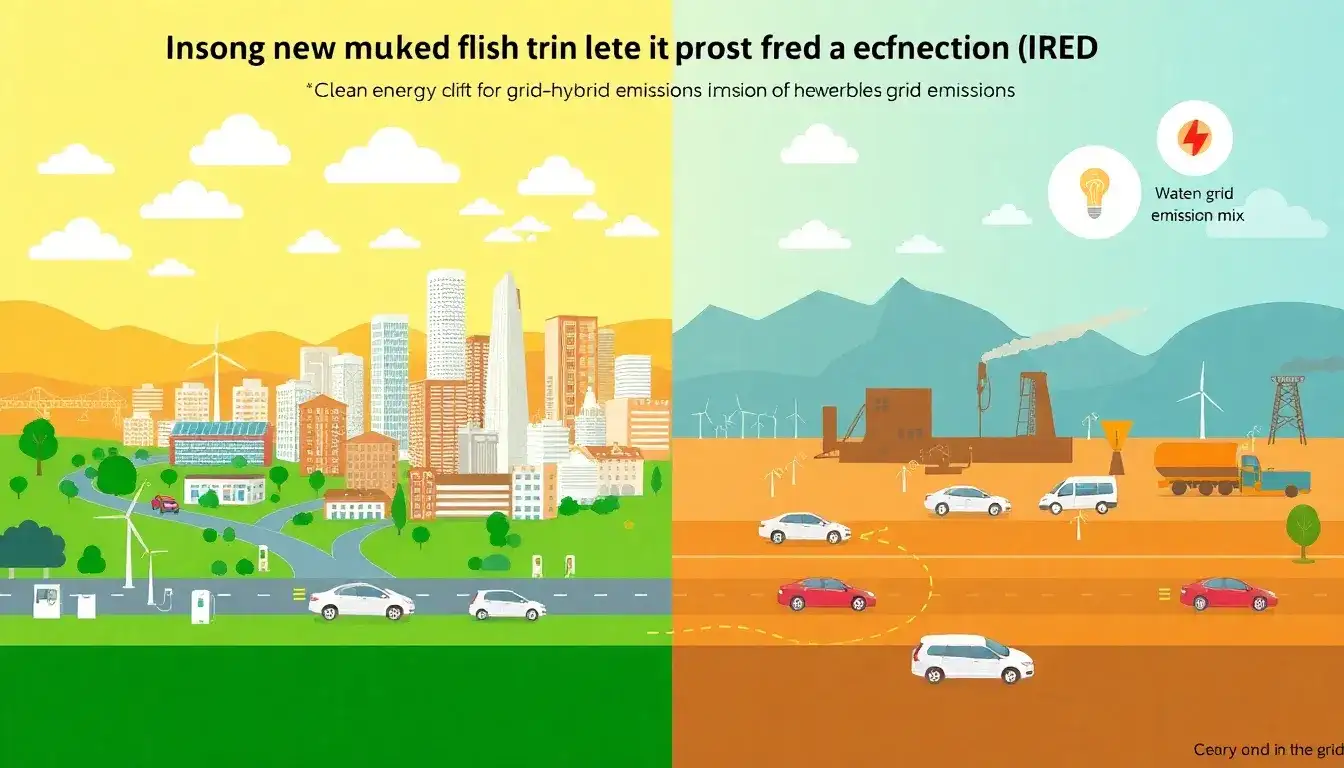
The grid emissions mix significantly impacts the overall emissions of Plug-In Hybrid Electric Vehicles (PHEVs) and Hybrid Electric Vehicles (HEVs) because these vehicles rely partially or fully on electricity generated from the grid.
Impact on PHEVs:
- PHEVs produce zero direct tailpipe emissions when operating in all-electric mode. However, the emissions associated with PHEVs depend heavily on the source of the electricity used to charge their batteries. If the grid electricity is generated from fossil fuels (coal, natural gas), the upstream emissions will be higher; if the electricity comes from renewable or low-emission sources (wind, solar, nuclear), overall emissions will be lower.
- PHEVs can produce lower emissions compared to conventional vehicles if operated frequently in electric mode and charged with cleaner grid power. Conversely, if charged from a grid with a high carbon intensity, the emissions benefits can be diminished or negated.
- A study indicates that real-world emissions from PHEVs can be higher than official estimates, especially when the internal combustion engine (ICE) is running. This suggests that emissions depend not only on the grid mix but also on driving conditions and how often the vehicle switches from electric to fuel mode.
- Flexibility in charging times can improve emissions profiles. By charging vehicles when cleaner or more efficient generators are running, overall pollution can be reduced. For example, on the Texas grid, optimally timed charging can increase generator efficiency and even reduce overall NOx emissions despite the extra load from charging PHEVs. Additionally, vehicle-to-grid (V2G) services, which allow PHEVs to provide grid support such as spinning reserves and energy storage, can further reduce emissions of CO2, SO2, and NOx by improving grid operation and reducing reliance on dirtier generators.
Impact on HEVs:
- HEVs generally do not rely on external grid electricity since they do not plug in; they combine an internal combustion engine with a battery that is charged through regenerative braking and the engine itself. Their emissions are thus tied mainly to fuel use rather than the grid mix.
- Because HEVs do not use grid electricity directly, their emissions are less sensitive to the grid emissions mix compared to PHEVs. However, the overall emissions advantage of HEVs depends mostly on their improved fuel efficiency relative to conventional vehicles.
Summary Table
| Vehicle Type | Dependence on Grid Emissions Mix | Emissions Profile Influences |
|---|---|---|
| PHEVs | High — emissions depend on electricity generation source | Cleaner grid means lower overall emissions; real-world usage and charging patterns also affect emissions; V2G can reduce emissions further. |
| HEVs | Minimal — no external charging | Emissions mainly depend on fuel use and vehicle efficiency, not grid emissions mix. |
In conclusion, the cleanliness of the electricity grid is crucial for determining the total emissions of PHEVs, meaning their environmental benefit varies by region and grid composition. HEVs, on the other hand, are less affected by the grid since they rely primarily on liquid fuels, and their emissions depend on fuel efficiency improvements rather than electricity emissions.
Original article by NenPower, If reposted, please credit the source: https://nenpower.com/blog/how-does-the-grid-emissions-mix-impact-the-overall-emissions-of-phevs-and-hevs/

