

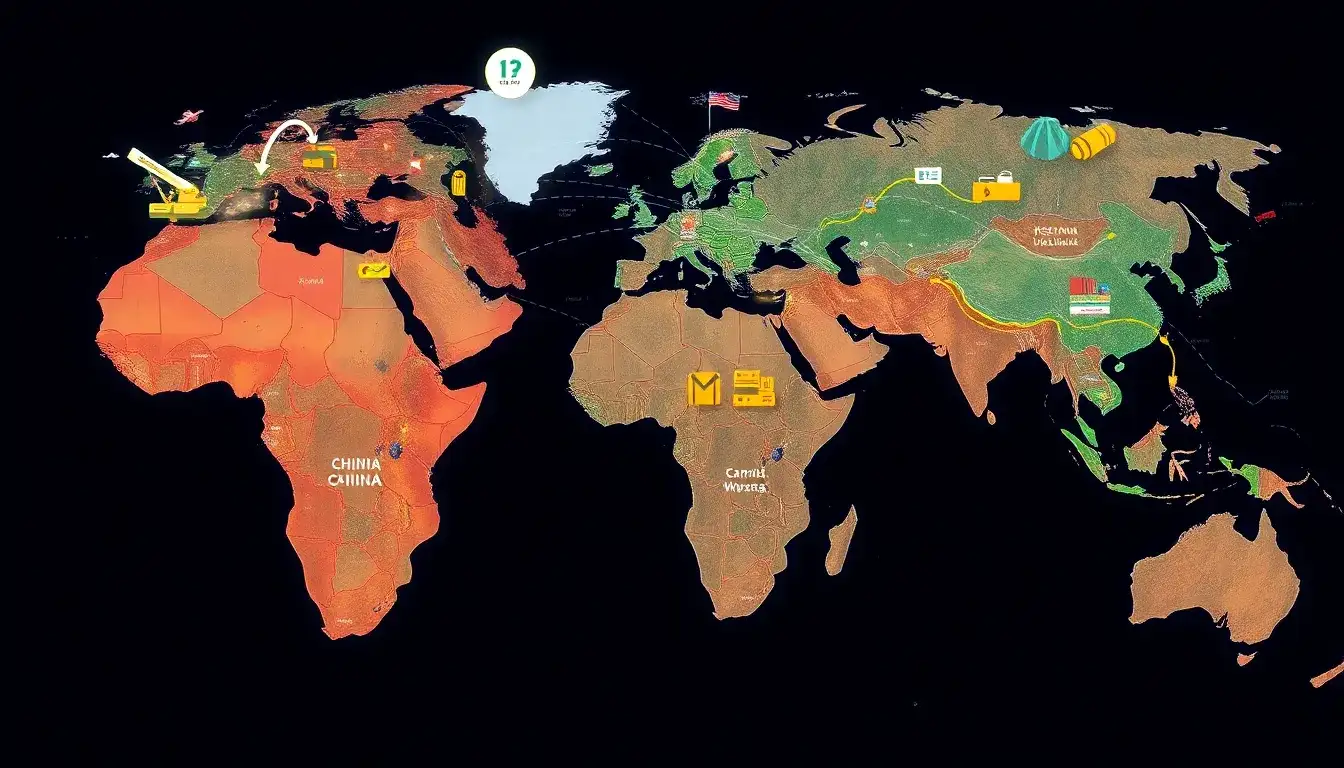
The geopolitical landscape significantly shapes the availability of rare earth elements (REEs) through supply concentration, strategic competition, and efforts at supply diversification. Key points are:
Concentrated Supply and Strategic Vulnerability
- China dominates global rare earth production, controlling a large share of mining and processing capacity, which creates a critical supply chain vulnerability for other countries reliant on these materials for high-tech and clean energy applications.
- This concentration gives China leverage in global markets and geopolitical influence, complicating trade relations and raising concerns about potential supply restrictions during conflicts or political tensions.
Emerging Geopolitical Competition
- The demand for REEs is rising due to the energy transition toward renewables, electric vehicles, and advanced technologies, making REEs strategically vital commodities beyond their economic value.
- The U.S. perceives reliance on Chinese rare earths as a national security risk and is actively working with allies to decouple its supply chain from China. This involves legislative actions aimed at boosting domestic production and securing alternative supply routes.
Supply Diversification and New Entrants
- Geopolitical dynamics are driving efforts worldwide to diversify rare earth supply sources. New mines and processing plants are being developed outside China to reduce dependency and enhance supply security.
- Regions like Pakistan, with significant potential rare earth deposits, are becoming important actors in the geopolitics of REEs due to their strategic location and mineral wealth.
Impact on Global Trade and Relations
- The competition and strategic importance of REEs have reshaped international trade and relations, fueling geopolitical tensions and cooperation efforts simultaneously. Policies like the U.S. Inflation Reduction Act promote clean energy industries alongside reshaping rare earth supply chains.
- Control over rare earths is increasingly a tool in broader geopolitical contests, reflecting shifts from a U.S.-dominated unipolar world to a multipolar system where resource control equates to technological and military advantage.
In summary, the geopolitical landscape affects rare earth availability by concentrating supply in politically sensitive hands, driving strategic competition and supply chain diversification, and influencing global economic and security policies. This nexus of resource control and geopolitics not only impacts the current availability of rare earths but also shapes future global power relations and technological developments.
Original article by NenPower, If reposted, please credit the source: https://nenpower.com/blog/how-does-the-geopolitical-landscape-affect-the-availability-of-rare-earth-elements/

