

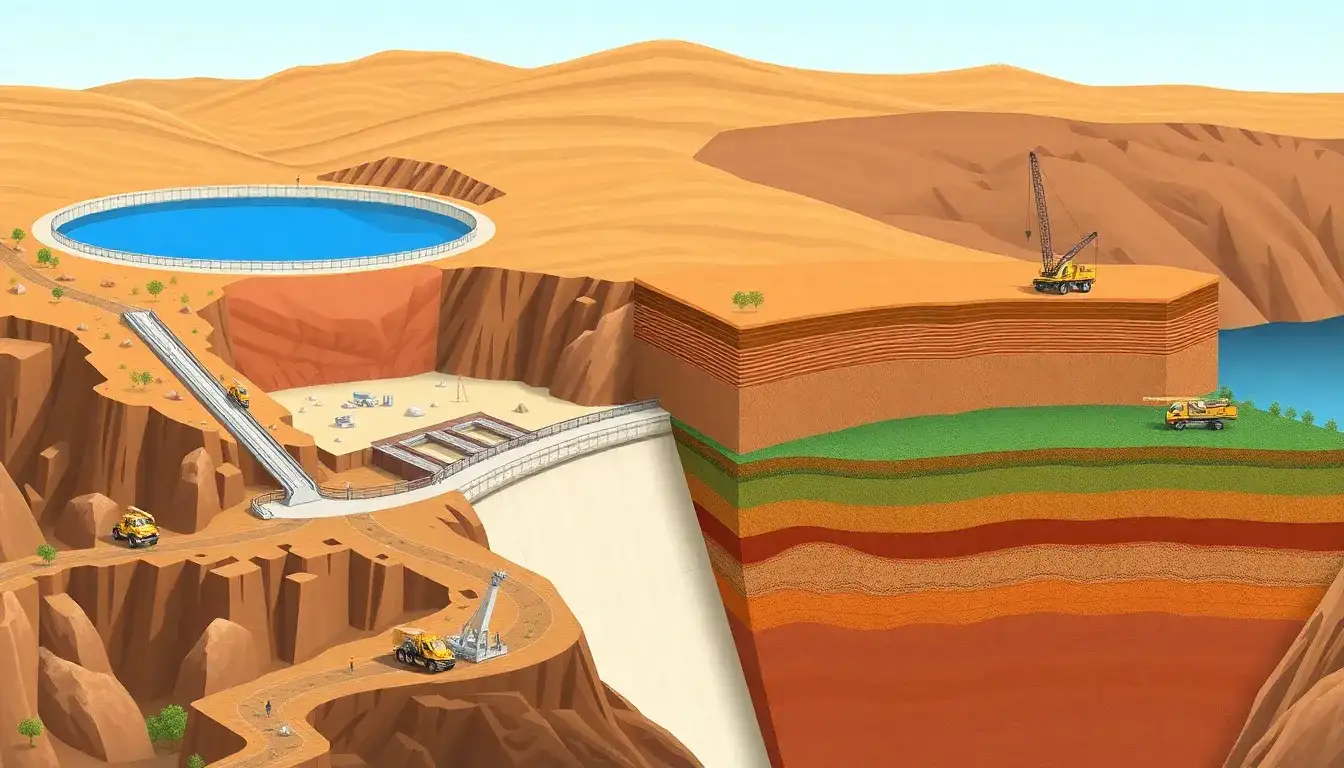
The geology of a location significantly impacts the maintenance and overall costs of pumped hydroelectric storage (PHS) systems, primarily through its influence on construction complexity, geological risks, and long-term operational challenges.
Impact of Geology on Maintenance and Costs of Pumped Hydro Storage Systems
1. Geological Risks and Construction Complexity
- Traditional PHS systems require large underground cavern excavations for the powerhouse, which directly depend on stable geology to ensure safe and cost-effective construction. Complex or unstable geological formations increase the risk of unexpected ground conditions, potentially causing delays, increased excavation volume, and engineering challenges. These factors elevate both capital and maintenance costs over the system’s lifetime.
- Novel designs, such as Obermeyer Hydro’s system, reduce geological risk by eliminating the need for large caverns, instead using vertical shafts to house submersible pump-turbines. This reduces excavation complexity and the volume of underground construction, thereby lowering geologic risks and associated maintenance expenses.
2. Maintenance Costs Linked to Geological Conditions
- Geological conditions affect the frequency and difficulty of maintaining underground structures and equipment. For example, unstable rock formations can cause structural degradation, water ingress, and equipment misalignment, all raising maintenance burdens and costs.
- Difficult terrain or geology may increase wear and tear on conveyance structures (such as tunnels and penstocks), requiring more frequent inspections and repairs.
3. Site Selection Influenced by Geography and Geology
- The choice of site is constrained by the geology, as suitable locations must support the structural integrity of upper and lower reservoirs and their associated tunnels or pipelines. Poor geological conditions can necessitate costly reinforcements, special construction techniques, and ongoing maintenance to manage erosion, seepage, or sediment buildup.
4. Influence on Long-Term Operational Reliability
- Geological instabilities or shifts can impact the alignment and operation of turbines and pumps, potentially increasing downtime and the need for corrective maintenance.
- Additionally, geological conditions influence the hydrological characteristics critical for reservoir stability, which indirectly affects operational efficiency and maintenance needs.
Summary Table: Geological Impact on PHS Costs
| Geological Factor | Impact on Costs | Explanation |
|---|---|---|
| Complex underground geology | Increased capital & maintenance costs | Higher excavation and structural reinforcement needs |
| Unstable rock formations | Elevated ongoing maintenance costs | Structural repairs, water ingress, equipment issues |
| Suitable bedrock presence | Reduced costs | Stable foundation reduces risk and maintenance |
| Need for large caverns | Higher upfront & maintenance expenses | Larger excavations are more complex and risky |
| Novel vertical shaft design | Lower construction & maintenance costs | Smaller excavation volume minimizes risk and complexity |
In conclusion, geology directly influences both the initial construction costs and ongoing maintenance expenses of pumped hydroelectric storage systems. Advancements in design that minimize excavation complexity can reduce these costs and risks, but site geology remains a key factor in the economic feasibility and operational reliability of PHS projects.
Original article by NenPower, If reposted, please credit the source: https://nenpower.com/blog/how-does-the-geology-of-the-location-impact-the-maintenance-costs-of-pumped-hydroelectric-storage-systems/

