

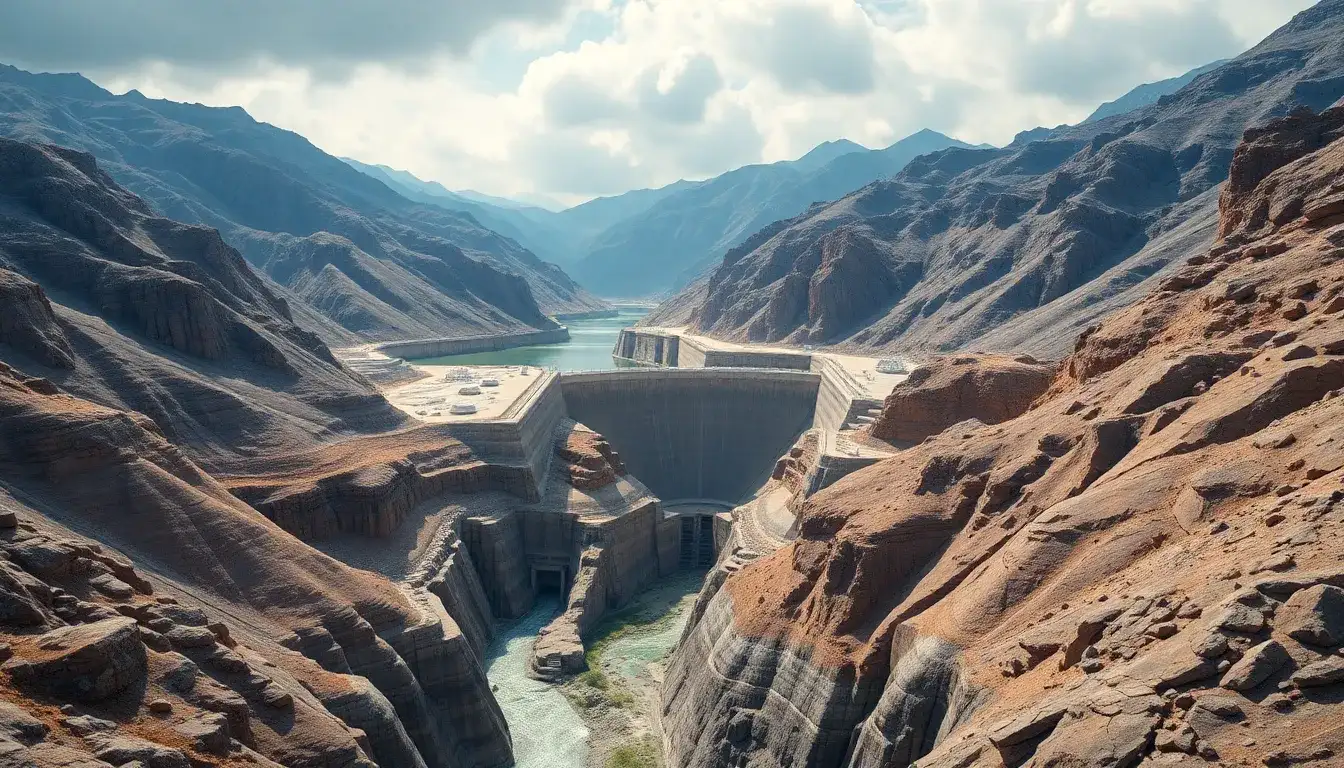
The geology of a location significantly influences the cost of a pumped hydro storage (PHS) project, primarily through its impact on excavation complexity, geological risks, and construction requirements.
Geological Impact on PHS Project Costs
- Excavation and Construction Complexity: The geological characteristics dictate how much excavation and what type of underground construction is needed, such as tunnels, caverns, and shafts. Difficult geology increases excavation volume and complexity, leading to higher costs and project delays. For example, complex or unstable geological formations necessitate more extensive engineering solutions to ensure structural integrity, thus raising capital expenditures.
- Geological Risks: Uncertainties like unexpected rock conditions, fault lines, or groundwater inflow can cause unforeseen costs and delays. Projects in challenging geology have higher risk premiums to cover potential surprises during underground powerhouse excavation and tunneling. Novel PHS systems that reduce underground excavation volume, such as those using vertical shafts instead of large caverns, can mitigate these geological risks and lower associated capital costs by up to 33%.
- Effect on Cost Sensitivity: According to detailed NREL modeling, total PHS costs are more sensitive to factors like hydraulic head and reservoir volume than directly to geology type or penstock type, indicating that while geology impacts cost, it may be less dominant in the overall cost breakdown compared to performance-related parameters. However, geology still contributes to indirect costs and construction challenges.
- Tunnel Length to Storage Head Ratio: Geological conditions affect tunnel routing which impacts tunnel length relative to the storage head, influencing costs. More favorable geology allows shorter tunnels or simpler alignments, reducing costs.
Summary
| Geological Factor | Impact on PHS Project Cost |
|---|---|
| Rock stability and type | Affects excavation difficulty and requirement for support |
| Geological surprises (faults, water inflow) | Increase risk, cause delays, add contingency costs |
| Excavation volume and complexity | Larger/more complex excavations increase construction costs |
| Tunnel routing influenced by geology | Longer tunnels increase capital costs |
| Innovative designs reducing underground work | Can reduce geology-related risks and lower upfront capital |
In essence, while geological conditions are not always the single largest cost driver in pumped hydro storage projects, they strongly influence construction complexity, risk management, and thus the overall capital cost and timeline of the project. Efforts to design systems that minimize underground excavation or exploit more favorable geological settings are key to reducing costs.
Original article by NenPower, If reposted, please credit the source: https://nenpower.com/blog/how-does-the-geology-of-a-location-impact-the-cost-of-a-pumped-hydro-storage-project/

