

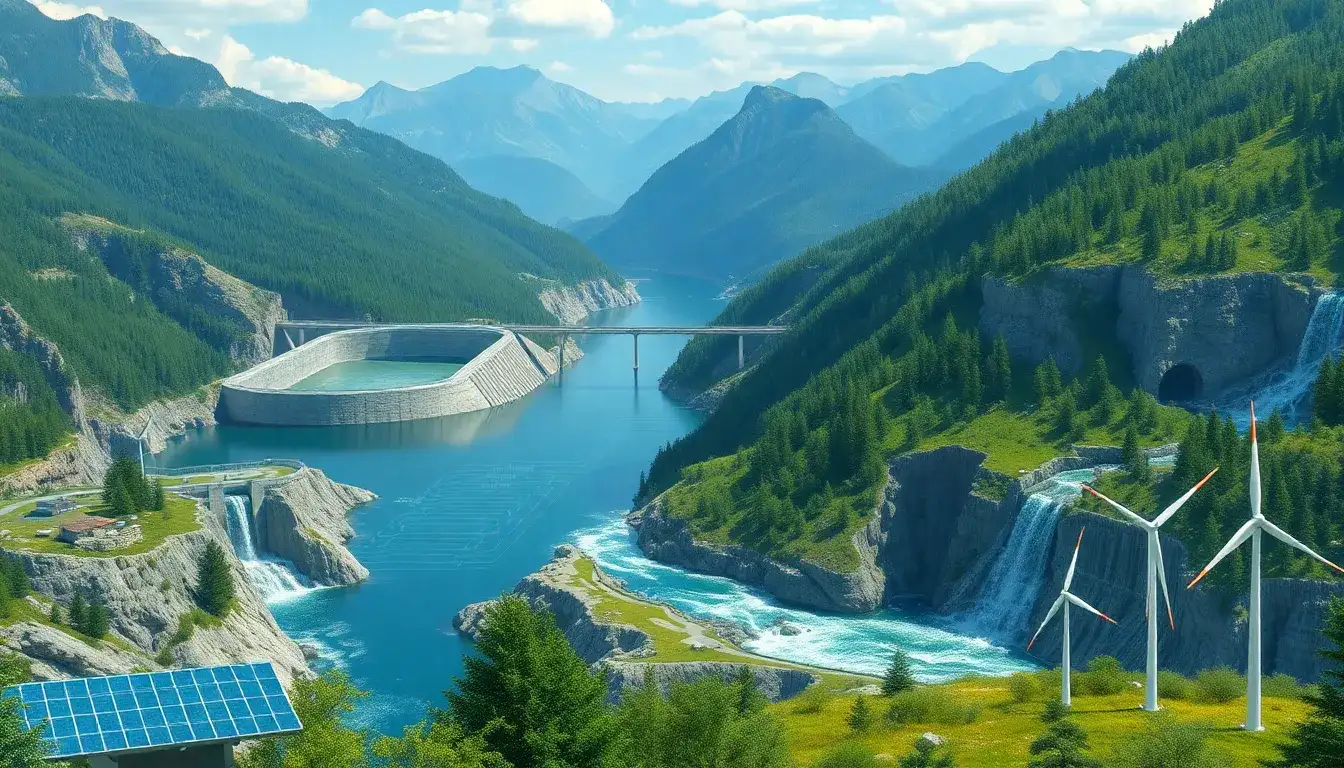
The feasibility of pumped hydro storage (PHS) is heavily influenced by the geography of a location, which affects several critical factors necessary for the effective operation of such systems.
Key Geographic Factors Influencing Pumped Hydro Storage
1. Elevation Difference:
Pumped hydro storage relies on the gravitational potential energy of water, which is stored in an upper reservoir and released to generate electricity as it flows down to a lower reservoir. Therefore, a significant elevation difference between the two reservoirs is essential. The greater the height difference, the more potential energy can be harnessed, leading to increased electricity generation capacity.
2. Terrain and Topography:
Hilly and mountainous areas are particularly suitable for PHS because they naturally provide the necessary elevation differences. These terrains also often have the space required for constructing reservoirs and the associated infrastructure, such as penstocks (the pipes that carry the water) and turbines. Flat or low-lying regions are generally less suitable for PHS unless significant artificial structures are built, which can increase costs and complexity.
3. Water Availability:
Consistent access to water is crucial for PHS systems. Regions with regular rainfall or nearby water sources contribute to maintaining reservoir levels. In contrast, dry areas may struggle to replenish water supplies, particularly during droughts, which can severely limit operational capability or render projects unfeasible.
4. Environmental Considerations:
The construction of reservoirs can significantly impact local ecosystems, including habitats for wildlife and changes in water flow patterns. Sites must be chosen to minimize ecological disruption, which can constrain options in some geographic areas. Furthermore, regulatory hurdles related to environmental impacts can also affect the feasibility of development in sensitive regions.
5. Proximity to Energy Demands:
PHS systems ideally should be located close to energy demand centers or renewable energy sources. This proximity allows for efficient transmission of electricity generated and reduced losses during energy transport. Regions with high renewable energy potential (e.g., wind or solar farms) are particularly advantageous, as these sources can supply the energy needed to pump water back into the upper reservoir when electricity generation exceeds demand.
6. Infrastructure and Accessibility:
The feasibility of constructing a PHS facility also depends on existing infrastructure, such as roads and transmission lines. Sites that are more accessible tend to have lower construction costs and shorter development timelines, making them more attractive for investment. Remote or difficult-to-access locations may require significant additional investment in infrastructure.
Summary
In conclusion, the successful implementation of pumped hydro storage systems is closely tied to geographical factors, including elevation differences, terrain, water availability, environmental impacts, proximity to energy demands, and existing infrastructure. By selecting sites that optimize these factors, developers can enhance the reliability and efficiency of pumped hydro storage, making it a vital component of modern energy systems, especially as the world shifts towards more renewable energy sources.
Original article by NenPower, If reposted, please credit the source: https://nenpower.com/blog/how-does-the-geography-of-a-location-impact-the-feasibility-of-pumped-hydro-storage/

