

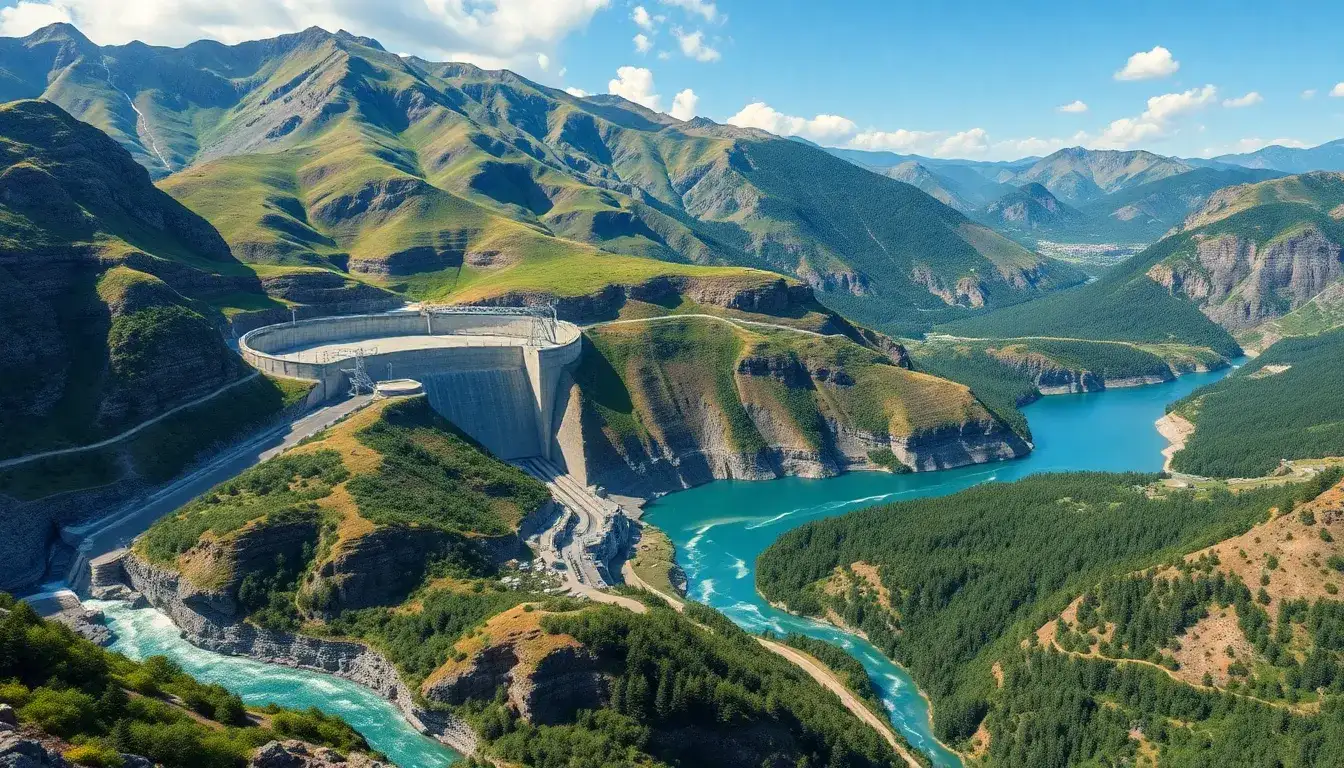
Impact of Geography and Terrain on Costs
- Dam Construction and Reservoir Creation:
- The site’s geological conditions, such as rock hardness and potential for landslides, affect dam construction costs. Harder rock formations can reduce excavation costs but may increase construction time due to drilling requirements.
- Reservoir size and shape are dictated by the terrain, with more complex terrains requiring more extensive engineering and construction efforts.
- Water Conveyance Systems:
- The distance and elevation difference between the upper and lower reservoirs, known as the “head,” influence the length and complexity of tunnels, pipes, and penstocks needed. Higher elevation differences reduce tunnel lengths but may require stronger materials and designs.
- Adverse geological conditions can complicate tunnel excavation, increasing costs due to specialized techniques or equipment required.
- Access Roads and Infrastructure:
- Difficult terrain complicates the construction of access roads, potentially necessitating more expensive infrastructure solutions like aerial lifts or specialized equipment for personnel and material transport.
- Environmental and Regulatory Compliance:
- Sites with sensitive ecosystems may require additional environmental impact assessments and mitigation measures, adding to costs.
- Regulatory compliance can be more complex in areas with protected habitats, increasing planning and permitting costs.
Cost Model Considerations
NREL’s PSH cost model accounts for these site-specific factors by integrating user input on geography and terrain into its calculations. This includes adjustments for construction materials, dam design, and excavation challenges based on local conditions. The model provides a comprehensive framework to estimate these costs and their impact on the overall project economics.
Economic Implications
While PHS is a valuable long-duration energy storage solution, its high upfront capital costs can be daunting. Simplifying the construction process and reducing site-specific challenges can help make PHS more economically viable. This might involve choosing sites with favorable geography for reduced excavation and construction needs, or implementing innovative designs that minimize environmental impacts while optimizing operational efficiency.
Original article by NenPower, If reposted, please credit the source: https://nenpower.com/blog/how-does-the-geography-and-terrain-of-a-site-affect-the-cost-of-pumped-hydro-storage/

