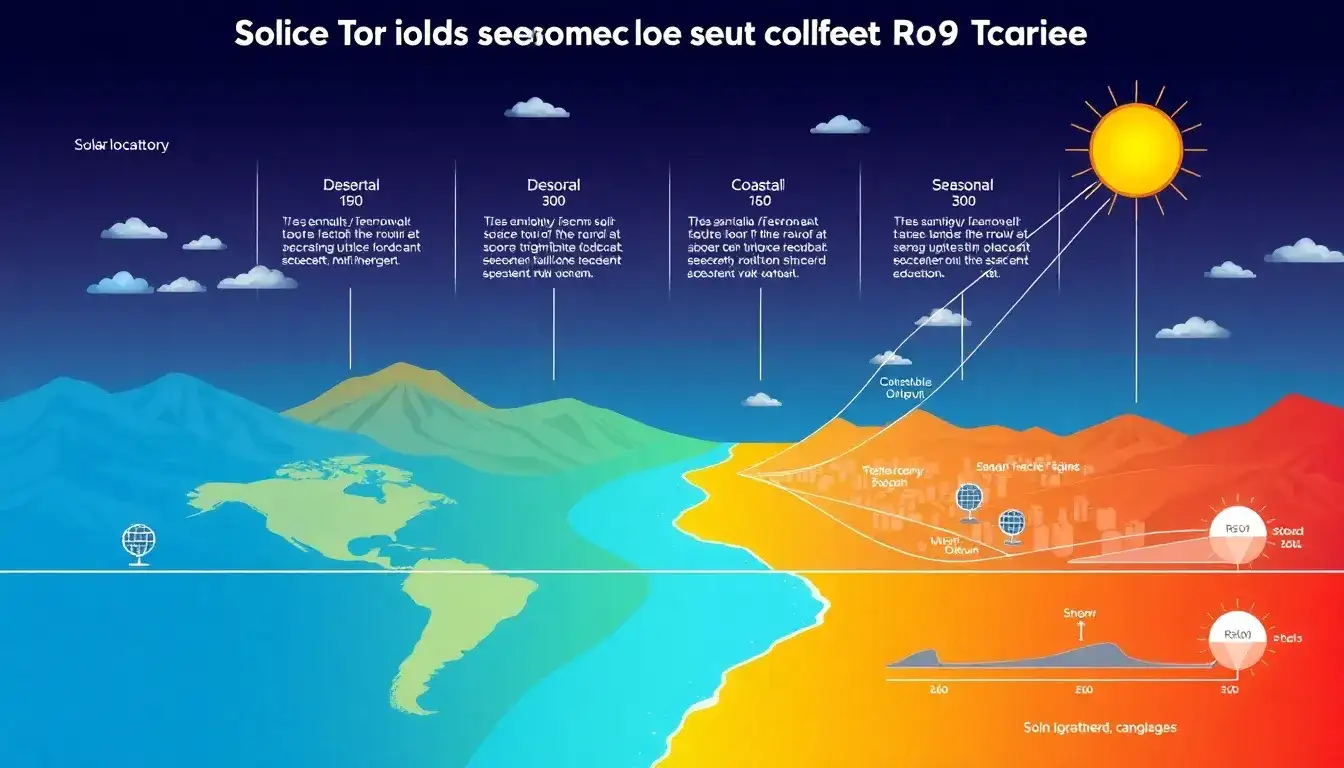
Solar trackers’ seasonal energy output is significantly influenced by geographical location due to variations in solar irradiance, latitude, and local climate conditions. Here’s a breakdown:
Latitude and Sun Path
- Higher latitudes (e.g., Germany) experience more pronounced seasonal sun-angle variations. Trackers adjust panel angles to capture low-angle winter sun, improving output during shorter days.
- Near the equator, seasonal sun-path changes are minimal, allowing single-axis trackers to maintain near-optimal angles year-round with smaller adjustments.
Irradiance and Seasonal Patterns
- Arid/sunbelt regions (e.g., Spain) benefit most from trackers due to consistently high irradiance, enabling 10–25% more annual energy than fixed systems.
- Temperate climates (e.g., Germany) see reduced tracker advantages in winter due to cloud cover, though optimized angles still mitigate output losses compared to fixed systems.
Land Availability vs. Energy Density
- Space-constrained regions (e.g., Germany) often prioritize fixed or east-west structures, sacrificing some seasonal efficiency for higher energy density per land area.
- Land-rich regions (e.g., parts of Spain) favor trackers, balancing increased seasonal output with lower land costs.
Seasonal Temperature Effects
- Colder climates enhance tracker performance in winter, as lower temperatures improve panel efficiency. Trackers maximize exposure to weaker winter sunlight.
- Hot regions may see reduced gains due to heat-related panel efficiency losses, though trackers still outperform fixed systems.
Case Study: Germany vs. Spain
- Germany: Trackers produce 43% less total energy than fixed structures due to space constraints forcing smaller installations, despite higher per-panel efficiency.
- Spain: Lower land costs allow larger tracker systems, delivering more total energy at a lower LCOE due to higher annual irradiance.
In summary, geographical location dictates tracker viability by influencing seasonal sun angles, local weather, land economics, and grid energy demands.
Original article by NenPower, If reposted, please credit the source: https://nenpower.com/blog/how-does-the-geographical-location-impact-the-seasonal-energy-output-of-solar-trackers/