

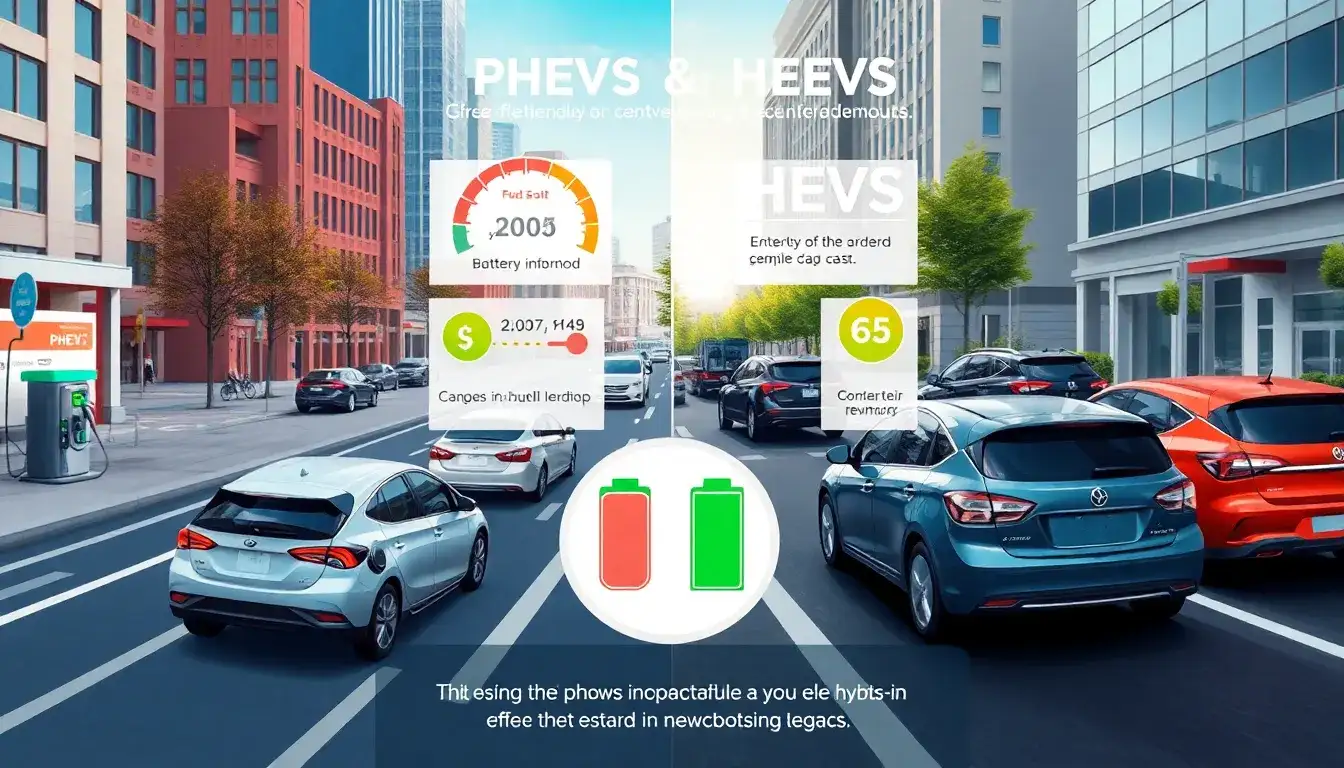
Fuel efficiency significantly impacts the overall cost of ownership for both Plug-in Hybrid Electric Vehicles (PHEVs) and Hybrid Electric Vehicles (HEVs), particularly in urban areas. Here’s a breakdown of how these efficiencies influence costs:
Fuel Efficiency Comparison
- HEVs (Hybrid Electric Vehicles): These vehicles typically achieve better fuel economy in gasoline-only mode compared to equivalent PHEVs running on gasoline. HEVs use regenerative braking to recharge smaller batteries, which enhances fuel efficiency, especially in city driving scenarios.
- PHEVs (Plug-in Hybrid Electric Vehicles): PHEVs have larger batteries that allow for electric-only operation, often covering 20 to 50 miles. This feature significantly reduces fuel consumption for short urban trips, making PHEVs more fuel-efficient when used in electric mode. However, real-world fuel efficiency can be less than claimed due to various driving conditions.
Impact on Overall Cost of Ownership in Urban Areas
Fuel Costs
- HEVs: Lower fuel costs compared to traditional gasoline vehicles, but higher than PHEVs when both are driven extensively in urban areas.
- PHEVs: Can operate almost entirely on electricity for short urban trips, potentially reducing fuel costs significantly if charged regularly.
Electricity Costs
PHEVs require plugging into an outlet, adding electricity costs. However, these costs are often lower than equivalent fuel expenses, especially if charged during off-peak hours.
Maintenance and Emissions
- Both HEVs and PHEVs tend to have lower maintenance costs due to fewer moving parts and reduced wear on the engine.
- Reduced emissions from both vehicles can lead to lower environmental impact, although specific cost savings may vary depending on local policies and incentives.
Purchase and Incentive Costs
- PHEVs often have higher purchase prices than HEVs due to larger batteries, but they may qualify for more substantial government incentives, which can offset initial costs.
- In urban areas, incentives like access to HOV lanes or reduced parking fees can also lower the effective cost of ownership for both vehicles.
In conclusion, while HEVs are generally more efficient on gasoline alone, PHEVs offer significant fuel savings in urban areas due to their electric capability. However, real-world fuel efficiency and electricity costs must be considered to accurately assess overall ownership costs.
Original article by NenPower, If reposted, please credit the source: https://nenpower.com/blog/how-does-the-fuel-efficiency-of-phevs-and-hevs-impact-their-overall-cost-of-ownership-in-urban-areas/

