

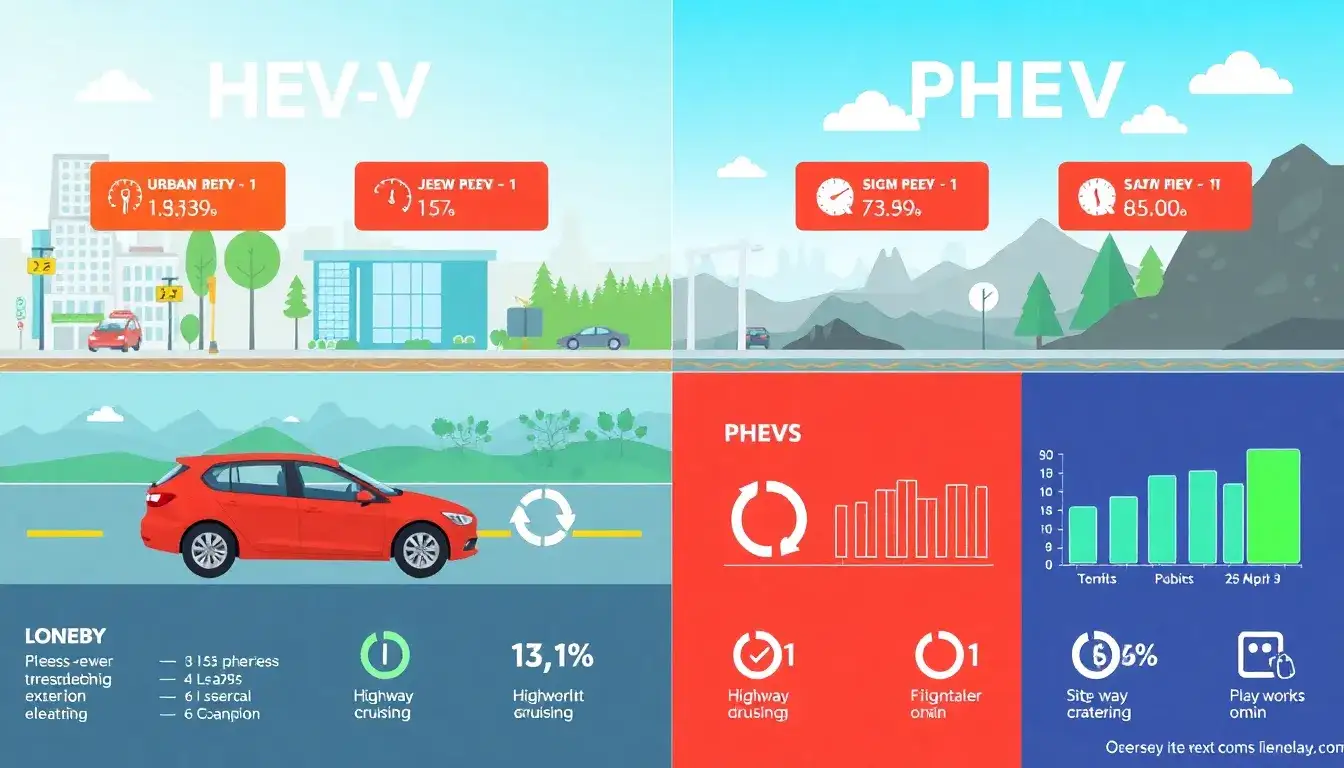
Hybrid Electric Vehicles (HEVs)
- Fuel Efficiency: HEVs are designed to maximize fuel efficiency through the use of both electric and gasoline powertrains. They utilize a small battery that is charged primarily through regenerative braking and the engine, but they do not require plugging in. HEVs typically achieve high fuel economy ratings in city driving, where frequent stops and starts allow for more regenerative charging and thus better use of the electric motor.
- Real-World Driving Conditions: In real-world conditions, HEVs perform well in stop-and-go traffic, such as urban driving, where they can use the electric motor effectively during acceleration and braking. However, their efficiency advantage diminishes somewhat in highway driving, as the gas engine is more dominant at higher speeds.
Plug-in Hybrid Electric Vehicles (PHEVs)
- Fuel Efficiency: PHEVs offer superior fuel efficiency compared to conventional hybrids due to their larger battery pack, which allows for a range of 20 to 50 miles on electric power alone. This means that in real-world driving, especially for shorter trips, PHEVs can operate entirely on electricity, reducing fuel consumption significantly. Once the electric range is depleted, the vehicle switches to hybrid mode, similar to an HEV.
- Real-World Driving Conditions: In real-world driving, PHEVs excel in scenarios where the electric range can be maximized, such as daily commutes or city driving. They also offer less range anxiety compared to full EVs because they can seamlessly switch to gasoline power once the battery is depleted. However, their overall fuel efficiency is highly dependent on how often they are charged and how much of their driving is done in electric mode.
Comparison
| Vehicle Type | Key Efficiency Features | Real-World Performance |
|---|---|---|
| HEVs | Small battery, regenerative braking, no plug-in required | High efficiency in city driving, less so on highways |
| PHEVs | Larger battery, plug-in capability, electric range of 20-50 miles | Excellent for short trips and city driving, superior fuel efficiency with frequent charging |
Overall, while HEVs are efficient due to regenerative braking and hybrid technology, PHEVs offer even higher efficiency potential by allowing users to cover significant distances on electric power alone, especially if charging is frequent.
Original article by NenPower, If reposted, please credit the source: https://nenpower.com/blog/how-does-the-fuel-efficiency-of-hevs-and-phevs-vary-in-real-world-driving-conditions/

