

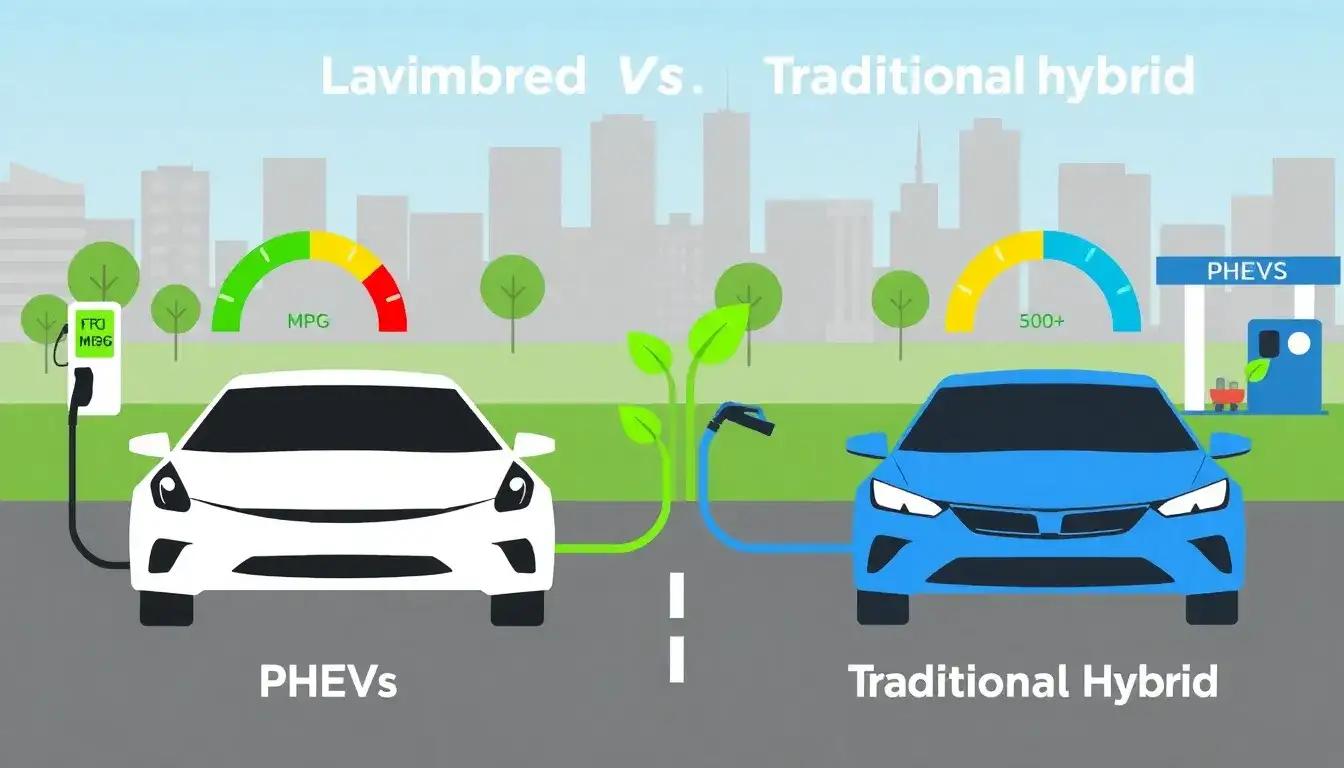
Comparison of Fuel Economy in PHEVs vs. Traditional Hybrids
Plug-in Hybrid Electric Vehicles (PHEVs)
- Key Features: PHEVs combine a gasoline engine with an electric motor and a larger battery than traditional hybrids. This setup allows for fully electric driving for distances of 20 to 50 miles, depending on the vehicle, provided the battery is charged externally.
- Fuel Economy: PHEVs offer superior fuel efficiency when the battery is fully charged, allowing drivers to enjoy electric-only driving. However, once the battery is depleted, they operate similarly to traditional hybrids, leveraging both the gasoline engine and electric motor to optimize fuel use. For example, the 2024 Toyota Prius Prime achieves a tested fuel economy of 46 mpg, along with an EV range of 33 miles.
Traditional Hybrids
- Key Features: Traditional hybrids use both a gasoline engine and an electric motor but do not have a large enough battery to allow extended electric-only driving without external charging. Instead, they rely on regenerative braking and the engine to charge the battery in real-time.
- Fuel Economy: Traditional hybrids are known for their efficiency, particularly in city driving where frequent stops allow regenerative braking to recharge the battery. However, they typically do not offer the same level of electric-only range as PHEVs. For instance, the Toyota Prius, a well-known hybrid model, offers excellent fuel efficiency but without the option for extended electric-only operation.
Comparison Points
- Electric Range: PHEVs provide a longer electric-only range, which can significantly reduce fuel consumption for short trips.
- Fuel Efficiency: Both types are fuel-efficient, but PHEVs can be more so when the electric mode is utilized extensively.
- Charging Requirement: Unlike traditional hybrids, PHEVs require external charging to achieve their full potential in terms of fuel economy.
- Operating Conditions: In conditions where the gasoline engine needs to engage frequently (e.g., cold weather, steep inclines), both types may see similar fuel efficiency, but PHEVs have the advantage of starting with electric power when charged.
Overall, while both types offer improved fuel efficiency compared to conventional vehicles, PHEVs provide an additional layer of fuel savings through extended electric driving capabilities when properly charged.
Original article by NenPower, If reposted, please credit the source: https://nenpower.com/blog/how-does-the-fuel-economy-of-phevs-compare-to-traditional-hybrids/

