

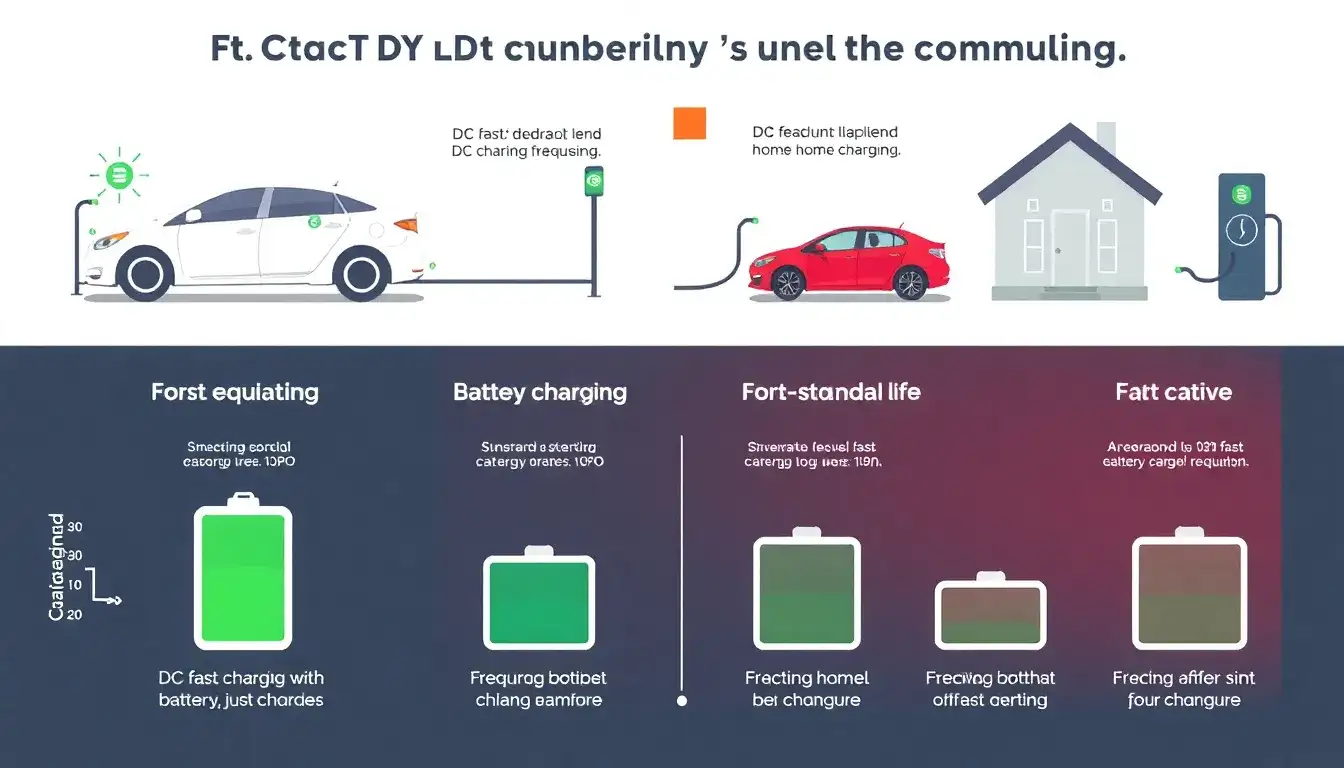
Battery Degradation and Charging Frequency
- DC Fast Charging (DCFC):
DC fast charging delivers high currents and power, which generates significant heat and voltage stress within the battery cells. This heat and stress can accelerate chemical and structural wear in the battery, leading to faster capacity loss and reduced overall battery life. Several studies and data analyses indicate that vehicles using DC fast charging frequently (e.g., more than 3 times per month) experience noticeably higher battery degradation rates, especially in hot climates where temperature exacerbates the effect. - AC Charging (Level 1 and Level 2):
Slower charging methods like Level 1 (120V) and Level 2 (240V) charging produce less heat and involve lower currents, which result in substantially less stress on the battery cells. Research suggests that the difference in battery degradation between Level 1 and Level 2 is minimal and statistically insignificant. These methods are gentler on the battery and contribute less to long-term degradation.
Additional Insights
- Heat Generation:
The key factor in degradation during DC fast charging is heat generation due to high power levels. Excess heat damages battery cells, accelerating their wear. - Voltage Stress and Battery Wear:
Fast charging can also cause voltage imbalances inside the battery pack, contributing further to cell degradation and capacity loss over time. - Practical recommendations:
Many automakers recommend limiting the use of DC fast charging and avoiding charging to 100% frequently, as keeping the battery at a lower state of charge (such as 80%) helps slow degradation. - Overall Impact:
While DC fast charging does increase the rate of battery degradation relative to slower AC charging, the short-term impact on battery capacity and health is not dramatic. Long-term effects become more pronounced with frequent DC fast charging, especially in hot climates.
Summary Table
| Charging Method | Battery Degradation Impact | Notes |
|---|---|---|
| DC Fast Charging | Higher degradation with frequent use | Heat and voltage stress accelerate wear; effect stronger in hot climates |
| Level 2 AC Charging | Low degradation | Minor difference from Level 1; gentler on battery |
| Level 1 AC Charging | Low degradation | Similar impact to Level 2; slowest charging |
In conclusion, frequent use of DC fast charging leads to faster battery degradation compared to AC charging methods due to increased heat and electrical stress. However, occasional use of DC fast charging has a limited impact. Using slower Level 1 or Level 2 AC charging methods is generally better for preserving battery health over time.
Original article by NenPower, If reposted, please credit the source: https://nenpower.com/blog/how-does-the-frequency-of-dc-fast-charging-compare-to-other-charging-methods-in-terms-of-battery-degradation/

