

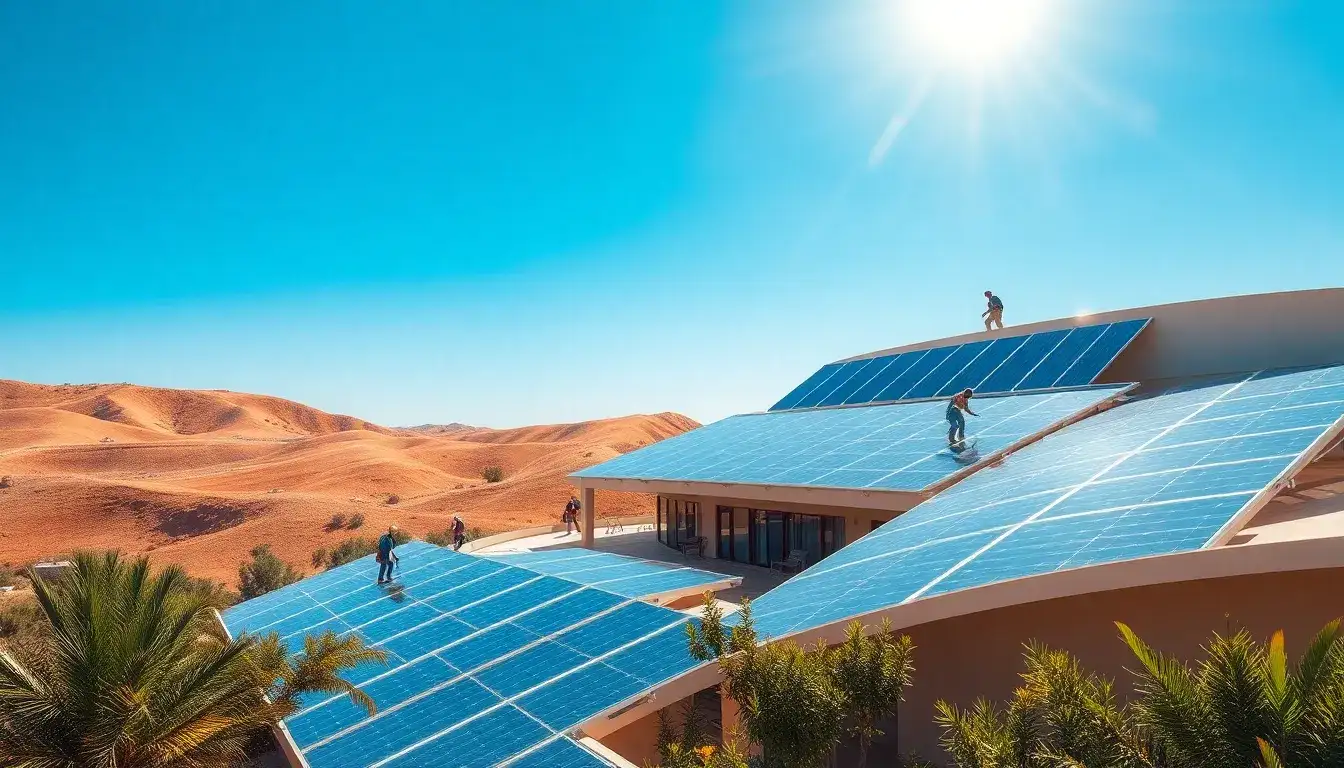
The flexibility of thin-film solar panels provides several key benefits for their installation in hot climates:
- Conformity to Diverse Surfaces: Their flexible nature allows thin-film panels to be integrated into curved, irregular, or unconventional surfaces such as building facades, rooftops with limited load-bearing capacity, vehicles, and portable devices. This flexibility enables solar installations in places where rigid silicon panels would be impractical or impossible to mount.
- Lightweight and Ease of Installation: Being lightweight and flexible means thin-film panels require less structural reinforcement and simpler mounting systems, reducing installation time and costs. This is especially advantageous in hot climates where buildings or structures might have limitations on weight or shape for solar installations.
- Better High-Temperature Performance: Thin-film solar panels, including technologies like Cadmium Telluride (CdTe) and Copper Indium Gallium Selenide (CIGS), have superior temperature coefficients compared to crystalline silicon panels. They maintain higher efficiency and lose less performance as temperatures rise, making them particularly suitable for hot environments where traditional panels suffer significant power drops.
- Durability in Harsh Conditions: Their construction, often protected by robust glass and specialized sealing, makes thin-film panels resistant to heat, humidity, and moisture—common challenges in tropical and desert climates. This durability complements their flexibility to enable installations in harsh hot-weather environments.
- Versatility in Application: Flexibility facilitates integration into building-integrated photovoltaics (BIPV), such as solar windows and facades, which can generate power without compromising architectural design even in hot climates. They can also be used in portable solar solutions ideal for remote or off-grid sunny areas.
In summary, the flexibility of thin-film solar panels benefits installation in hot climates by allowing versatile, lightweight, and cost-effective deployment on varied and constrained surfaces while ensuring better energy performance under high-temperature conditions. These advantages make thin-film technology a strong candidate for solar energy solutions in warm and sunny regions.
Original article by NenPower, If reposted, please credit the source: https://nenpower.com/blog/how-does-the-flexibility-of-thin-film-solar-panels-benefit-their-installation-in-hot-climates/

