

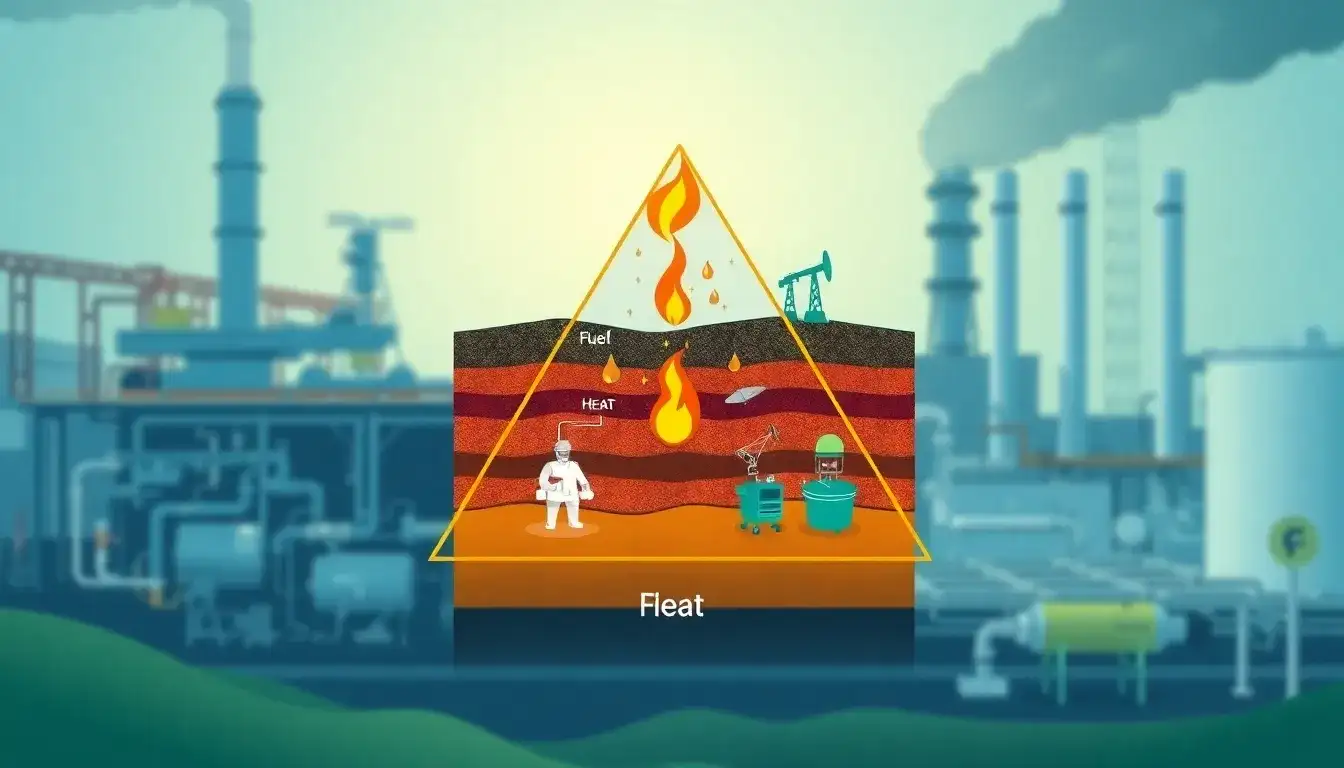
The fire triangle concept is fundamental to understanding fire safety and can be applied to various environments, including depleted natural gas reservoirs. The fire triangle consists of three essential elements: heat, fuel, and oxygen. For a fire to start or continue burning, all three components must be present. Here’s how the fire triangle applies to the safety of depleted natural gas reservoirs:
Application of the Fire Triangle to Depleted Natural Gas Reservoirs
- Heat: In a depleted natural gas reservoir, potential heat sources could include sparks from equipment, ignition from electrical discharges, or other heat-generating activities. Removing heat sources is crucial to preventing fires.
- Fuel: Natural gas itself is a highly combustible fuel. Although the concentration of gas in a depleted reservoir might be lower, it still poses a risk if mixed with air in the right proportions. Ensuring proper ventilation and monitoring gas concentrations are critical to preventing ignition.
- Oxygen: While depleted reservoirs may have limited oxygen due to the presence of methane and other gases, all potential sources of oxygen should be considered. This includes any air that might enter the reservoir during operations or maintenance.
Safety Measures
To enhance safety in these environments, the principles of the fire triangle can be applied by:
- Controlling Heat: Implementing safety protocols to prevent sparks or heat generation in areas where fuel is present.
- Managing Fuel: Ensuring that gas concentrations remain below flammable limits and monitoring for any leaks or releases.
- Regulating Oxygen: Preventing oxygen from entering areas where fuel is present by maintaining good seals and using inert gases if necessary.
Understanding and applying the fire triangle helps prevent fires and ensures effective emergency responses in depleted natural gas reservoirs.
Original article by NenPower, If reposted, please credit the source: https://nenpower.com/blog/how-does-the-fire-triangle-concept-apply-to-the-safety-of-depleted-natural-gas-reservoirs/

